






About the Episode
Got a story to tell? An innovative idea to share? Fill out our guest nomination form and let's chat!
About the Episode:
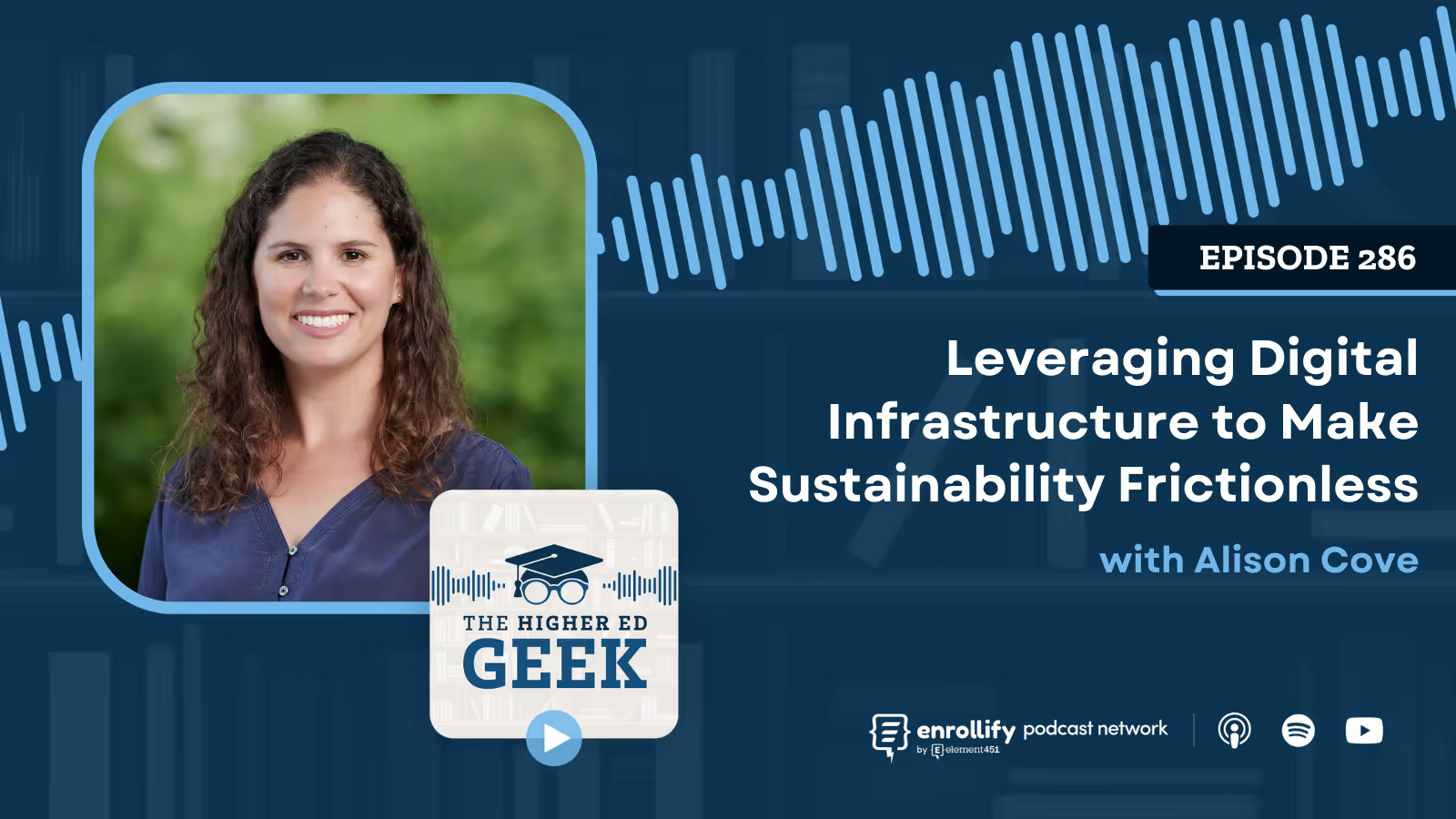
In this episode recorded live from Transact 360, Dustin sat down with Alison Cove, Founder and CEO at USEFULL, to discuss her company’s mission to make reusable containers the default—not the exception—on college campuses. What starts as a conversation about ditching plastic turns into a deeper exploration of how tech-forward systems can drive student behavior change, reduce operational costs, and spark cross-campus collaboration.
From stainless steel containers with library-style return systems to tackling the real cost of "compostable" packaging, Alison breaks down why convenience, accountability, and integration are the keys to making sustainability scalable.
Key Takeaways
- Reusable containers meet digital infrastructure — USEFULL combines sustainability and technology for seamless takeout solutions on campus.
- Students want sustainability—but they want convenience too — USEFULL's tech-powered system ensures participation is easy and user-friendly.
- Plastic-free goals are driving innovation — Institutions are seeking smart alternatives to meet sustainability and health benchmarks.
- Cost neutrality is key — Reusables aren't just greener; they can also be economically viable, even cost-saving, when compared to single-use packaging.
- Tech integrations with campus systems make it scalable — USEFULL's integration with Transact allows for fast implementation and better user tracking.
- Friction kills adoption — User experience must be at the core of every sustainability initiative to truly scale.
What is USEFULL, and why does it matter for higher ed?
USEFULL is a tech-powered, plastic-free takeout solution for college campuses. As Cove explains, the idea emerged from a desire to improve student health and environmental sustainability by eliminating single-use plastic containers. The mission? Replace wasteful packaging with reusable, stainless-steel containers that hold up to daily student life—without sacrificing convenience.
But this isn’t your average “bring-your-own” initiative. Those programs, Cove notes, often top out at 10% adoption rates. Instead, USEFULL functions like a library system for containers. Students check out their reusable takeout boxes and return them within a designated timeframe—usually a few days—to avoid late fees. It’s sustainable, scalable, and built for student behavior.
How does the technology actually work?
At the heart of USEFULL's system is a smart integration with Transact’s suite of tools—including mobile ordering, kiosks, and point-of-sale (POS) systems. When a student places an order, their meal is automatically assigned to a container that’s tracked in the backend system. This makes it easy to monitor usage, send reminders, and nudge students to return containers on time.
There’s even a “firm but fair” late fee structure that holds students accountable without being punitive. The integration ensures students don’t slip through the cracks, and dining services can easily track inventory and usage trends. The containers themselves are high-quality—double-wall insulated and leak-proof—to avoid the practical issues that often derail reusable programs.
As Cove explains, it’s about replicating the ease of single-use with a sustainable option that’s just as convenient—and a lot more durable.
What makes this a smart investment for schools?
Many institutions worry about the costs of implementing green solutions. But Cove insists the USEFULL model is either cost-neutral or cost-saving. Single-use containers aren’t free—they require constant purchasing, storage, and disposal. Reusables, by contrast, become part of a closed-loop system that saves money over time and reduces operational headaches.
Plus, the environmental and health benefits are significant. With growing awareness around microplastics and harmful chemicals like PFAS, colleges are under pressure to provide safer, more sustainable dining options. USEFULL offers a tangible way to meet campus-wide sustainability goals while delivering a better student experience.
Cove notes that most adoption comes through administrative buy-in rather than student advocacy. While students are often the catalysts, administrators are the ones who can champion long-term change—especially when the solution checks all the boxes: cost-effective, health-conscious, and environmentally responsible.
What should higher ed leaders be thinking about now?
If you're in auxiliary services, student affairs, or sustainability leadership, the writing’s on the wall: takeout culture isn't going away. Institutions need a scalable plan for addressing the waste it generates. But Cove warns that without intentional infrastructure—like conveniently located return bins and cross-department collaboration—even the best programs can falter.
She also flags the challenge of compostable packaging, which sounds eco-friendly but often ends up as “expensive trash” if not processed properly. Many compostables contain harmful coatings or require industrial composting facilities, which are few and far between. Reusable, tech-enabled solutions avoid these pitfalls while offering superior performance and reliability.
What’s next on the horizon? More institutions are adopting plastic-free goals, and health research around microplastics is becoming more mainstream. Students are already demanding better—it's up to institutions to deliver in ways that are seamless, scalable, and sustainable.
About the Show: The Higher Ed Geek Podcast explores the impact of edtech on the student experience by speaking with diverse leaders from institutions, companies, and nonprofit organizations. Each week we aim to provide an engaging, fun, and relevant dose of professional development that honors the wide range of work happening all across the higher ed ecosystem. Come geek out with us! The Higher Ed Geek Podcast is hosted by Dustin Ramsdell and is a proud member of the Enrollify Podcast Network.
Connect With Our Host:
Dustin Ramsdell
About The Enrollify Podcast Network:
The Higher Ed Geek is a part of the Enrollify Podcast Network. If you like this podcast, chances are you’ll like other Enrollify shows too!
Some of our favorites include Generation AI.
Enrollify is produced by Element451 — the next-generation AI student engagement platform helping institutions create meaningful and personalized interactions with students. Learn more at element451.com.







.svg)
.svg)
