






About the Episode
Got a story to tell? An innovative idea to share? Fill out our guest nomination form and let's chat!
About the Episode:
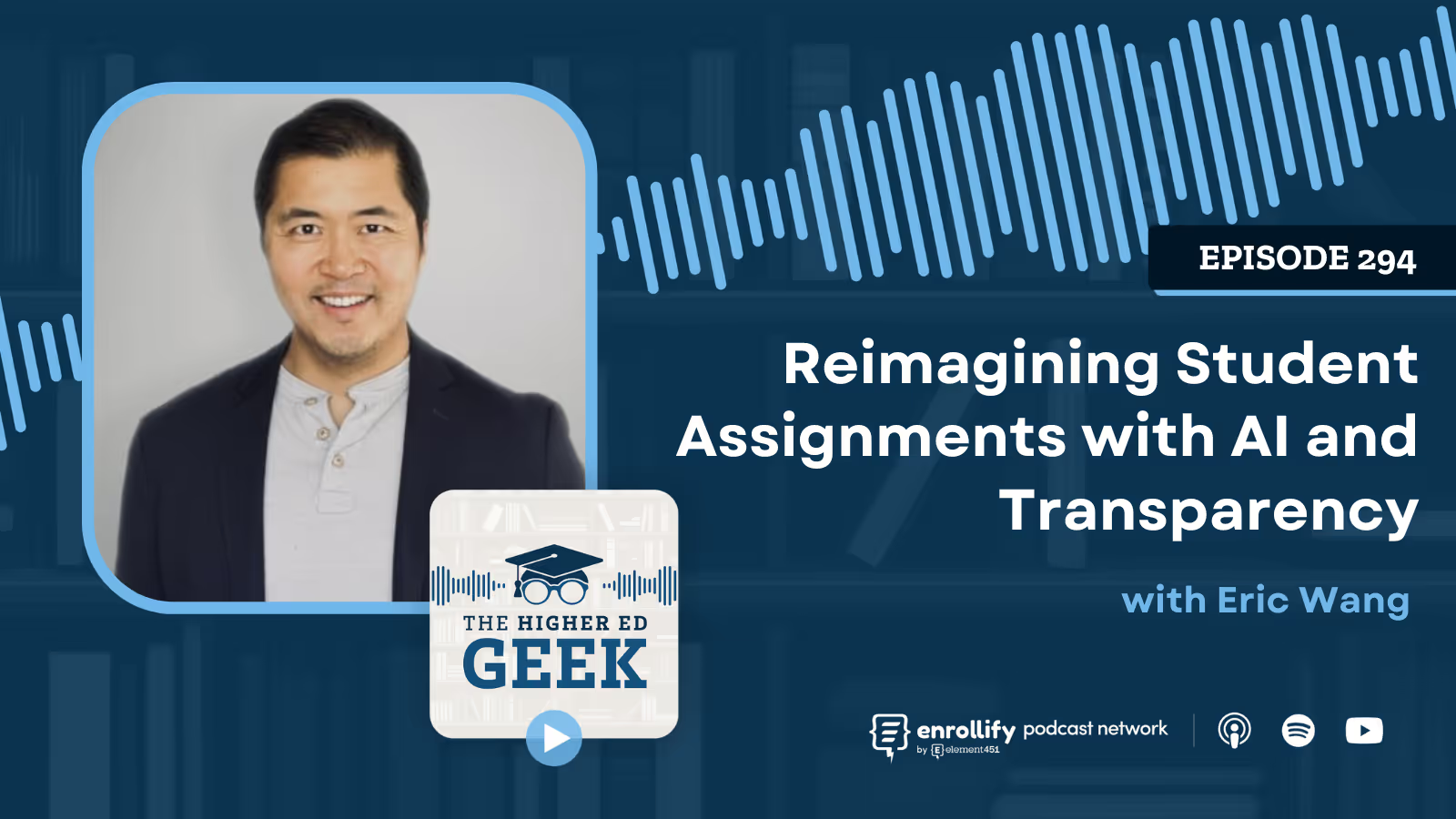
What if AI could make student writing more honest—not less? In this episode, Dustin sits down with Eric Wang, VP of AI at Turnitin, to talk about the launch of Turnitin Clarity: a new AI-powered document editor that helps students build critical thinking skills and helps educators better understand the process behind students’ assignment submissions. Eric unpacks the “why” behind Clarity, what makes it different from your typical chatbot, and how AI can actually strengthen student-teacher trust instead of eroding it.
Key Takeaways
- Turnitin Clarity offers a transparent AI-enhanced document editor that supports students through their writing process while giving faculty insights into that journey — not just the end product.
- The platform is designed to encourage critical thinking and productive struggle, not automate student work.
- AI is used as a scaffolding tool for learning, not a shortcut, helping students build confidence and faculty provide more personalized feedback.
- Clarity supports responsible AI integration in education, providing both student-facing and teacher-facing experiences that prioritize transparency.
- The tool reflects a larger shift toward authentic assessment and AI literacy in the classroom.
- Turnitin is building Clarity iteratively, learning from real-world classroom usage to refine and expand its capabilities.
- Eric Wang emphasizes the importance of augmenting human creativity with AI, not replacing it — especially in student learning and institutional growth.
- AI can unlock new moments of meaningful engagement between students and faculty, even during 2 a.m. writing sessions.
Episode Summary
Everything You Need to Know About Turnitin Clarity and the Future of AI in Higher Ed
What is Turnitin Clarity?
Turnitin Clarity is a newly launched tool within the Turnitin Feedback Studio ecosystem, designed to promote transparency between students and educators by tracking and revealing the process behind a student's written assignment — not just the final result. According to Eric Wang, VP of AI at Turnitin, Clarity is a lightweight document editor with a built-in AI assistant. Unlike generic chatbots, this one is deeply contextual, trained specifically to scaffold critical thinking and provide support without doing the work for students.
The goal is to encourage original thinking and build confidence, especially when students hit roadblocks in their writing. It allows students to explore ideas, reflect on their process, and even fail productively — while still feeling supported. For instructors, Clarity provides a narrative of how the student got from a blank page to a finished product, creating new opportunities for feedback and conversation. It’s about celebrating the journey, not just the destination.
How does Clarity support collaboration and transparency?
One of the biggest challenges AI presents in higher ed is trust — both in how students use AI and how faculty interpret that use. Clarity tackles this head-on by creating a shared space for student-faculty interaction. When a student writes using Clarity, any interaction with the AI assistant is tracked and visible to instructors. This not only prevents misuse but also fosters an honest conversation about where students struggled, where they improved, and how they engaged with the writing process.
Faculty can see summaries of how students used the AI assistant, what changes were made, and where students might need more support. This opens the door for more personalized, constructive feedback that’s rooted in context. As Eric puts it, Clarity isn't about catching students — it's about understanding them. That shift in mindset reorients the classroom dynamic from one of suspicion to one of partnership.
Why is this moment significant for AI in teaching and learning?
The launch of Clarity isn’t just a new product release — it’s a signal of a larger cultural shift in higher education. For years, there’s been uncertainty about how to handle AI in academic settings. Should institutions ban it, regulate it, or embrace it? Turnitin has taken a firm stance: embrace it responsibly. Clarity represents a new chapter — one where AI becomes a co-pilot for both teaching and learning.
Eric shares a compelling vision: a future where AI helps instructors eliminate time-consuming tasks so they can spend more energy on meaningful human connection. He imagines AI helping students at 2 a.m. when faculty can’t be there, and AI helping faculty spot common struggles across multiple assignments so they can adjust their instruction in real time. This is about augmenting human capabilities, not automating away the heart of education.
What does the future hold for AI integration in higher ed?
While Clarity is still in its early days, Turnitin’s roadmap is clear: continue learning from how real students and faculty use the tool, and build iteratively from there. Some features in development include AI-powered grammar support, citation assistance, and richer feedback loops. On the faculty side, more sophisticated dashboards and TL;DR-style summaries are on the horizon to prevent data overwhelm while maintaining insight.
Eric also spoke about the broader implications of AI in society. He emphasized that the real value of AI isn’t in replacing jobs — it’s in amplifying human decision-making. He envisions a world where students are taught to use AI not to cheat, but to think better, solve harder problems, and communicate more effectively. That mindset shift will require new types of assessments, new teaching approaches, and a deep commitment to transparency and trust.
What advice does Eric have for higher ed leaders navigating AI?
Eric’s message to higher ed leaders is simple yet powerful: lean into change with trust and transparency. AI isn’t going anywhere, and the sooner institutions embrace its potential — thoughtfully and intentionally — the sooner they’ll unlock new pathways for student success. Rather than resisting the change or rushing to adopt new tools without a plan, leaders should ground their decisions in values: clarity, trust, collaboration, and opportunity.
By focusing on those principles, institutions can shape AI into a force that enhances the human side of education, rather than replacing it. Whether it's redesigning assignments to promote authentic learning or supporting faculty in AI literacy, the work ahead is both challenging and exciting. As Eric reminds us, we’re still writing the story — but if we do it right, it ends in a better, more inclusive, and more effective educational experience for all.
About the Show: The Higher Ed Geek Podcast explores the impact of edtech on the student experience by speaking with diverse leaders from institutions, companies, and nonprofit organizations. Each week we aim to provide an engaging, fun, and relevant dose of professional development that honors the wide range of work happening all across the higher ed ecosystem. Come geek out with us! The Higher Ed Geek Podcast is hosted by Dustin Ramsdell and is a proud member of the Enrollify Podcast Network.
Connect With Our Host:
Dustin Ramsdell
About The Enrollify Podcast Network:
The Higher Ed Geek is a part of the Enrollify Podcast Network. If you like this podcast, chances are you’ll like other Enrollify shows too!
Some of our favorites include Generation AI.
Enrollify is produced by Element451 — the next-generation AI student engagement platform helping institutions create meaningful and personalized interactions with students. Learn more at element451.com.






.svg)
.svg)
