






About the Episode
Got a story to tell? An innovative idea to share? Fill out our guest nomination form and let's chat!
About the Episode:
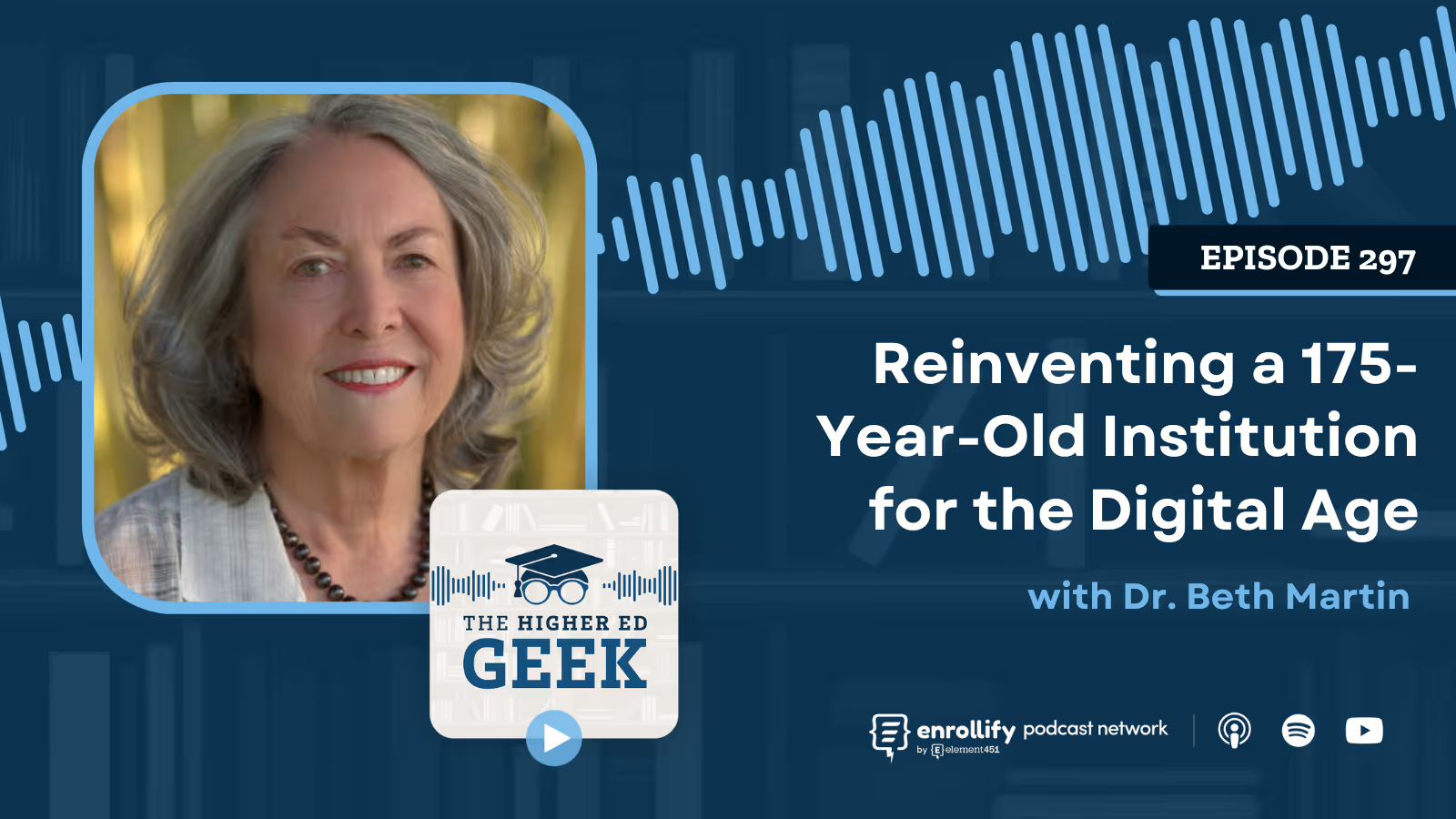
What do you do when your institution no longer needs acres of land and buildings? You sell it and build a more agile, student-centered future. In this episode, Dustin chats with Dr. Beth Martin, President of Notre Dame de Namur University (NDNU), about the bold and forward-thinking decision to sell their historic campus and double down on serving adult learners. Beth shares what it takes to lead through transformation, why selling land can be a catalyst—not a collapse—and how other institutions might reimagine their own paths forward.
Key Takeaways
- How higher ed institutions can rethink physical space to increase financial sustainability
- The rising importance of serving “post-traditional” students in higher education
- Strategic partnerships—like land sales—can empower institutional reinvention without mission loss
- Digital transformation, including hybrid and online modalities, is key to long-term institutional resilience
- Leadership mindset matters: innovation, flexibility, and mission-alignment are critical during periods of transition
- AI in higher education and instructional design are central to preparing students for future jobs
- NDNU’s model may serve as a playbook for other small institutions navigating the demographic cliff
Episode Summary: Reimagining a Century-Old Campus for a New Higher Ed Era
Why did NDNU sell its campus land to University of California Investments?
NDNU’s sale of its historic 46-acre campus to University of California Investments wasn't just a real estate transaction—it was a lifeline. Faced with a changing student demographic and escalating operational costs, especially related to deferred maintenance, the university needed a bold financial strategy. The land sale provided both immediate financial stability and flexibility for future growth, giving NDNU the capital required to invest in digital infrastructure, instructional design, and student-focused programming without sacrificing its mission or independence. Crucially, UC Investments offered not just funding, but empathy—allowing NDNU to remain on-site for five years while transitioning operations.
Who are NDNU’s students today, and how is the university serving them?
Today, NDNU is primarily serving “post-traditional” students—working adults with families, often returning to complete undergraduate degrees or pursue graduate programs. With an average student age of 35, NDNU recognized the need for flexible, convenient learning options. Over the past few years, the university has shifted dramatically from a residential liberal arts college to a digitally agile institution offering hybrid, fully online, and in-person classes. This shift has been supported by a robust Center for Excellence in Teaching and Learning and a team of instructional designers who have helped move 85% of courses online—a remarkable digital transformation for a formerly face-to-face campus.
How did leadership and mission alignment shape this transformation?
At the heart of NDNU’s evolution is a deep commitment to student success strategies and staying true to the mission of the Sisters of Notre Dame. Dr. Martin credits the institution’s board and the Sisters themselves for backing a strategic and business-minded plan for transformation. This included not only a strategic plan but a detailed business plan to guide the university’s growth. That long-view thinking—and a willingness to embrace bold action—enabled NDNU to make the difficult decision to sunset its traditional undergraduate programs and reimagine its identity. Today, faculty and staff are motivated not by nostalgia, but by a clear sense of purpose and opportunity to serve learners where they are, not where tradition dictates they should be.
Will this type of land-sale model become more common in higher ed?
Dr. Martin believes this model may become more common, especially in urban and high-value real estate markets like Silicon Valley. While not every institution sits on such valuable land, the idea of reimagining physical space—through leasing, downsizing, or shared services—is one that many institutions should be exploring. As the student body becomes more adult, mobile, and tech-savvy, being tethered to large, aging physical campuses may no longer serve either student success or institutional sustainability. This move by NDNU demonstrates how institutions can honor tradition while courageously embracing transformation.
About the Show: The Higher Ed Geek Podcast explores the impact of edtech on the student experience by speaking with diverse leaders from institutions, companies, and nonprofit organizations. Each week we aim to provide an engaging, fun, and relevant dose of professional development that honors the wide range of work happening all across the higher ed ecosystem. Come geek out with us! The Higher Ed Geek Podcast is hosted by Dustin Ramsdell and is a proud member of the Enrollify Podcast Network.
Connect With Our Host:
Dustin Ramsdell
About The Enrollify Podcast Network:
The Higher Ed Geek is a part of the Enrollify Podcast Network. If you like this podcast, chances are you’ll like other Enrollify shows too!
Some of our favorites include Generation AI.
Enrollify is produced by Element451 — the next-generation AI student engagement platform helping institutions create meaningful and personalized interactions with students. Learn more at element451.com.
Register for the AI Engage Summit — Oct 15–16, 2025
👉 Join us online from 12–4 PM ET each day for two afternoons of AI insights and training. Free to attend with on-demand access included. Register now.




.svg)
.svg)
