


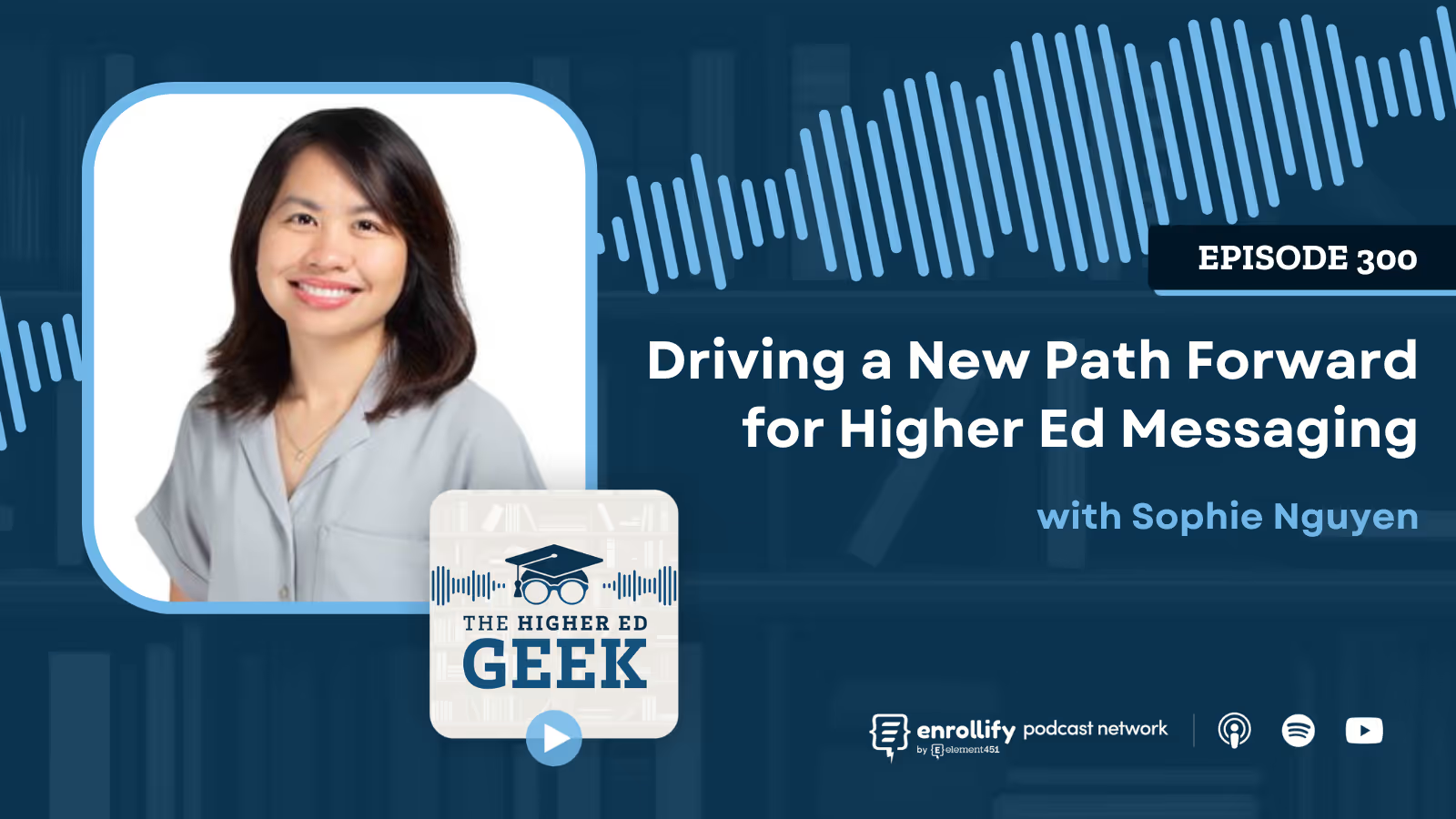




About the Episode
Got a story to tell? An innovative idea to share? Fill out our guest nomination form and let's chat!
About the Episode:
In this milestone 300th episode, Sophie Nguyen, Senior Policy Manager at New America, joins Dustin to unpack the newest findings from the new 2025 Varying Degrees report — a data-rich look at how Americans view the role, value, and future of higher education. From surprising bipartisan agreement to the communication failures of institutions, this episode reveals what colleges need to know and do to rebuild public trust and deliver on their promise.
This episode includes a sponsored question in partnership with Brian LeDuc, founder of Learning, Designed — a consulting practice and newsletter focused on helping higher ed institutions design more student-centered systems and strategies.
You can subscribe to the newsletter here.
Episode Summary: The Big Questions Answered in Episode 300
What is the Varying Degrees 2025 Report?
The Varying Degrees report is New America’s annual survey capturing public opinion on the state and value of higher education. Launched in 2017, the report aims to track how Americans perceive affordability, access, accountability, and overall trust in the system. This year’s edition, the ninth in the series, dives deep into questions around higher ed’s core purpose and public trust—particularly amid political scrutiny and economic uncertainty.
Sophie Nguyen shared that this year’s survey focuses on the fundamental roles people expect colleges to play, from teaching critical thinking and soft skills to conducting research and contributing to the economy. The data challenges media narratives by showing significant alignment between Democrats and Republicans on what higher ed should do—even when their rhetoric suggests otherwise.
What Surprised the Researchers About Public Opinion?
One of the biggest surprises? The strength of public consensus around higher education’s broader mission. While it’s true that fewer than half of Americans are fully satisfied with the current system, over 70% still see it as a worthwhile investment. There’s widespread agreement that colleges should teach soft skills, critical thinking, and civic responsibility—not just workforce prep.
Nguyen emphasized that despite political noise suggesting stark divisions, Americans are more aligned on higher ed’s purpose than media headlines suggest. For example, both parties show strong support for teaching communication and writing skills and for federal investment to improve affordability.
How Can Higher Ed Leaders Use This Data?
Nguyen’s call to action is clear: institutional leaders must do more to shift the narrative around higher ed—and they now have the data to do it. College presidents, marketers, and policymakers should leverage the Varying Degrees insights to frame messages that resonate across demographics and political divides.
Specifically, leaders should use this report to:
- Reinforce higher ed’s societal value—not just its ROI.
- Craft communications that address cost concerns while affirming long-term benefits.
- Develop cross-functional messaging strategies that include community impact, research contributions, and social mobility.
Nguyen also urges colleges to listen more intently to their own students. From affordability struggles to mental health needs, student-centered systems are no longer optional—they’re essential.
What Are the Implications for Policy?
Nguyen outlines that while colleges can’t control federal or state policy alone, they can advocate more effectively by speaking with a unified voice. Institutions should push for expanded Pell Grants, smarter loan reform, and targeted support for underserved populations. More importantly, they must explain why those changes matter—not just for students, but for the health of society at large.
Too often, the higher ed conversation is dominated by elite institutions that don't reflect the lived experiences of most learners. Nguyen calls for a broader coalition of institutions—especially those serving low-income and first-generation students—to step up and own the narrative.
How Do We Start Driving Change in Higher Education?
In the episode’s final segment, Sophie Nguyen delivers a powerful reflection on driving change: start with students. Understand their lives, struggles, and goals—not just inside the classroom, but outside of it. Nguyen stresses the transformative power of education and how institutional change begins by listening to the voices of those we serve.
Whether you're a policymaker or a frontline staff member, Nguyen's message resonates: impactful change in higher ed begins with empathy, research, and responsive action.
About the Show: The Higher Ed Geek Podcast explores the impact of edtech on the student experience by speaking with diverse leaders from institutions, companies, and nonprofit organizations. Each week we aim to provide an engaging, fun, and relevant dose of professional development that honors the wide range of work happening all across the higher ed ecosystem. Come geek out with us! The Higher Ed Geek Podcast is hosted by Dustin Ramsdell and is a proud member of the Enrollify Podcast Network.
Connect With Our Host:
Dustin Ramsdell
About The Enrollify Podcast Network:
The Higher Ed Geek is a part of the Enrollify Podcast Network. If you like this podcast, chances are you’ll like other Enrollify shows too!
Some of our favorites include Generation AI.
Enrollify is produced by Element451 — the next-generation AI student engagement platform helping institutions create meaningful and personalized interactions with students. Learn more at element451.com.
Register for the AI Engage Summit — Oct 15–16, 2025
👉 Join us online from 12–4 PM ET each day for two afternoons of AI insights and training. Free to attend with on-demand access included. Register now.




.svg)
.svg)
