


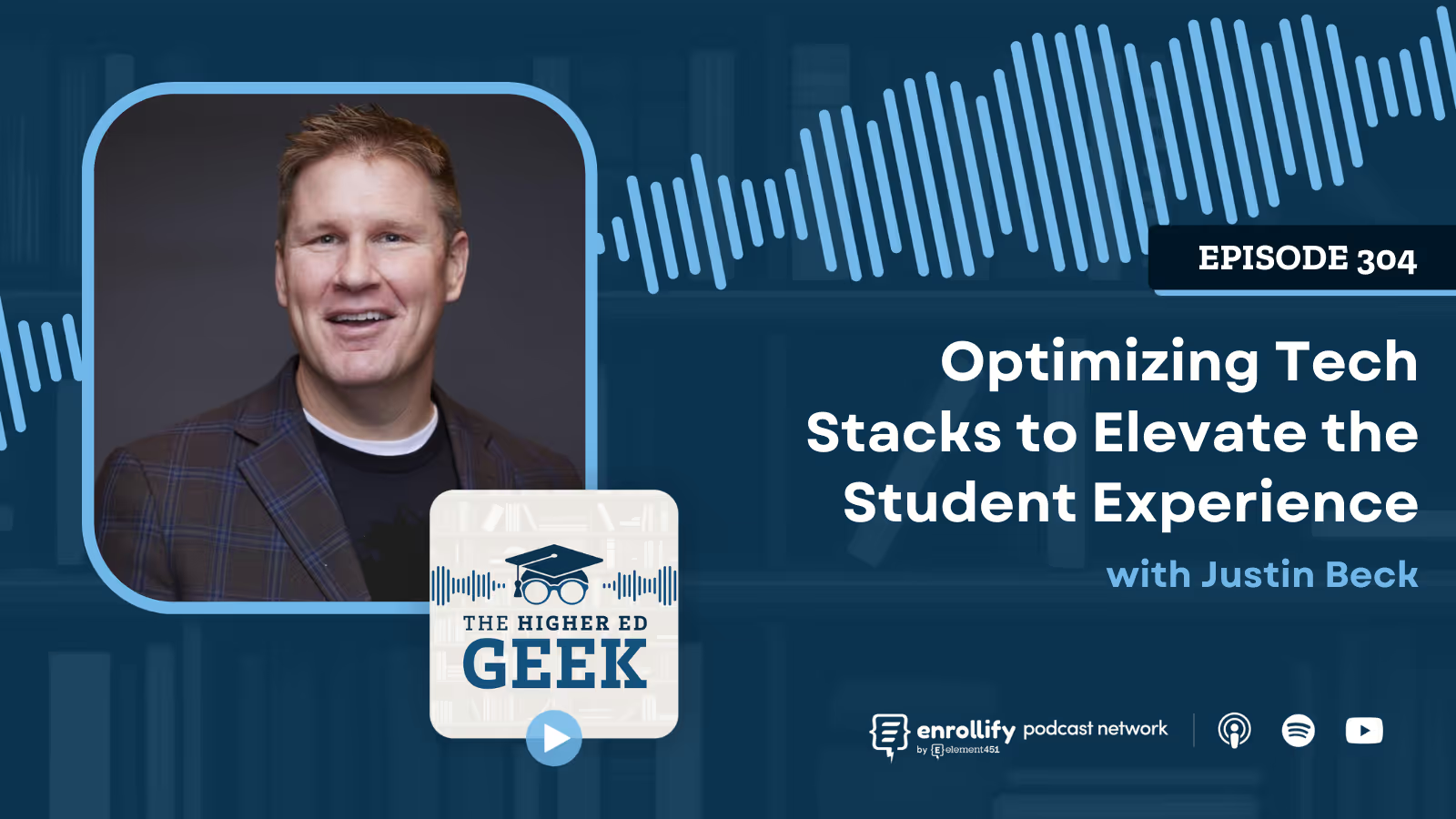




About the Episode
Got a story to tell? An innovative idea to share? Fill out our guest nomination form and let's chat!
About the Episode:
What happens when your institution has too many systems—and none of them talk to each other? In this episode, Dustin chats with Justin Beck, CEO of Gravyty, about how colleges and universities can stop tech creep from derailing the student experience. Drawing from his background at Apple, Blackboard, Salesforce, Instructure, and now Gravyty, Justin shares hard-earned insights on how schools can create a more connected, intuitive digital journey for students, staff, and alumni.
From the power of omnichannel engagement to surprising AI-driven fundraising wins, Justin breaks down how to work smarter with the tech you already have—and how to stop chasing perfection at the expense of progress.
Key Takeaways
- Today’s student experience is fractured. Most institutions use dozens of siloed systems that don’t talk to each other, creating friction for students and staff alike.
- Engagement platforms like Gravyty aim to unify the student journey. By sitting on top of CRMs, ERPs, and LMSs, Gravyty connects data across systems to support holistic engagement.
- AI is unlocking personalization at scale. From chatbots to alumni engagement, AI tools help identify trends, automate responses, and surface key data.
- Proactive engagement beats reactive support. Institutions must meet students where they are — with text nudges, in-app prompts, and 24/7 tools that anticipate needs.
- Don’t chase perfection — chase progress. Institutions don’t need a tech overhaul. They need to better use what they already have and focus on the 80% of students who benefit from streamlined, consistent engagement.
- Alumni engagement must start before graduation. Schools are using AI to proactively identify and build relationships with future donors before they even leave campus.
- Culture and collaboration matter. Tech alone isn’t the solution — higher ed leaders must break down departmental silos, share data, and co-design strategies across teams.
Episode Summary: Your Biggest Questions Answered from Episode 304 of The Higher Ed Geek Podcast
What is Gravyty and how does it help higher ed institutions?
Gravyty is the result of a merger between three organizations, including Ocelot and IVY.AI, and is designed to sit atop core campus systems like CRMs, ERPs, and LMSs. Instead of replacing these systems, Gravyty acts as an engagement layer — helping institutions communicate more effectively across the student lifecycle, from inquiry to alumni engagement.
As Justin Beck explains, most campuses are flooded with tools. But students don’t see systems — they just see the institution. Gravyty helps unify that front-facing experience, even if the backend is still complex. Whether through chatbots, automated workflows, or omnichannel communications, Gravyty centralizes student engagement to reduce confusion and boost outcomes.
Why are institutional tech stacks so bloated, and how did we get here?
Over time, institutions have invested in best-in-class tools for specific functions: recruitment, advising, financial aid, housing, advancement — you name it. But the result has been a “tech creep,” with dozens (sometimes hundreds) of disconnected tools working in silos.
Justin traces this back to the rise of niche solutions filling gaps left by core systems. And while some tools (like LMSs) have achieved wide adoption, many others still operate independently, without integration or coordination. This fragmented infrastructure puts the burden on students to navigate systems — often with frustrating results.
What’s the risk of fragmented systems for students and staff?
When systems don’t communicate, students are left to guess which office handles what, or where to go for support. Justin shares a real example: at a major R1 university, changing a major still requires walking a paper form across campus during business hours. This analog process in a digital age creates barriers that can affect retention and student satisfaction.
For staff, disjointed tools mean duplicated efforts, missed data insights, and limited collaboration. Departments often have blind spots about how their work impacts other parts of the student journey — especially when 40% of chatbot questions in one office are actually about something else entirely.
How does AI fit into solving these problems?
AI is a powerful enabler of both personalization and scale. Chatbots can now handle thousands of common questions, freeing up staff to focus on complex needs. AI also identifies trends — like FAQs going unanswered — and helps institutions update knowledge bases or reroute inquiries more effectively.
In one example, a financial aid chatbot revealed that a large portion of inquiries were about housing. This insight allowed Gravyty to help the institution update content, route queries more accurately, and prompt collaboration across departments. That’s the promise of AI: real-time insights that lead to real-world improvements.
Should every department use its own tools, or is centralization better?
While departmental autonomy can lead to innovation, Justin argues we’re entering a new phase — one that demands more standardization and interoperability. He calls for a new “interoperability movement,” much like what happened with LMSs and the creation of LTI standards.
The goal isn’t to stifle innovation, but to ensure systems can talk to each other, share data, and create a unified experience. That means investing in middleware, encouraging bi-directional data flows, and making sure tools like chatbots and apps pull from — and feed back into — your core systems.
What’s a good example of proactive engagement powered by technology?
Justin shares an example from an Ohio institution that used behavioral data — like website visits and app activity — to trigger text message nudges for prospective students. These nudges brought users back to the same place they left off, making the experience feel seamless and personalized.
That’s the future: not bombarding students with calls and emails, but meeting them where they are, when they need support, and helping them continue on their journey. The tech already exists. The challenge is integrating it intelligently and using it consistently.
How can institutions better engage alumni and future donors?
One of the most exciting use cases for AI and engagement tools is in the advancement space. Gravyty helped one institution identify two major donors — one of whom ended up giving $15 million — through AI-powered LinkedIn scraping and digital profiling.
Why did this matter? Because the alumni office had been denied access to student data by another department. The workaround not only broke down silos, but showed the value of cross-functional collaboration. The earlier institutions start engaging students as future alumni, the more meaningful those relationships — and gifts — become.
What advice would you give to institutional leaders looking to improve student experience through tech?
Justin offers three powerful pieces of advice:
- Invite students to the table. Too many “student experience” decisions are made without student input. Involve them early and often in journey mapping, beta testing, and workflow design.
- Don’t chase perfection. Higher ed often stalls on initiatives because of edge-case concerns. Focus on improving the experience for the 80% of students in the middle — not the exceptions at the margins.
- Be scrappy and bold. You don’t need more tools — you need better use of what you already have. Start small, experiment often, and rally teams around a shared vision for improving the student experience.
About the Show: The Higher Ed Geek Podcast explores the impact of edtech on the student experience by speaking with diverse leaders from institutions, companies, and nonprofit organizations. Each week we aim to provide an engaging, fun, and relevant dose of professional development that honors the wide range of work happening all across the higher ed ecosystem. Come geek out with us! The Higher Ed Geek Podcast is hosted by Dustin Ramsdell and is a proud member of the Enrollify Podcast Network.
Connect With Our Host:
Dustin Ramsdell
About The Enrollify Podcast Network:
The Higher Ed Geek is a part of the Enrollify Podcast Network. If you like this podcast, chances are you’ll like other Enrollify shows too!
Some of our favorites include Generation AI.
Enrollify is produced by Element451 — the next-generation AI student engagement platform helping institutions create meaningful and personalized interactions with students. Learn more at element451.com.






.svg)
.svg)
