


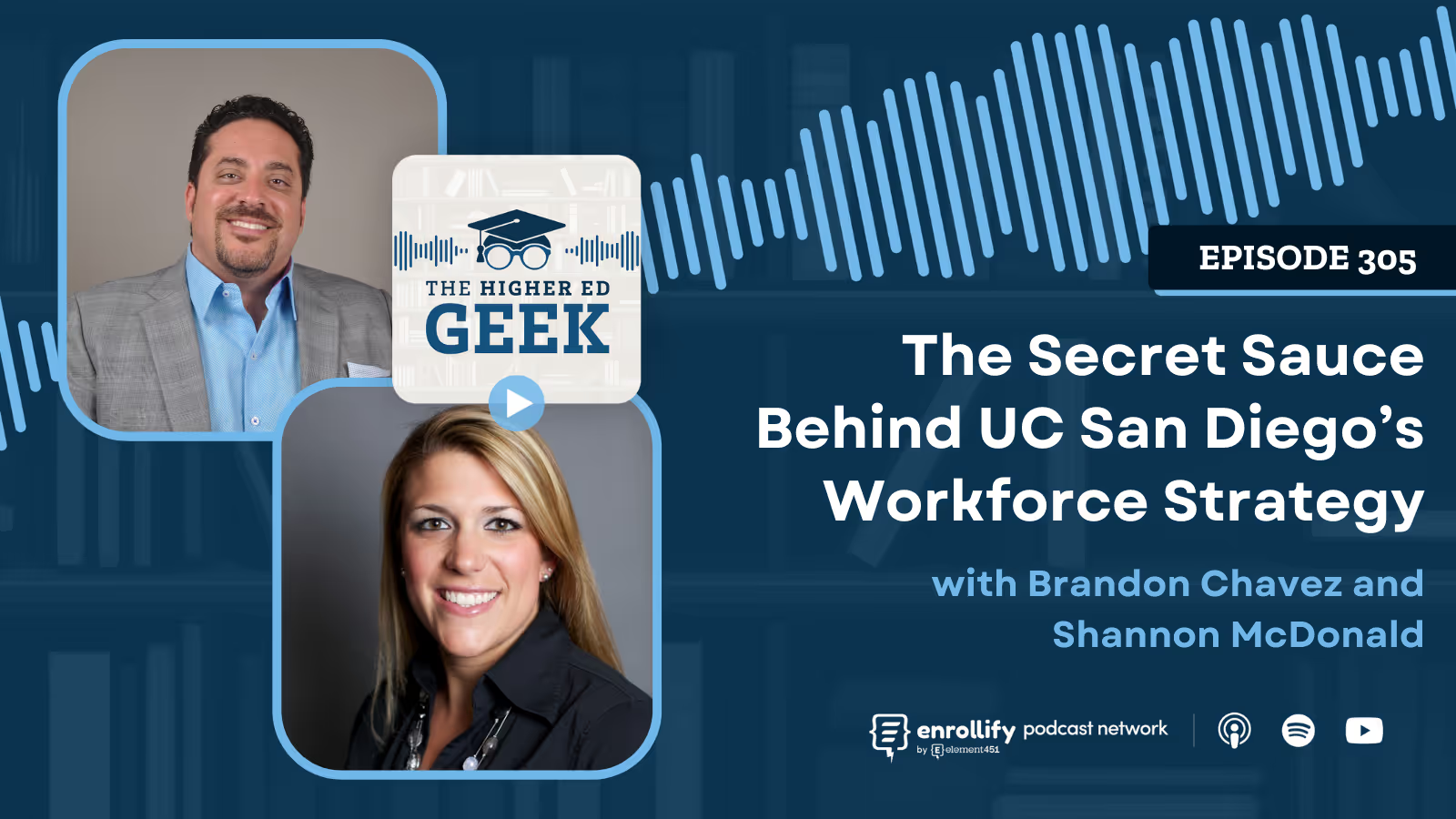




About the Episode
Got a story to tell? An innovative idea to share? Fill out our guest nomination form and let's chat!
About the Episode:
In this episode, Dustin chats with Shannon McDonald and Brandon Chavez from the Division of Extended Studies at UC San Diego about how continuing education can be a powerful catalyst for institutional resilience and workforce transformation. With decades of experience between them, Shannon and Brandon share how their team builds agile, data-informed, employer-driven programs that deliver value to both learners and local industries. From stackable credentials to custom corporate partnerships, this conversation is full of practical insights on how to make higher ed more accessible, responsive, and sustainable.
Key Takeaways
- Continuing education is redefining who higher ed serves, making learning more accessible for nontraditional students, alumni, retirees, and working professionals.
- Corporate partnerships are key to program innovation, helping institutions design agile, real-world-relevant curricula that meet workforce demands.
- Self-supporting CE units like DES offer sustainable revenue streams, enabling rapid course development and workforce alignment without reliance on state or federal funding.
- CE fosters equity in education access, offering stackable credentials, flexible pathways, and employer-sponsored upskilling opportunities.
- Advisory boards with industry leaders help CE stay future-ready, ensuring course content aligns with in-demand skills and technologies.
- Employers are not just funders—they’re stakeholders, contributing instructors, curricula insights, and real-world context to CE programming.
- Data-driven course development enables responsive programming aligned to hiring trends, economic shifts, and learner needs.
- CE programs can serve as testbeds for innovation across the broader campus, offering agility traditional academic structures often lack.
Episode Summary
How is continuing education helping higher ed institutions stay resilient, relevant, and responsive?
This episode answers that and much more.
What role does continuing education play in transforming higher ed?
Shannon McDonald frames continuing education as a gateway to lifelong learning and a radical redefinition of the traditional university audience. Rather than focusing exclusively on 18–22-year-olds, CE reaches learners across life stages—from high schoolers and working professionals to retirees and career changers. This broader reach allows institutions to position themselves as long-term partners in learning, rather than transactional providers of degrees. Brandon Chavez echoes this, highlighting CE’s flexibility, accessibility, and lower cost barriers, making it a lifeline for learners who can’t commit to traditional full-time study.
Programs at UC San Diego's DES offer stackable credentials, certificates, and microcredentials that allow students to learn at their own pace and return when ready. This modular model supports lifelong reskilling and upskilling in an economy that increasingly demands agility from workers and educators alike. CE not only fills this gap—it defines it.
How are corporate partnerships redefining CE program development?
Brandon describes UC San Diego’s corporate partnerships as “co-creative,” not transactional. These collaborations prioritize mutual value, with companies identifying key skill gaps in their workforce and DES rapidly responding with custom programming. This alignment ensures training is both immediately applicable and scalable. Often, employer-specific programs are later adapted for broader public use, extending their impact beyond the initial partnership.
Employers also play a strategic role in shaping curriculum through advisory boards and even serve as instructors, bringing real-world expertise into the classroom. These relationships ensure DES courses remain industry-relevant, responsive to labor market needs, and deeply practical in their application.
Shannon adds that companies frequently underwrite new programs, offer scholarships, and sponsor employee participation, broadening access to education. These corporate ties aren’t just funding mechanisms—they’re engines for equity, innovation, and long-term workforce development.
How does continuing education help institutions endure and thrive?
Shannon points out that DES is a self-supporting nonprofit unit, giving it the financial independence to be both sustainable and agile. Without reliance on state or federal funds, the division operates more like a mission-driven business—one that reinvests in public service and workforce-aligned offerings. That structure has made it inherently resilient during periods of economic uncertainty and shifting enrollment trends.
Brandon emphasizes that during economic downturns, demand for CE often increases. Employees seek new skills to pivot careers or secure advancement, and forward-thinking employers double down on training as a cost-effective alternative to turnover. One DES program saved a corporate partner $50,000 per internal improvement project—demonstrating the tangible ROI of investing in CE. These data points give CE units a clear edge in proving their value, both to employers and their own institutions.
Together, Shannon and Brandon argue that CE units can serve as innovation incubators, offering models of responsiveness, speed, and relevance that the rest of campus can learn from.
What’s next for UC San Diego’s Division of Extended Studies?
Looking ahead, Brandon’s goal is to position DES as the “easiest way for nontraditional learners to access UC San Diego.” His team is focused on deepening existing partnerships and developing new ones that extend DES’s reach across the region. The vision? A robust, accessible bridge between university resources and community needs.
Shannon shared that more graduate-level certificates are on the horizon, particularly those co-created with campus departments like the School of Computing and Information Technologies. These advanced certificates serve as entry points into master’s programs and allow professionals to access high-quality education without committing to full degrees upfront.
This model supports a stackable, modular education system where learning pathways are built with flexibility, career alignment, and upward mobility in mind. It’s exactly the kind of thinking that the future of higher ed demands.
About the Show: The Higher Ed Geek Podcast explores the impact of edtech on the student experience by speaking with diverse leaders from institutions, companies, and nonprofit organizations. Each week we aim to provide an engaging, fun, and relevant dose of professional development that honors the wide range of work happening all across the higher ed ecosystem. Come geek out with us! The Higher Ed Geek Podcast is hosted by Dustin Ramsdell and is a proud member of the Enrollify Podcast Network.
Connect With Our Host:
Dustin Ramsdell
About The Enrollify Podcast Network:
The Higher Ed Geek is a part of the Enrollify Podcast Network. If you like this podcast, chances are you’ll like other Enrollify shows too!
Some of our favorites include Generation AI.
Enrollify is produced by Element451 — the next-generation AI student engagement platform helping institutions create meaningful and personalized interactions with students. Learn more at element451.com.




.svg)
.svg)
