






About the Episode
Got a story to tell? An innovative idea to share? Fill out our guest nomination form and let's chat!
About the Episode:
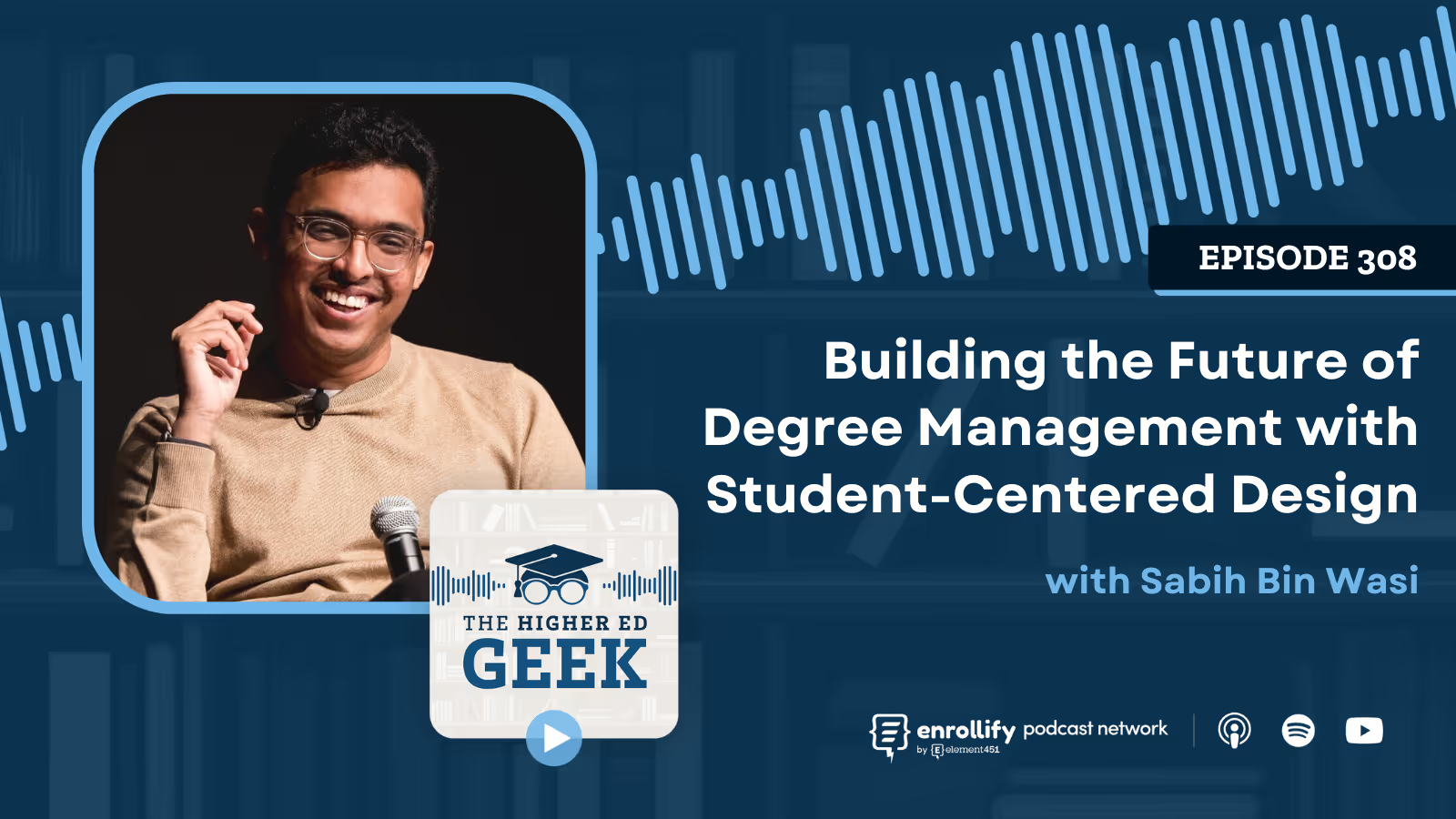
In this episode, Dustin chats with Sabih Bin Wasi, Founder and CEO of Stellic, about rethinking course registration, degree planning, and the broader student experience. What started as a tool to help Sabih navigate his own college journey as a first-gen student has evolved into a platform used by over a million students worldwide. Together, they unpack why registration is more than a transactional task—it’s a pivotal point that shapes academic, personal, and professional futures.
Whether you’re a registrar, advisor, or enrollment leader, this conversation will challenge you to question outdated systems and consider how better tech (and mindset shifts) can improve both the student and institutional experience.
Episode Summary: Why Course Registration Deserves a Total Makeover
Why is course registration such a critical touchpoint in the student journey?
It may seem like a routine task, but course registration is one of the most high-stakes activities students face each semester. Sabih Bin Wasi emphasizes how choosing just five courses from thousands of possibilities not only impacts a student’s current schedule but also shapes their long-term academic and professional path. Take a wrong turn, and you could delay graduation, miss financial aid benchmarks, or lose out on internships. Moreover, advisors are often overwhelmed—managing 300–500 students each—which further complicates the support ecosystem. This process isn't just about class selection; it's a foundational piece of the student experience that demands intentionality and smarter tools.
From the institution’s side, registration problems also create reputational headaches. Provosts and presidents often get parent complaints tied directly to students being unable to register for needed courses. This is a prime performance indicator in education, and it’s screaming for reform. Modernizing this process is a strategic imperative for improving student outcomes and institutional trust.
What’s broken with transfer credit evaluation—and why does it matter?
Transfer credits remain one of the most under-addressed and opaque areas of higher ed operations. Sabih shares his own story of unknowingly retaking courses he’d already completed—simply because he didn’t know how to navigate the system or what “transfer credit” even meant. This experience isn’t rare. In fact, many students lose significant progress when transferring, often because institutions process requests manually and inconsistently.
What’s worse? Equity gaps emerge when two students submit the same course from the same school and receive different outcomes due to subjective evaluations. Most of this stems from outdated systems and tribal knowledge stored in someone’s head, rather than structured policy. The solution? Platforms that codify articulation rules, automate transcript analysis, and deliver near-instant clarity on credit applicability. Not only does this support enrollment marketing goals by attracting more transfer students, but it also enhances student satisfaction and retention.
Where are the most promising opportunities for institutions to innovate?
Stellic’s work is grounded in creating more transparent, personalized, and data-rich systems for course planning. One of the biggest opportunities lies in shifting from institution-first scheduling (where the admin sets the course times in a vacuum) to student-first scheduling (where actual student demand influences course availability and delivery modes). With the right education market research and analytics, institutions can adjust offerings in real time, avoiding bottlenecks and excess demand.
AI in higher education is also reshaping how pathways are built and visualized. Sabih mentions using AI to soft-annotate courses with skills and outcomes, build personalized pathways based on student aspirations, and even recommend or discourage certain course combinations based on historical performance. These innovations not only reduce friction in the registration process, but they also actively help students avoid burnout and improve student success strategies.
Finally, institutions must reimagine registration day itself. Why should students experience anxiety levels akin to snagging Taylor Swift tickets? The process should be seamless, intuitive, and even—dare we say—delightful.
About the Show: The Higher Ed Geek Podcast explores the impact of edtech on the student experience by speaking with diverse leaders from institutions, companies, and nonprofit organizations. Each week we aim to provide an engaging, fun, and relevant dose of professional development that honors the wide range of work happening all across the higher ed ecosystem. Come geek out with us! The Higher Ed Geek Podcast is hosted by Dustin Ramsdell and is a proud member of the Enrollify Podcast Network.
Connect With Our Host:
Dustin Ramsdell
About The Enrollify Podcast Network:
The Higher Ed Geek is a part of the Enrollify Podcast Network. If you like this podcast, chances are you’ll like other Enrollify shows too!
Some of our favorites include Generation AI.
Enrollify is produced by Element451 — the next-generation AI student engagement platform helping institutions create meaningful and personalized interactions with students. Learn more at element451.com.







.svg)
.svg)
