






About the Episode
Got a story to tell? An innovative idea to share? Fill out our guest nomination form and let's chat!
About the Episode:
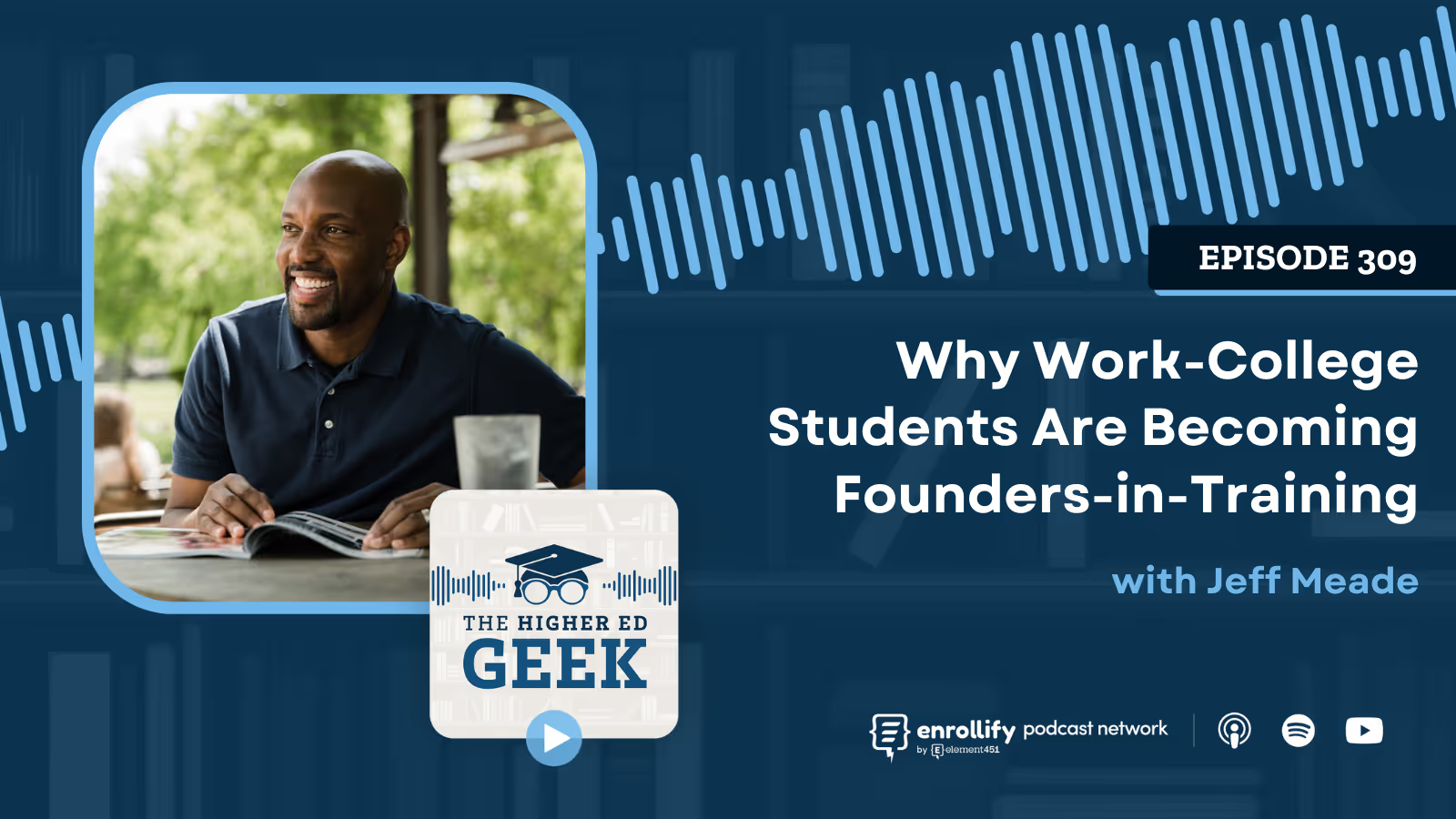
What if launching a business was a graduation requirement? At Paul Quinn College, that’s exactly what students are doing.
In this episode, Dustin sat down with Jeff Meade from Paul Quinn College (PQC), who shares how this HBCU is integrating entrepreneurship into the student experience—not as an elective or a club, but as a campus-wide, curriculum-infused mission. You’ll hear how students from every discipline are learning to think like founders, pitch real ideas, and even secure funding.
Key Takeaways
- Every student at Paul Quinn College is required to start and operate a business to graduate.
This groundbreaking approach redefines experiential learning and integrates entrepreneurship across the curriculum. - Entrepreneurship is treated as a mindset—not just a major.
Students across all disciplines, from education to physical therapy, are empowered to think and act like entrepreneurs. - Curriculum-wide collaboration drives venture-based learning.
Faculty across departments incorporate real student-run business ventures into assignments and course outcomes, from accounting to marketing. - AI and technology are being woven into entrepreneurship education.
Guest experts and in-residence entrepreneurs help students explore real-world applications of AI to scale and innovate their business ideas. - The program is building soft landings for risk-taking.
Students pitch real business ideas, receive funding, and get mentoring—all in an academic environment that supports failure as a part of learning.
Episode Summary
What is the “Every Quinnite is an Entrepreneur” program at Paul Quinn College?
Jeff Meade introduces the initiative as a bold reimagination of what experiential learning can look like in higher education. The program requires every student—regardless of major—to start and operate a business as part of their degree. It's built on Paul Quinn’s foundation as an urban work college, where students already engage in meaningful work experiences both on and off campus. The entrepreneurship initiative adds another dimension, focused on cultivating an entrepreneurial mindset in every student.
The program kicks off with incoming freshmen during a summer bridge experience, where students begin exploring business ideas, collaborating in teams, and pitching ventures. From there, entrepreneurship becomes a longitudinal experience embedded throughout their academic journey, with upper-level classes in marketing, finance, and accounting contributing to real business-building outcomes.
How does entrepreneurship integrate with non-business majors?
A major strength of the program lies in its inclusivity—it’s not just for business students. Jeff shares examples of students who initially intended to become teachers or therapists but discovered that entrepreneurial thinking could open more doors and equip them to lead change in their communities. By scratching their own itch—starting with a personal or community problem to solve—students realize how they can build meaningful ventures that align with their values and passions.
This reframing helps students build confidence, see broader career possibilities, and develop transferable skills like storytelling, problem-solving, and leadership. The aim is not to push students to all become startup founders, but to instill intrapreneurial thinking they can apply in any field.
What role does AI and technology play in the program?
Though the college doesn’t offer AI-related majors, technology is being gradually woven into student projects and entrepreneurial thinking. Guest experts introduce students to practical use cases of AI—from building pitch decks to scaling customer service. Jeff emphasizes the importance of moving beyond flashy use cases to helping students identify when and how technology can improve their products, streamline operations, or enhance customer experience.
Importantly, AI isn't the starting point—students begin by identifying real problems they care about. Technology is then layered in as a tool to help scale or improve their solution. This approach encourages thoughtful integration rather than tech for tech’s sake.
What’s next for the program?
As the program wraps up its first full year, it’s entering an exciting phase. Spring semester will focus on investing in student-run businesses that show real promise. Students will work with mentors through an entrepreneur-in-residence initiative, build go-to-market strategies, and begin operations with institutional support.
The vision is to continue integrating these ventures into the broader curriculum so that students in various classes contribute to their success—creating a symbiotic, ecosystem-wide approach to experiential learning. Jeff also shares plans to work more closely with entrepreneurship leaders at other institutions like Babson College and Wharton to shape the program's growth and sustainability.
What advice does Jeff offer to other higher ed leaders?
Jeff encourages institutions not to reinvent the wheel, but to lean into partnerships and peer networks. He has found value in reaching out to leaders in entrepreneurship education, local accelerators, and subject matter experts. His key advice? Make experiential learning real, not theoretical. Let students take risks, fail safely, and build meaningful solutions in a supportive academic setting.
About the Show: The Higher Ed Geek Podcast explores the impact of edtech on the student experience by speaking with diverse leaders from institutions, companies, and nonprofit organizations. Each week we aim to provide an engaging, fun, and relevant dose of professional development that honors the wide range of work happening all across the higher ed ecosystem. Come geek out with us! The Higher Ed Geek Podcast is hosted by Dustin Ramsdell and is a proud member of the Enrollify Podcast Network.
Connect With Our Host:
Dustin Ramsdell
About The Enrollify Podcast Network:
The Higher Ed Geek is a part of the Enrollify Podcast Network. If you like this podcast, chances are you’ll like other Enrollify shows too!
Some of our favorites include Generation AI.
Enrollify is produced by Element451 — the next-generation AI student engagement platform helping institutions create meaningful and personalized interactions with students. Learn more at element451.com.







.svg)
.svg)
