






About the Episode
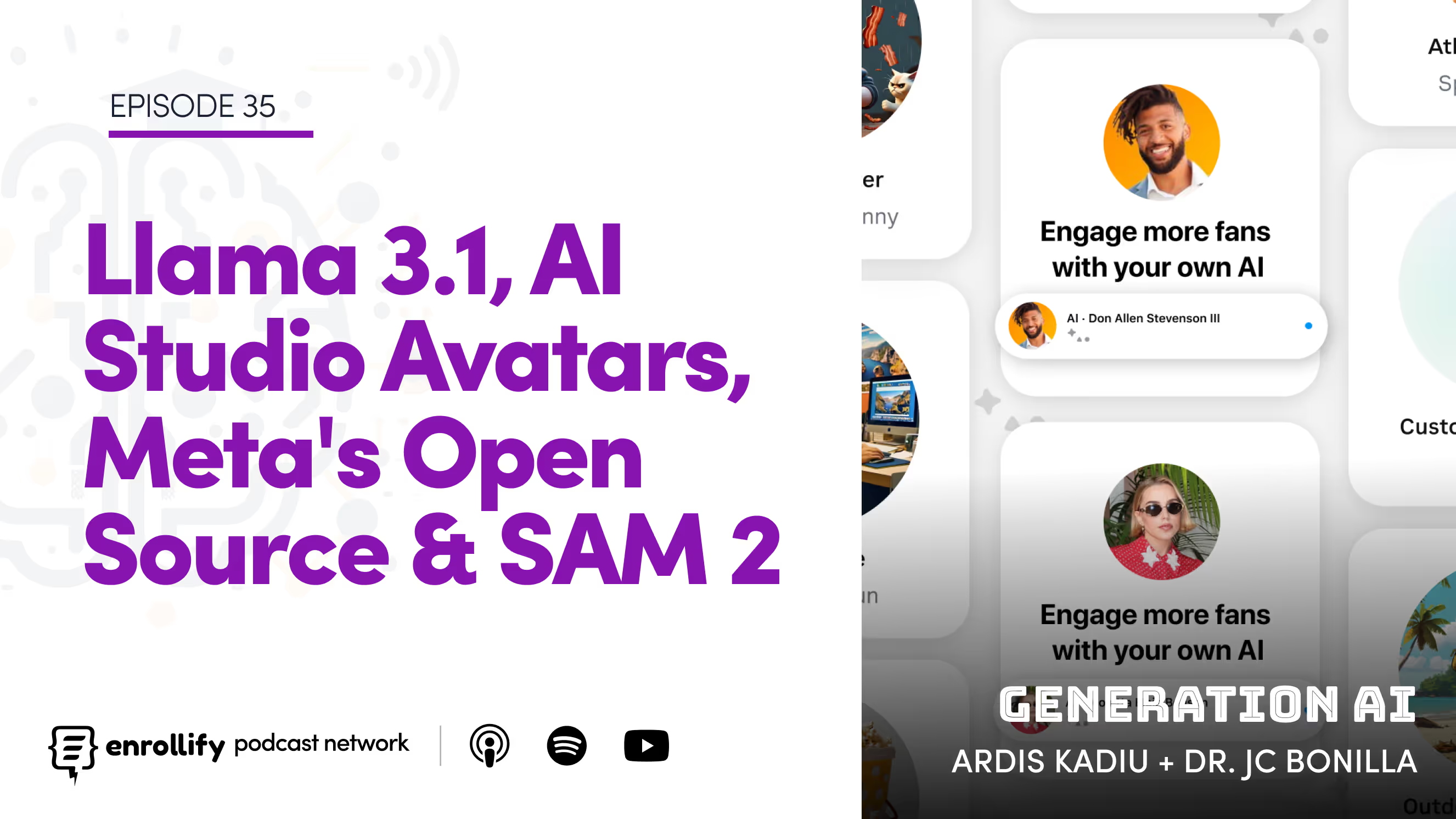
About the Episode: This episode of Generation AI explores Meta's recent developments in AI, focusing on the release of Llama 3.1 and AI Studio. The hosts discuss how these open-source AI models are matching or surpassing closed-source alternatives, potentially making AI more accessible and affordable. They explore the implications for higher education, including improved AI writing tools and personalized learning experiences. The conversation also touches on the broader impact of these technologies on social media interactions and daily life.
Llama 3.1 Release
- 405 billion parameter model, largest open-source AI to date
- 128,000 token context length
- Multilingual support: French, German, Hindi, Italian, Spanish
- Trained on over 15 trillion tokens using 16,000 Nvidia H100 GPUs
- Performance competitive with GPT-4 and Claude 3.5 Sonnet
- More cost-efficient operation compared to competitors
AI Studio Launch
- Platform for creating custom AI avatars without technical skills
- Users can design AIs for various purposes: humor, meme generation, travel advice
- Creators can use AI to answer common DMs and story replies
- Replaces previous attempt at celebrity AI chatbots
Meta's Open Source Vision
- Aim to democratize access to advanced AI technologies
- Partnerships with Amazon, Databricks, and Nvidia for infrastructure support
- Potential for synthetic data generation and model distillation
- Integrated safety features: Llama Guard 3 and Prompt Guard
- Aligns with U.S. policy discussions on open-source AI investment
Segment Anything 2 (SAM 2) Release
- Unified model for real-time object segmentation in images and videos
- State-of-the-art performance in promptable segmentation
- Open-sourced with Apache 2.0 license
- Includes SA-V dataset: 51,000 real-world videos, 600,000+ masklets
- Potential applications in video effects, creative tools, and data annotation
Key Takeaways
- Llama 3.1’s Impact: Meta’s open-source Llama 3.1 model surpasses GPT-4 and Claude 3.5 in several benchmarks, making it the most advanced freely available AI model.
- The Linux of AI: By committing to open-source development, Meta aims to make AI accessible, affordable, and adaptable for all industries.
- AI Studio Revolution: With no-code tools for creating personalized AI assistants, Meta is enabling seamless integration of AI into WhatsApp, Instagram, and Messenger.
- Broader Implications: Open-source AI empowers innovation, reduces costs, and provides scalable solutions for education, business, and beyond.
Episode Summary
Llama 3.1: A New Frontier for Open-Source AI
Meta’s Llama 3.1 represents a leap forward in the capabilities of open-source AI models. Trained on 405 billion parameters using 15 trillion tokens, this model achieves state-of-the-art performance rivaling proprietary models like GPT-4. Its standout features include:
- Massive Context Windows: Up to 128,000 tokens for more comprehensive reasoning.
- Multilingual Proficiency: Support for languages like French, Hindi, Spanish, and more.
- Fine-Tuned Tool Use: Integration-friendly design for enterprise applications.
Meta’s commitment to open-source makes advanced AI accessible to businesses, universities, and developers, empowering a new wave of innovation across sectors.
The Role of AI Studio: Personalizing AI for Everyday Use
AI Studio takes Llama 3.1’s power and packages it into user-friendly tools for creating custom AI assistants. Imagine building a WhatsApp bot that responds to family messages, or an Instagram AI that curates content and interacts with followers—all without coding expertise.
Key features of AI Studio include:
- Customizable Personas: Users can design assistants with tailored personalities and skills.
- Integration with Meta Apps: Seamlessly deploy AIs in WhatsApp, Instagram, and Messenger.
- No Tech Skills Required: Empowering individuals and small businesses to leverage AI.
This democratization of AI means higher education professionals can create chatbots for student engagement, automate administrative tasks, and personalize communication strategies with ease.
The Open-Source Advantage
Meta’s strategy to create the “Linux of AI” positions Llama 3.1 as a foundational model for the next generation of AI applications. By making AI models open and interoperable, Meta is addressing key pain points for institutions:
- Lower Costs: Free access to powerful models reduces financial barriers.
- Greater Customization: Developers can fine-tune models to meet specific needs.
- Rapid Innovation: Open-source fosters a community-driven approach to improving AI capabilities.
Connect With Our Co-Hosts:
Ardis Kadiu
https://www.linkedin.com/in/ardis/
https://twitter.com/ardis
Dr. JC Bonilla
https://www.linkedin.com/in/jcbonilla/
https://twitter.com/jbonillx
About The Enrollify Podcast Network:
Generation AI is a part of the Enrollify Podcast Network. If you like this podcast, chances are you’ll like other Enrollify shows too! Some of our favorites include The EduData Podcast and Visionary Voices: The College President’s Playbook.
Enrollify is made possible by Element451 — the next-generation AI student engagement platform helping institutions create meaningful and personalized interactions with students. Learn more at element451.com.





.svg)
.svg)
