






About the Episode
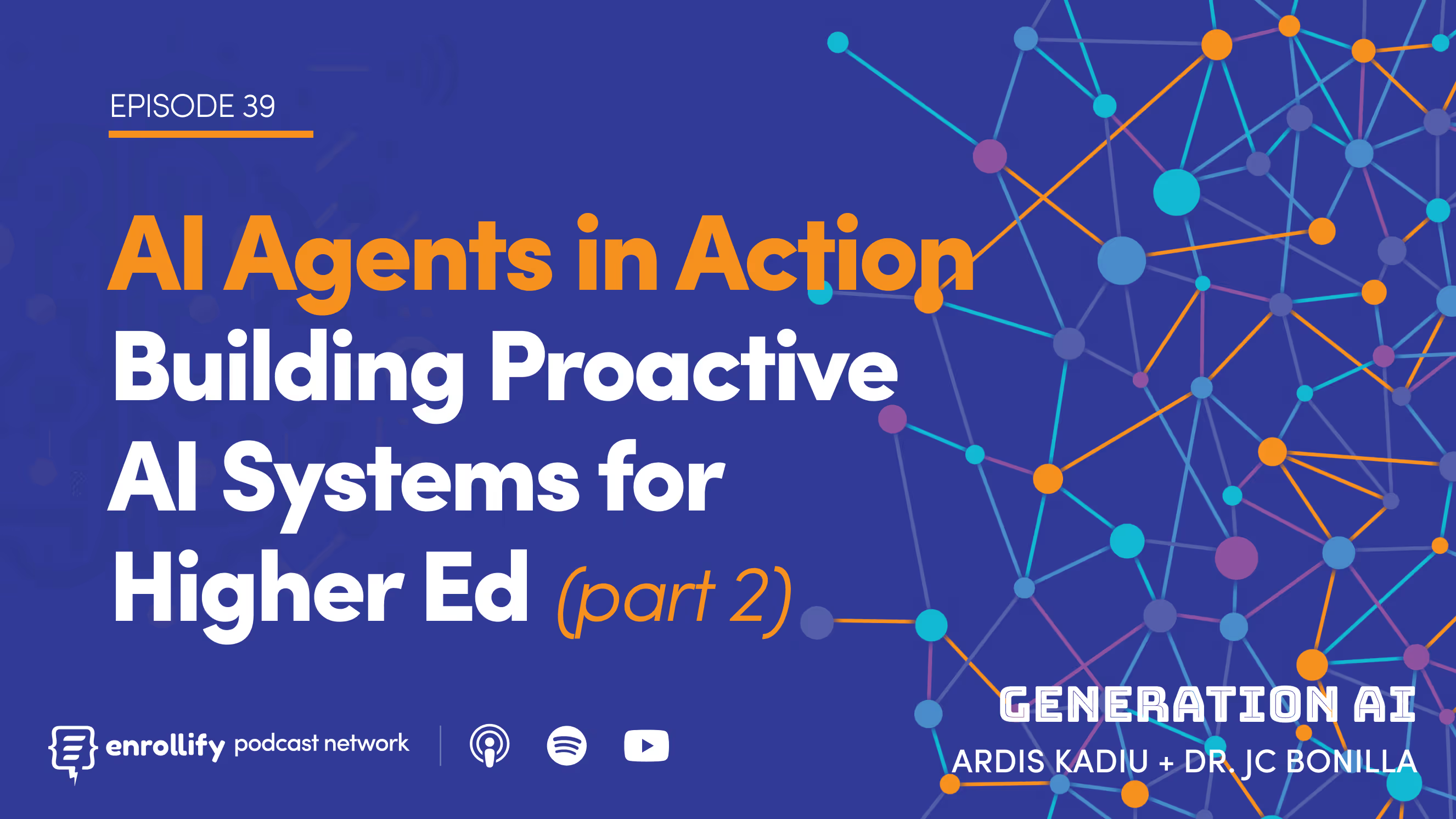
About The Episode: In this second episode of a two-part series, Generation AI dives deep into the practical applications of proactive AI assistants in higher education. Hosts Ardis Kadiu and Petar Djordjevic discuss how Element451 is implementing AI agent systems to revolutionize student engagement and recruitment. They explore the transition from reactive to proactive AI, explaining how these systems can automate and personalize the entire student journey, from initial inquiry to enrollment.
Key Takeaways
- Proactive AI Assistants Redefine Engagement: Moving from reactive to proactive systems allows AI to act autonomously based on student data and overarching goals.
- Dynamic Journeys for Every Student: AI assistants can create and adjust personalized workflows for individual students in real-time.
- Human Oversight Remains Critical: Even with autonomy, proactive AI assistants provide transparency and control to ensure trust and ethical deployment.
- The Segment of One is Here: Personalized, data-driven interactions at scale are transforming the way higher education institutions engage with students.
Episode Summary
What Are Proactive AI Assistants?
Proactive AI assistants operate autonomously to achieve predefined goals, using real-time data and context to guide decisions. Unlike traditional workflows that rely on manual inputs, proactive systems dynamically adapt based on a student’s interactions, preferences, and journey stage. This allows for truly personalized engagement at scale, a crucial component for higher education institutions.
How Proactive AI Fits Into Higher Ed
1. The Challenge: Static Workflows
Traditional systems require staff to design detailed workflows for every possible student scenario. This static approach is time-consuming, inflexible, and often fails to account for unique student behaviors.
- Example: A workflow might consist of sending an email, assigning a counselor task, and following up with SMS reminders. But if a student bypasses one step (e.g., applies through a different channel), the system cannot adapt without manual intervention.
2. The Solution: Dynamic, AI-Powered Journeys
Proactive AI assistants analyze a student’s context and decide the next best action—whether to send an email, follow up with a call, or wait for a response before proceeding. This is akin to having a personal advisor for each student, but one that operates at scale.
- Key Feature: The assistant dynamically writes the next step in real-time, tailoring engagement based on the latest data.
3. The Outcome: Better Engagement
With AI analyzing massive amounts of data—application forms, email open rates, prior interactions, and more—institutions can deliver personalized, relevant, and timely communications that improve outcomes.
Technical Insights: How It Works
1. Decision-Making in Real-Time
- Triggers: An action like submitting an RFI form starts a workflow.
- Context Analysis: The AI assistant gathers data from the student’s profile and previous interactions to determine the next action.
- Dynamic Actions: The system decides whether to send an email, assign a task, or take another step.
2. Collaboration Among Specialized Agents
Proactive AI assistants rely on a network of specialized agents:
- Email Writer Agent: Personalizes communication.
- Voice Call Agent: Handles outreach via phone.
- Data Filter Agent: Ensures only relevant data is passed to decision-making processes.These agents work together, with a central orchestrator ensuring alignment toward the institution’s goals.
3. Built-In Oversight
Institutions retain control through transparency:
- Approval Mechanisms: Critical actions require staff approval.
- Reasoning Logs: AI assistants provide explanations for their decisions, helping staff understand the logic behind actions.
Ethical and Practical Considerations
1. Trust and Transparency
Institutions must ensure staff can monitor and intervene in AI-driven processes. Systems should provide clear reasoning for actions and allow human oversight where necessary.
2. Data Privacy
Proactive AI assistants rely on large amounts of data. By leveraging techniques like tokenization and obfuscation, sensitive information can be protected while maintaining functionality.
3. Scalability and Efficiency
By automating repetitive tasks and enabling staff to focus on strategic initiatives, proactive AI assistants help institutions achieve more with fewer resources.
Connect With Our Co-Hosts:
Ardis Kadiu
https://www.linkedin.com/in/ardis/
https://twitter.com/ardis
Dr. JC Bonilla
https://www.linkedin.com/in/jcbonilla/
https://twitter.com/jbonillx
About The Enrollify Podcast Network:
Generation AI is a part of the Enrollify Podcast Network. If you like this podcast, chances are you’ll like other Enrollify shows too! Some of our favorites include The EduData Podcast and Visionary Voices: The College President’s Playbook.
Enrollify is produced by Element451 — the next-generation AI student engagement platform helping institutions create meaningful and personalized interactions with students. Learn more at element451.com.





.svg)
.svg)
