



About the Episode
About the Episode:
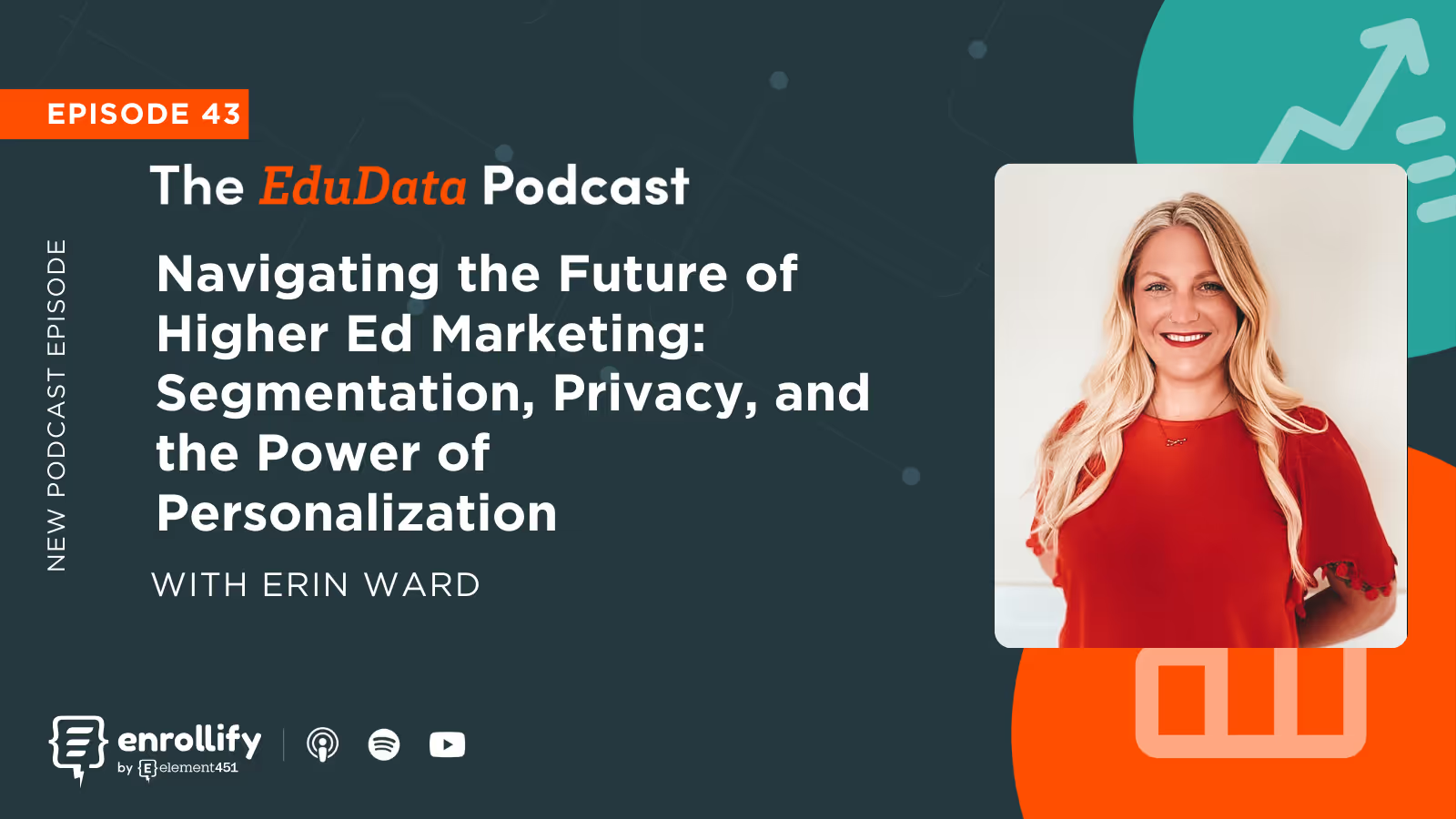
In this episode, Timothy and Jamie are joined by Erin Ward, Head of Digital Sales & Client Experience for NextGrad. Erin discusses the evolving landscape of higher education marketing, emphasizing the challenges of reaching Gen Z and Gen Alpha students in a world shaped by data privacy regulations and personalization demands. She shares insights into how NextGrad leverages digital billboards in high schools to engage students while adhering to privacy laws, as well as the growing importance of using personalized, targeted content to cut through the noise. The conversation touches on the need for deeper collaboration between marketing and admissions, best practices in data usage, and the role of transparency in building trust with students.
Key Takeaways
- Personalization is key to reaching Gen Z and Gen Alpha, as they expect to be co-creators in the marketing process.
- Digital out-of-home media, like billboards in high schools, offers a unique way to connect with students while respecting data privacy laws.
- Successful marketing campaigns require balancing creative content with data-driven strategies.
- Institutions should look at historical data to make informed decisions about automating and refining marketing strategies.
- Collaboration between admissions and marketing teams is essential for building effective campaigns.
Episode Summary
How does NextGrad help higher ed institutions market to prospective students?
NextGrad provides both digital and out-of-home marketing solutions for higher education institutions, specializing in creative content that targets high school students. Erin Ward explains that their out-of-home solutions include physical and digital billboards placed in high schools across the U.S. and Canada. By combining this with digital marketing strategies on platforms like Google, Meta, and Spotify, NextGrad helps colleges reach students who may otherwise be difficult to target due to increasing data privacy regulations.
What is the current state of personalization in higher ed marketing?
With the rise of AI and tailored content, personalization is becoming more essential in engaging younger audiences like Gen Z and Gen Alpha. Erin notes that these students are accustomed to AI-driven, highly personalized experiences in their daily lives. To keep up, higher ed institutions need to create content that feels customized and meaningful. This includes segmenting students by interests beyond just academic programs and crafting marketing initiatives that make students feel like active participants in their education journey.
How can institutions use data to create more personalized campaigns?
Erin emphasizes that the key to successful personalization is asking the right questions upfront. Instead of simply asking what program a student is interested in, institutions should focus on gathering more nuanced information about their motivations and interests. By understanding where students come from and what content they engage with, marketing teams can tailor their messages to resonate more effectively. Historical data is also valuable, as it helps refine automations and avoid the knee-jerk reactions that often result from manual campaign adjustments.
What challenges do institutions face with data privacy in marketing?
Data privacy laws present a significant challenge for higher education marketers, especially when targeting 16- to 18-year-olds. Erin highlights the importance of transparency and consent when collecting student data. By allowing students to opt in for personalized marketing, institutions can respect their privacy while still providing relevant content. Additionally, NextGrad’s out-of-home solutions avoid these issues entirely by not requiring personal data, creating a safer and more compliant way to reach students directly.
How do admissions and marketing teams collaborate more effectively?
Erin explains that there is often a disconnect between admissions and marketing teams, which can hinder campaign success. Both departments should come together to align on institutional goals and work collaboratively on campaign strategy. Instead of blaming one another when something goes wrong, they should focus on open communication to identify and resolve any issues. This collaborative approach ensures that campaigns are not only successful in reaching students but also effective in converting them into applicants.
Connect With Our Co-Hosts:
About The Enrollify Podcast Network: The EduData Podcast is a part of the Enrollify Podcast Network. If you like this podcast, chances are you’ll like other Enrollify shows too!
Some of our favorites include Generation AI and The Higher Ed Geek.
Enrollify is produced by Element451 — the next-generation AI student engagement platform helping institutions create meaningful and personalized interactions with students. Learn more at element451.com.
Element451 is hosting the AI Engage Summit on Oct 29 and 30. Register now for this free, virtual event.The future of higher ed is being redefined by the transformative power of AI. The AI Engage Summit brings together higher ed leaders, innovators, and many of your favorite Enrollify creators to explore AI’s impact on student engagement, enrollment marketing, and institutional success.
Experience firsthand how AI is improving content personalization at scale, impacting strategic decision-making, and intuitively automating the mundane tasks that consume our time. The schedule is packed with real examples and case studies, so you leave knowing how to harness AI to drive meaningful change at your institution.
Whether you’re looking to enhance student outcomes, optimize enrollment marketing, or simply stay ahead of the curve, the AI Engage Summit is your gateway to the next level of higher education innovation. Registration is free, save your spot today.