






About the Episode
Got a story to tell? An innovative idea to share? Fill out our guest nomination form and let's chat!
About the Episode:
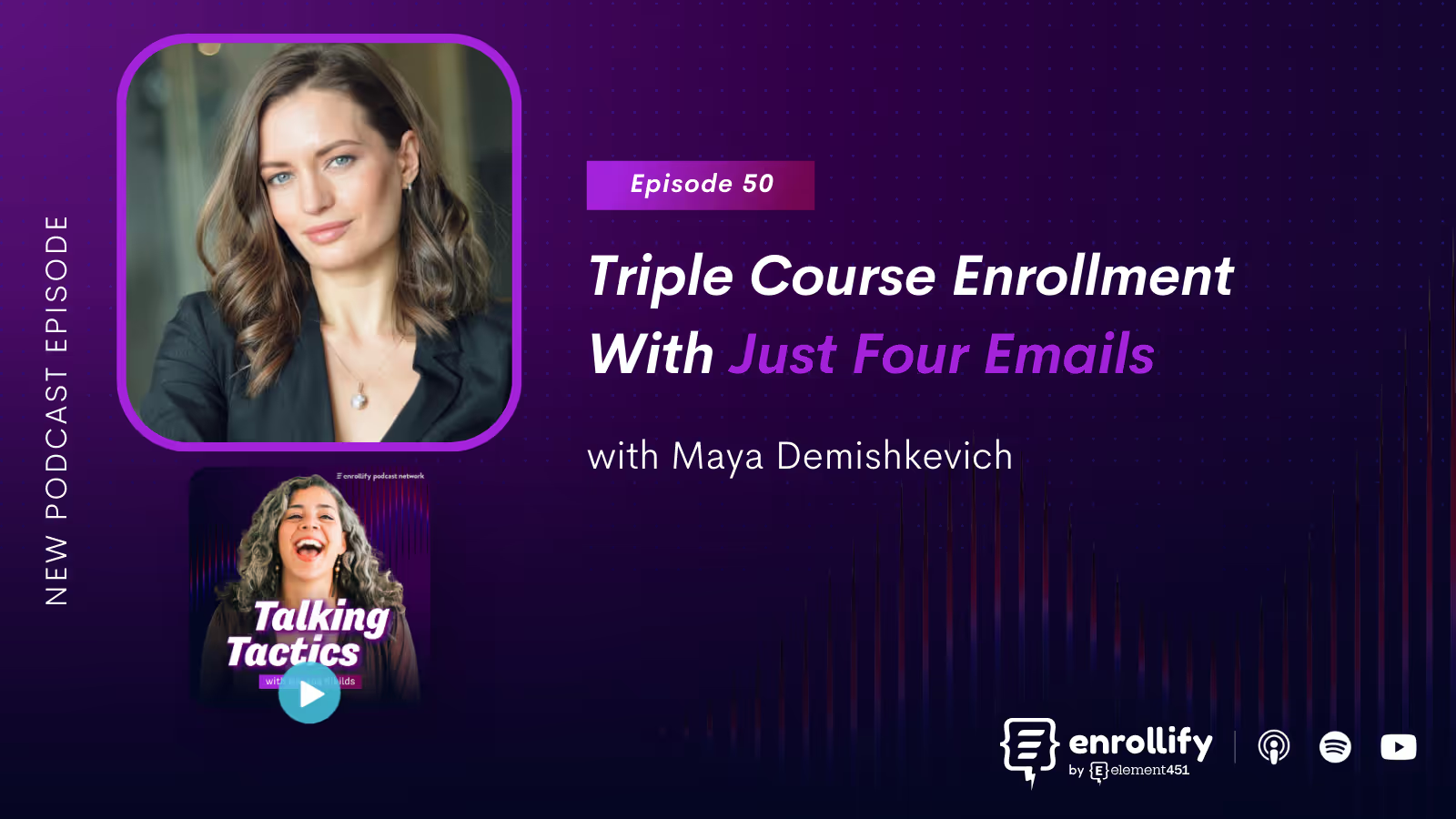
In this episode of Talking Tactics, Dayana Kibilds is joined by former Hidden Gem host and current CMO at Carroll Community College, Maya Demishkevich. Maya shares how she tripled enrollment in a continuing education course by creating a more personalized email sequence—and how that tactic has since shaped how her the team approaches course promotion across the board.
You’ll get the inside scoop on the structure, strategy, and psychology behind the emails that got real results.
Key Takeaways
- Tripled enrollment in a continuing ed course by creating a more personalized email sequence.
- Swapped generic course descriptions for conversational, benefit-driven copy tailored to audience needs.
- Used a 4-email sequence spread over three weeks, each one building urgency, trust, and emotional connection.
- Applied psychological triggers like identity reinforcement, hope of gain, and the desire to belong (inspired by the book Triggers by Joseph Sugarman).
- Reframed calls to action from “Register Now” to more inclusive language like “Join Us”—a small change with a big impact.
- Leveraged AI tools like Bing Chat to help non-marketers create smarter content and gain confidence in their messaging.
What challenge was Maya trying to solve?
Like many institutions offering continuing education or business training programs, Carroll Community College struggled with low enrollment for non-credit courses. Specifically, a course called Financial Bootcamp for Nonprofits often failed to meet the minimum of six registrants required to run. Despite quality content and instructor planning, the course often got canceled due to lack of enrollment—wasting time and resources. Maya's task? Help this course fill its seats using a smarter marketing strategy.
What was the original email marketing approach—and why wasn’t it working?
Before Maya’s involvement, the marketing strategy relied on one or two generic emails, often just a copy-paste of the course description. No personalization. No segmentation. No clear benefit-driven messaging. The emails lacked a sender name, compelling subject lines, and persuasive copy—ultimately failing to engage the audience or create urgency. As Maya pointed out, “they would send one communication out and then hope that people register.” Sound familiar?
How did Maya redesign the email strategy?
Maya implemented a four-part email sequence, sent weekly in the three weeks leading up to the course. Each email served a distinct psychological and strategic purpose:
- Email 1-3: Focused on benefits, logic, and social proof through student testimonials.
- Email 4: Played up urgency and FOMO (fear of missing out), one week before the course began.
Each email included multiple calls to action (CTAs), strategically worded to appeal to curiosity, logic, and emotion—"Join us" replaced the sterile "Register now." Formatting was overhauled: shorter paragraphs, bullet points, headers, white space, and a personalized signature built trust and improved readability.
What role did psychological triggers play?
Drawing from the book Triggers by Joseph Sugarman, Maya applied cognitive psychology to marketing. She used:
- Hope of Gain: Framing the course as a solution to existing pain points.
- Consistency: Appealing to the reader's self-identity as a committed nonprofit professional.
- Belonging: Framing the invitation as a chance to "join us" versus “register now”—suggesting they’d be part of a like-minded community.
These small yet powerful copy shifts turned generic outreach into targeted persuasion.
How did AI factor into this success?
Though not the central focus, AI tools like Bing Chat and ChatGPT supported the content creation process. Maya taught the department coordinator to prompt AI with lists of psychological triggers to help generate more compelling copy. This not only improved the campaign but also empowered the team to replicate the approach moving forward.
What were the results?
The course went from three or four registrations to 11—a threefold increase in just four weeks. The department was so impressed, they requested a training session with Maya on email best practices. Even with limited CRM analytics (because, fun fact, they broke the system with open rates exceeding 100%), the attribution was clear: the enrollments came directly from the emails.
Attend the 2025 Engage Summit!
The Engage Summit is the premier conference for forward-thinking leaders and practitioners dedicated to exploring the transformative power of AI in education.
Explore the strategies and tools to step into the next generation of student engagement, supercharged by AI. You'll leave ready to deliver the most personalized digital engagement experience every step of the way.
👉🏻 Register now to secure your spot in Charlotte, NC, on June 24-25, 2025!



.svg)
.svg)
