


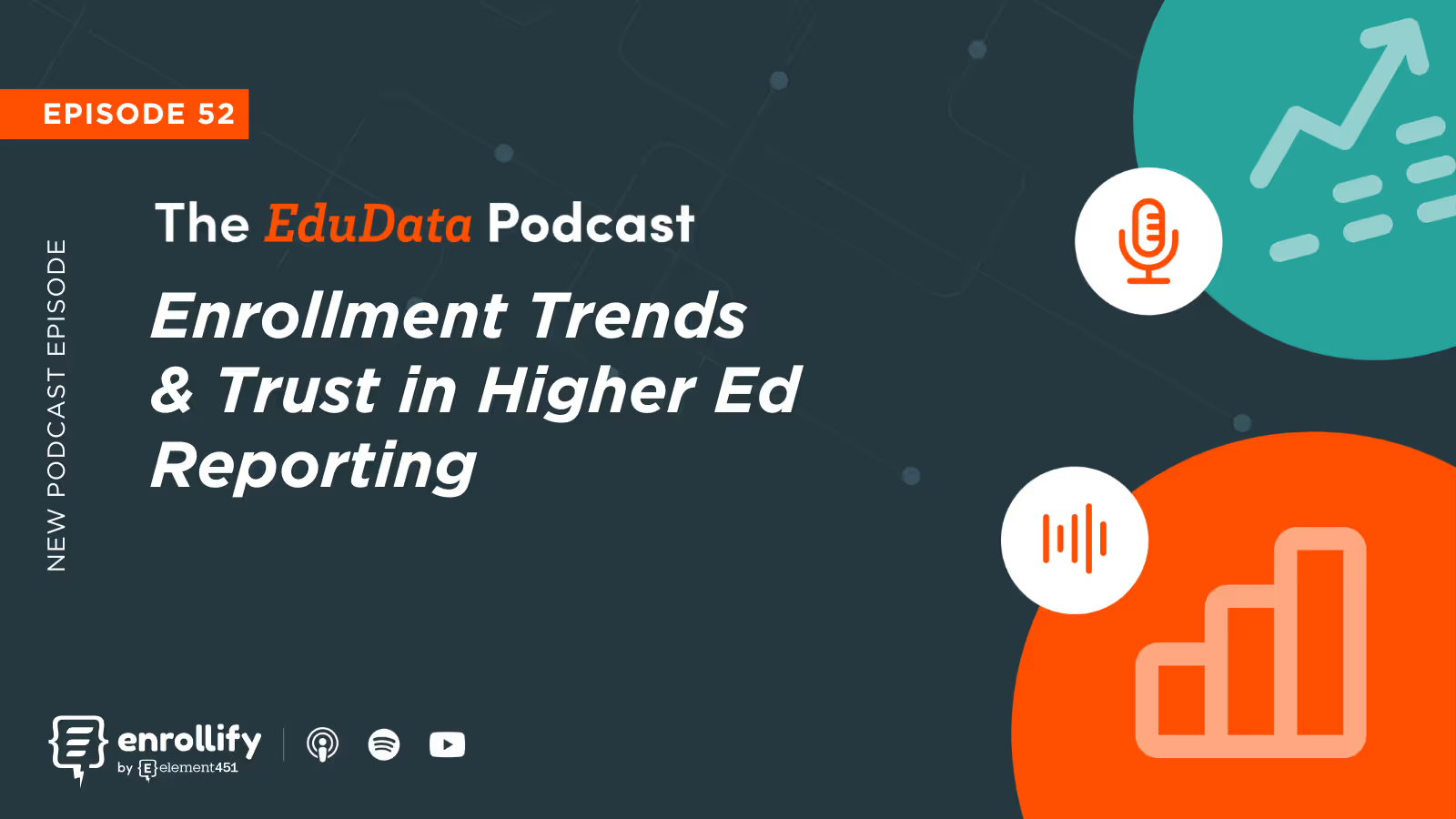




About the Episode
Got a story to tell? An innovative idea to share? Fill out our guest nomination form and let's chat!
About the Episode:
Welcome to 2025! In this first recorded episode of the new year, Timothy and Jamie dive into higher education's unexpected comeback. They discuss the corrected National Student Clearinghouse report revealing undergrad enrollment is up and costs are down. From dual enrollment misclassifications to the importance of transparency in data reporting, they explore lessons for data professionals. Plus, hear their take on the optimism buzzing in higher ed and what it means for the industry moving forward. Don't miss this insightful start to the new year!
Key Takeaways
- Undergraduate enrollment is growing – Freshman enrollment has officially surpassed pre-pandemic levels for the first time since 2019.
- NSC’s reporting error impacted multiple years – A misclassification of dual enrollment students led to an underestimation of first-time freshmen, an issue present in reports dating back to 2020.
- Increased diversity in enrollment – Black and Hispanic student enrollment both rose by 6.8%, while HBCU enrollment grew by 3.8%.
- Alternative credentials are booming – Certificates and non-traditional degree programs saw 10% year-over-year growth and a 28.9% increase since 2019.
- Data transparency is key – The NSC’s response highlights the importance of owning and correcting data errors to maintain trust in higher education reporting.
How Did the National Student Clearinghouse Get Enrollment Wrong?
The National Student Clearinghouse (NSC) is widely considered a trusted source for higher ed enrollment data, but in January 2025, it issued a surprising correction. An error in its preliminary Stay Informed Report—originally released in October 2024—had significantly underreported freshman enrollment. The mistake? A misclassification of dual enrollment students as high school students instead of first-time freshmen.
This error had been present in all Stay Informed Reports dating back to 2020, meaning past years may have also inaccurately reflected lower enrollment trends. However, the NSC’s Current Term Enrollment Report, released on January 23rd, 2025, confirmed the corrected numbers: enrollment is growing, not declining.
Why This Enrollment Growth is a Game-Changer
For years, the industry has braced for the so-called "enrollment cliff", a predicted downturn in college enrollments due to shifting demographics. But the corrected data tells a different story:
- Total undergraduate enrollment is up for the first time since the pandemic.
- All states except Vermont and Nebraska saw increases (and their declines were both under 1%).
- Community colleges and alternative credentials are surging, signaling a shift in student preferences toward flexible and workforce-aligned education.
This data shift doesn't erase long-term demographic concerns, but it does suggest that higher ed’s decline is not as steep—or as inevitable—as once thought.
What Higher Ed Can Learn from This Data Correction
Data professionals in higher ed should take note of how the NSC handled this issue. In an interview with Inside Higher Ed, NSC CEO Ricardo Torres emphasized the importance of transparency and accountability when errors occur. His key points:
- Own the mistake – The NSC openly admitted the error and quickly issued a correction.
- Communicate early and often – Stakeholders received direct explanations of what happened and why.
- Ensure continuous improvement – The NSC is reviewing its processes and may discontinue the Stay Informed Report to prevent future inaccuracies.
For institutional data teams, this serves as a reminder: Errors happen, but how you handle them determines trust.
What Does This Mean for the Future of Higher Ed?
The biggest takeaway? Higher education is evolving, but it’s not in decline. This correction, while embarrassing for the NSC, actually reveals positive momentum in the sector. More students are enrolling, alternative credential programs are growing, and traditional institutions are adapting.
So, where does higher ed go from here? Expect to see:
- More investment in non-degree credentials as students seek flexible learning options.
- A shift in enrollment strategies to capitalize on emerging student demographics.
- Stronger data governance as institutions double-check their own reporting methodologies.
This episode proves that higher ed isn't dying—it's transforming. And as always, data plays a crucial role in shaping that future.
Connect With Our Co-Hosts:
About The Enrollify Podcast Network: The EduData Podcast is a part of the Enrollify Podcast Network. If you like this podcast, chances are you’ll like other Enrollify shows too!
Some of our favorites include Generation AI and The Higher Ed Geek.
Enrollify is produced by Element451 — the next-generation AI student engagement platform helping institutions create meaningful and personalized interactions with students. Learn more at element451.com.
Attend the 2025 Engage Summit!
The Engage Summit is the premier conference for forward-thinking leaders and practitioners dedicated to exploring the transformative power of AI in education.
Explore the strategies and tools to step into the next generation of student engagement, supercharged by AI. You'll leave ready to deliver the most personalized digital engagement experience every step of the way.
👉🏻 Register now to secure your spot in Charlotte, NC, on June 24-25, 2025!



.svg)
.svg)
