






About the Episode
Got a story to tell? An innovative idea to share? Fill out our guest nomination form and let's chat!
About the Episode:
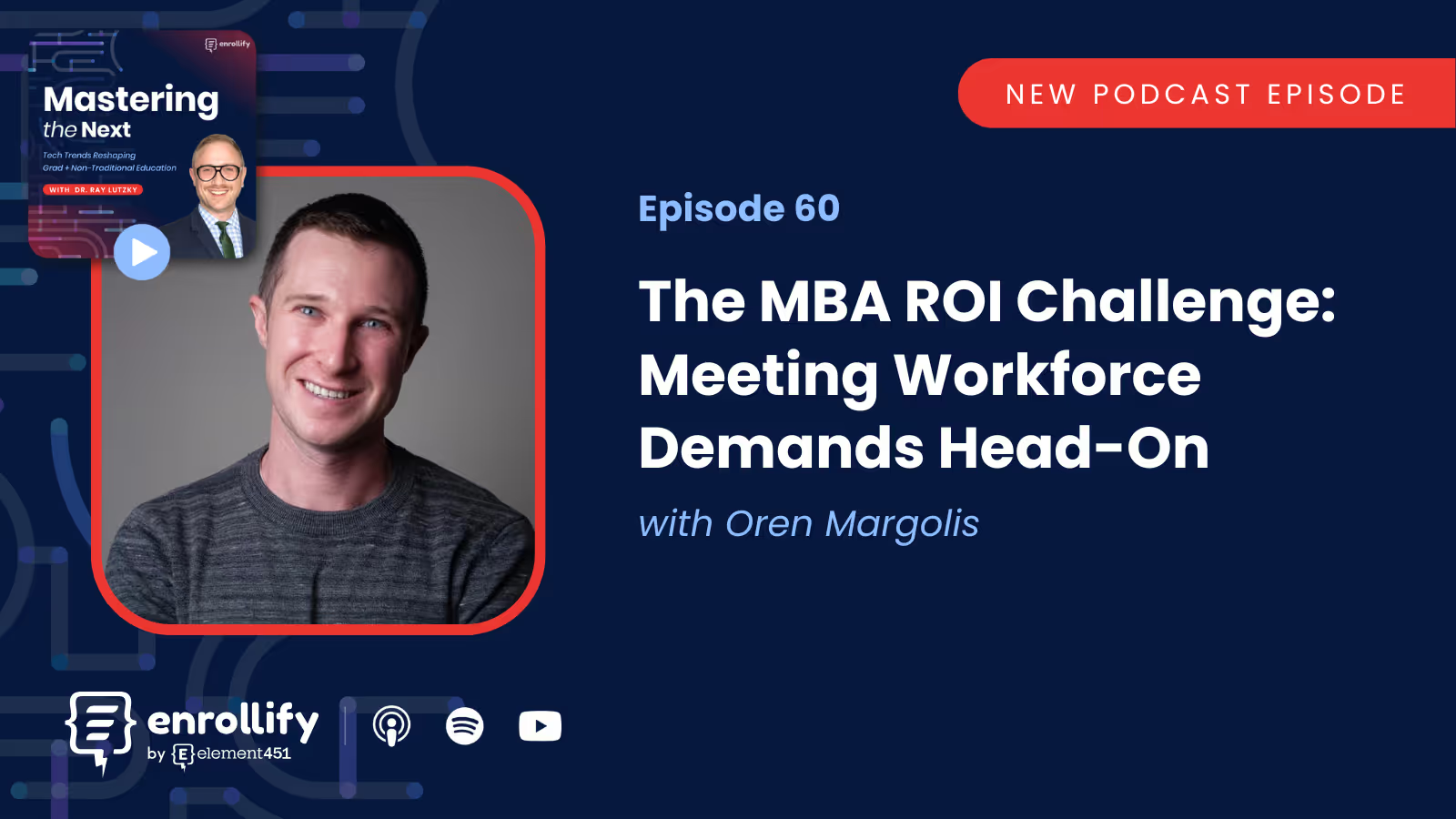
The MBA landscape is shifting faster than ever. Programs are experimenting with online hybrids, one-year accelerators, and specialized tracks. With so many formats competing for attention, how can schools adapt and stay relevant? In this episode, Oren Margolis, Founder of Pinetree & Palm Consulting, offers a candid look at what business schools are getting right and where they risk falling short. Drawing on his experience at NYU Stern and in talent development at high-growth companies, Oren explains why skills matter more than pedigree and how institutions can frame MBA ROI in ways that resonate with today’s students and the evolving workforce.
Join us as we discuss:
- [4:54] Gen Z and millennial career priorities: what’s changed, what hasn’t
- [8:11] Rethinking ROI: short-term salary vs. long-term trajectory
- [16:26] Skills vs. pedigree: where MBAs really create value
To hear this interview and many more like it, subscribe on Apple Podcasts, Spotify, or our website, or search for “Mastering the Next” in your favorite podcast player.
Is the MBA still relevant in today’s evolving workforce?
Oren Margolis doesn’t think the MBA is obsolete — but he’s clear that it must evolve. While the traditional promise of “get the degree, get the job” still holds in many cases, today’s applicants are asking harder questions about outcomes. The economy has shifted, tech hiring is uncertain, and the stability an MBA once offered isn’t guaranteed. Students want to know: will this degree still open doors five years from now? And more importantly — do I need it to get where I want to go?
The MBA is still highly relevant — if it adapts. That means business schools must be more honest about what they can and can't deliver. For many students, especially those seeking leadership development, network access, or a long-term career boost, an MBA can still be a powerful accelerator. But programs that rely on outdated selling points or inflated job placement stats will lose credibility quickly.
What’s changed in how students evaluate MBA programs?
Oren challenges the idea that Gen Z and Millennials have wildly different expectations — what’s changed is the context, not the core goals. Students still want mobility, prestige, and meaningful work, but they’ve also seen economic downturns, massive layoffs, and tech bubbles burst. As a result, there’s a healthy dose of skepticism. They want proof that a $200K investment will actually pay off — and they’re comparing MBAs with alternatives like online certificates, bootcamps, and short-form credentials.
This is where time horizon matters. Oren emphasizes that smart applicants are thinking beyond the 2-year post-MBA salary bump. They’re asking: Where will this degree take me in 10 or 20 years? Will it help me lead teams, transition industries, or build resilience in uncertain times? Business schools need to start framing ROI with a longer lens — not just starting salaries and job titles.
How should business schools reposition their MBA offerings?
The answer isn’t more bells and whistles — it’s more clarity and credibility. Oren suggests that schools need to move away from generic promises (“you’ll pivot into consulting!”) and instead double down on the real, unique value they offer. That might be practical leadership training, a strong alumni network, or specialized skills in high-demand sectors.
Pedigree still matters — let’s not pretend otherwise — but it’s not everything. Programs outside the top 10 can compete by being hyper-focused on skill-building, career support, and authentic storytelling about student outcomes. In other words: prove it. Show how you’re equipping students to lead in real-world, high-stakes scenarios. Show how you help underdogs rise and help mid-career professionals reignite stalled paths.
What questions should prospective students ask before applying?
Oren urges students to pause before they hit “apply.” The #1 problem he helps clients solve? Figuring out if they even need the degree. Applicants should ask themselves:
- Why am I pursuing an MBA?
- What problem am I trying to solve?
- Are there lower-cost, lower-risk ways to achieve that same goal?
- What is my time horizon for ROI — two years, or twenty?
- Do I need a full-time experience, or could I grow faster through hybrid learning and real-world application?
By reframing the MBA as one of many tools — not the only path — students can make more strategic decisions. And the best programs will be the ones that support this kind of honest reflection, not just push toward enrollment.
Connect With Our Host:
About The Enrollify Podcast Network: Mastering the Next is a part of the Enrollify Podcast Network. If you like this podcast, chances are you’ll like other Enrollify shows too!
Some of our favorites include The EduData Podcast and Generation AI.
Enrollify is produced by Element451 — the next-generation AI student engagement platform helping institutions create meaningful and personalized interactions with students. Learn more at element451.com.




.svg)
.svg)
