


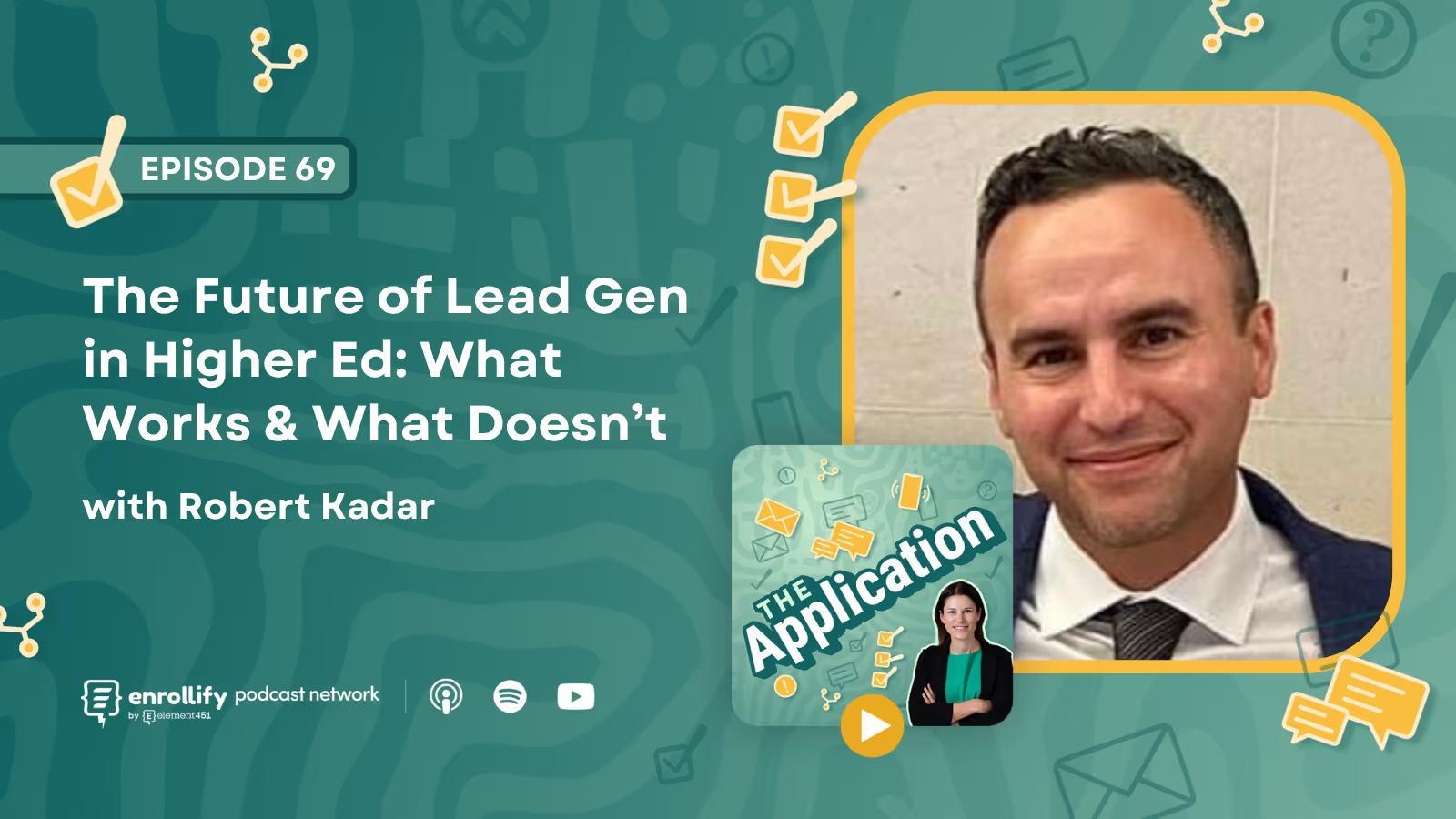




About the Episode
Got a story to tell? An innovative idea to share? Fill out our guest nomination form and let's chat!
About the Episode:
Traditional lead generation in higher education isn't working. Universities pour time and money into RFI (Request for Information) forms, yet most enrolled students never even fill one out. So why are we still treating prospective students like sales leads instead of informed decision-makers?
In this episode, Allison is joined by Robert Kadar, a higher ed marketing expert with over 15 years of experience in enrollment and media strategy. Together, they break down why lead generation tactics fall short, what students actually do when researching colleges, and how universities can shift their marketing focus for better results.
Join us as we discuss:
- [2:35] How Robert discovered that 90% of students never submit an RFI form
- [9:01] Optimizing for applications and how universities can drive better ones
- [15:46] How generative AI can help admissions offices fill the gaps
Check out these resources we mentioned during the podcast:
To hear this interview and many more like it, subscribe on Apple Podcasts, Spotify, or our website, or search for “The Application with Allison Turcio” in your favorite podcast player.
Why Isn’t Lead Generation Working in Higher Ed Anymore?
Robert Kadar doesn’t just theorize about higher ed marketing — he tests it. With a background in evolutionary biology and a passion for experimentation, he uncovered a hard truth: the majority of enrolled students never filled out a lead form. Despite universities spending countless hours and dollars optimizing landing pages to collect RFIs, they were failing to reach and influence most of their applicants.
Through integrated marketing and enrollment CRM systems, Kadar tracked student behavior from ad click to application and discovered a staggering reality — 90% of applicants bypass lead forms entirely. This suggests that current lead-gen strategies aren't just inefficient; they may be actively holding institutions back by pushing tactics that don't align with actual student behavior.
What Should Higher Ed Marketers Be Doing Instead?
Instead of funneling prospects into lead forms, Kadar argues that institutions should design content-rich, navigable pages that empower students to self-educate. Prospects aren’t passive — they’re actively researching across rankings, reviews, Reddit threads, and YouTube before ever considering applying. Landing pages should reflect this behavior, offering deep, relevant content that answers real questions rather than demanding personal info upfront.
Kadar recommends shifting KPIs away from lead volume and toward application completions. By optimizing for applications, schools not only generate better candidates but also create a more genuine and helpful experience. Prospective students value comprehensive information — and they’ll reward schools that prioritize transparency and usefulness.
How Do You Track Success Without Lead Forms?
If leads aren’t the metric, then what is? Kadar suggests focusing on full-funnel visibility and application conversions. This requires tight integration between marketing and enrollment systems so teams can track how marketing efforts actually influence applications. Measuring success now includes evaluating content engagement, click-through rates, application volume, and — crucially — the quality of those applications.
And yes, there’s a place for generative AI here — but it must be handled with care. Kadar cautions against sounding like every other institution. AI should be used to personalize and scale messaging based on student needs (like tailoring by major or location), but the human voice and institutional authenticity must remain intact.
What Types of Content Do Prospective Students Really Want?
Students aren’t just looking for facts — they’re looking for confidence. According to Kadar, the most critical content areas to address include:
- Location (how close or accessible the school is),
- Affordability (scholarships and cost),
- Reputation (rankings, faculty excellence, alumni success),
- Career Outcomes, and
- Experience (day-in-the-life stories, campus living, student perspectives).
Platforms like YouTube and Reddit are gold mines for authentic, student-driven storytelling. Your school’s content strategy should mirror this reality — serve up what students actually want to know in the places they’re looking for it.
Connect With Our Host:
Allison Turcio
https://www.linkedin.com/in/allisonturcio/
https://twitter.com/allisonturcio
About The Enrollify Podcast Network: The Application with Allison Turcio is a part of the Enrollify Podcast Network. If you like this podcast, chances are you’ll like other Enrollify shows, too!
Some of our favorites include Mission Admissions and Visionary Voices: The College President’s Playbook.
Enrollify is made possible by Element451 — the next-generation AI student engagement platform helping institutions create meaningful and personalized interactions with students. Learn more at element451.com.
Attend the 2025 Engage Summit!
The Engage Summit is the premier conference for forward-thinking leaders and practitioners dedicated to exploring the transformative power of AI in education.
Explore the strategies and tools to step into the next generation of student engagement, supercharged by AI. You'll leave ready to deliver the most personalized digital engagement experience every step of the way.
👉🏻 Register now to secure your spot in Charlotte, NC, on June 24-25, 2025!


.svg)
.svg)
