

cancel

Search podcasts, blog posts, people

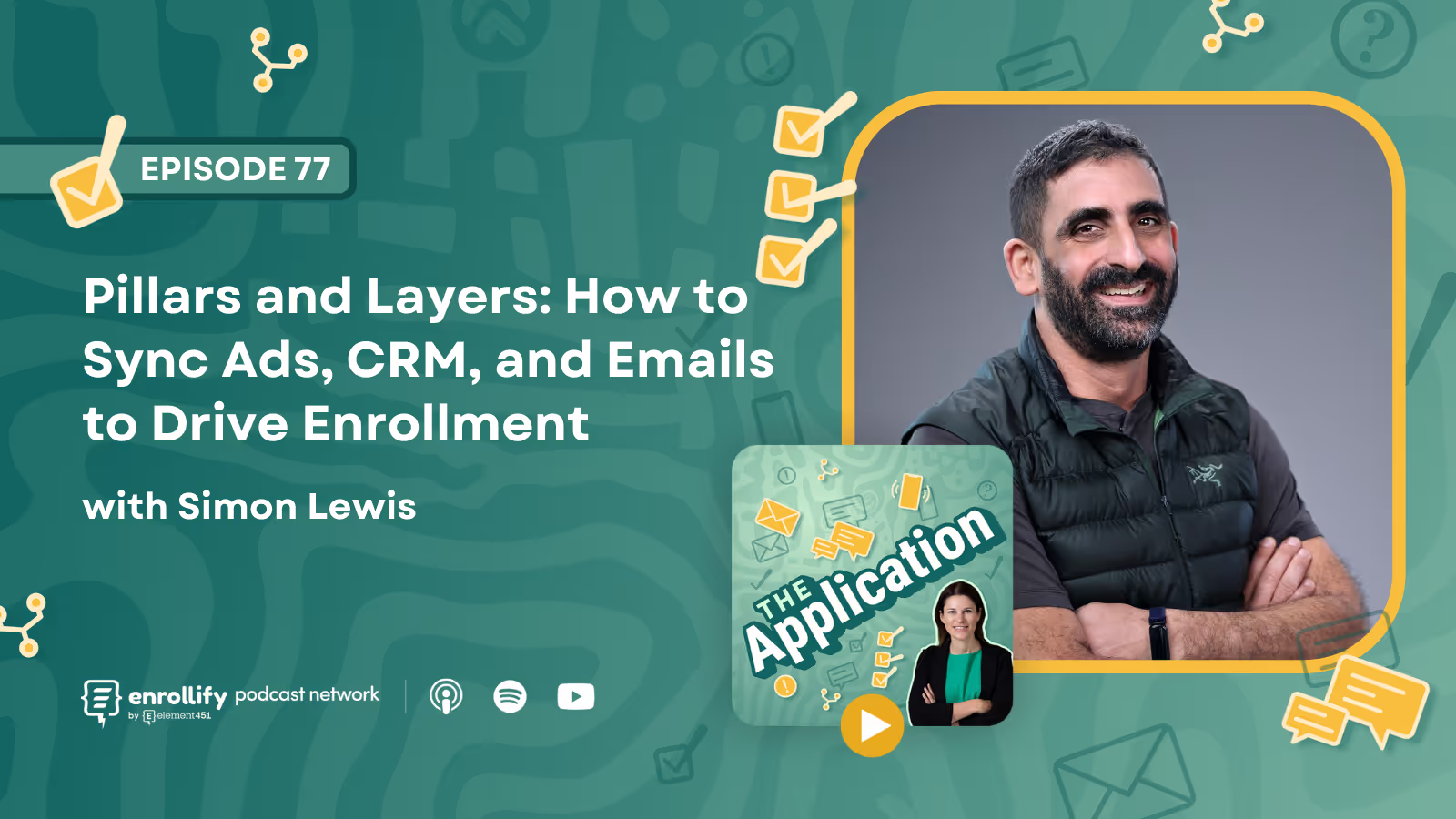
In this episode, Allison sits down with Simon Lewis, founder of Binary & Co., to dive deep into his Pillars and Layers framework.
Got a story to tell? An innovative idea to share? Fill out our guest nomination form and let's chat!
About the Episode:
In this episode, Allison sits down with Simon Lewis, founder of Binary & Co., to dive deep into his Pillars and Layers framework. This smarter, student-centered approach helps nurture higher-ed leads throughout their long and emotional decision-making journey. We explore why lead capture is only the starting point, not the goal, and how to keep students engaged well beyond the initial form fill. Simon explains how to sync your ads, emails, and CRM so you can meet students where they actually are rather than where you wish they were.
Join us as we discuss:
Check out these resources we mentioned during the podcast:
Unlike impulse purchases, higher education decisions involve a long (6–18 month) consideration cycle and are deeply tied to identity and life direction. Simon notes the process is fluid—students bounce between researching cost, outcomes, program fit, and personal readiness. This requires marketers to guide rather than push, providing relevant content at every stage.
Simon advocates moving away from the mindset that a form fill is the finish line. Instead, see it as a data capture moment—a point where you learn about a student’s interests and can offer them the next most relevant step. This might mean a lead magnet, event registration, or downloadable content—often through platform-native forms like LinkedIn Lead Gen or Instagram Instant Forms.
Pillars are your institution’s unique differentiators (e.g., connection to industry, specialized faculty expertise, supportive learning environment). Layers are universal student concerns—future, time, and cost—that should be woven into messaging under each pillar. For example, if “industry connection” is a pillar, the future layer might highlight alumni job placement, time could outline hands-on projects, and cost might address ROI.
Too often, ad campaigns stop once a student submits a form. Simon recommends continuing ad delivery in sync with email nurturing. Early-stage leads might see more informational ads or invitations to virtual events, while late-stage prospects receive targeted “next step” messaging such as campus visit invitations or application guidance.
Connecting ad platform data with your CRM allows you to label and track what actions a prospect has taken—whether they’ve downloaded a guide, registered for an open house, or attended an event. Admissions teams can then prioritize outreach to prospects who have taken high-intent actions, saving time and improving conversion rates.
Early-stage leads require a softer approach. Instead of immediate calls to apply, outreach should match the student’s readiness—inviting them to events, sharing relevant content, or introducing them to current students or alumni. This staged nurturing builds trust and sustains engagement over the long decision cycle.
Connect With Our Host:
Allison Turcio
https://www.linkedin.com/in/allisonturcio/
https://twitter.com/allisonturcio
About The Enrollify Podcast Network: The Application with Allison Turcio is a part of the Enrollify Podcast Network. If you like this podcast, chances are you’ll like other Enrollify shows, too!
Some of our favorites include Mission Admissions and Visionary Voices: The College President’s Playbook.
Enrollify is made possible by Element451 — the next-generation AI student engagement platform helping institutions create meaningful and personalized interactions with students. Learn more at element451.com.
Get new podcasts, articles, videos, and exclusive content from Enrollify delivered straight to your inbox.
Search podcasts, blog posts, people