


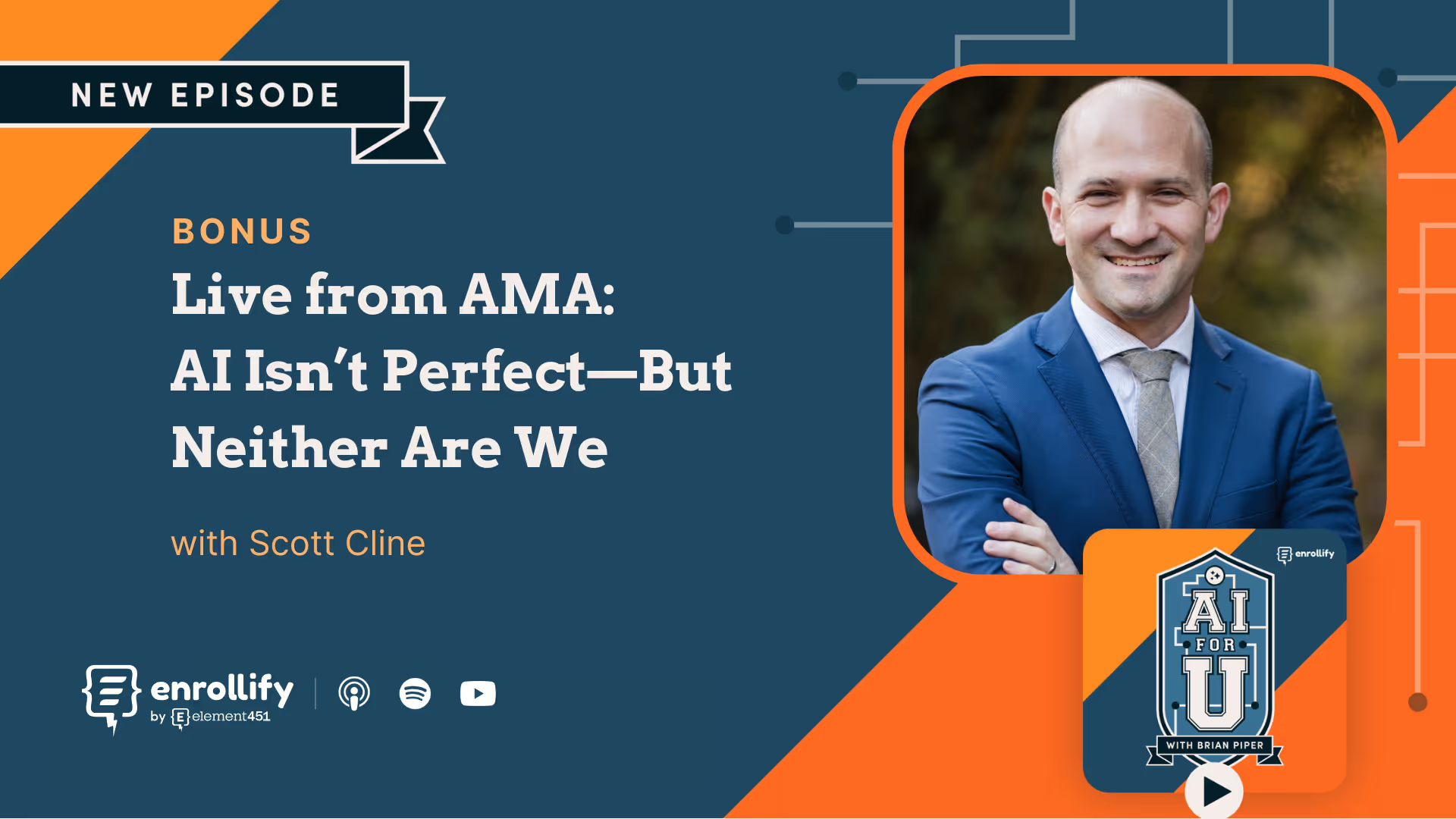




About the Episode
About The Episode:
This episode of AI for U captures a lively discussion from the AMA Symposium for the Marketing of Higher Education with Scott Cline, an independent consultant for higher education institutions. The conversation dives deep into how AI is transforming administrative and strategic workflows in higher education, empowering professionals to focus on meaningful human interactions.
Key Takeaways
- AI saves time on administrative tasks: By automating repetitive tasks, AI allows higher ed professionals to invest more time in building connections and fostering collaboration.
- AI isn’t perfect, but it doesn’t need to be: Leveraging AI for gap analysis and ideation improves workflows and surfaces insights that might otherwise be overlooked.
- Institutions must adopt a flexible approach: AI is an evolving tool, requiring ongoing adjustments and an openness to experimentation and learning.
- AI facilitates creative and strategic work: With AI managing groundwork, leadership teams can focus on impactful conversations, ideation, and innovation.
How Is AI Transforming Administrative Work in Higher Education?
Scott Cline highlighted that much of a higher ed professional’s time—up to 70-80%—is spent on administrative tasks like emails, meetings, and resource coordination. By using AI to streamline these tasks, professionals can refocus on the human side of their roles, engaging with staff, faculty, and students. Cline emphasized that this shift is not about replacing jobs but enabling more meaningful connections.
What Are the Key Benefits of Using AI for Strategic Work?
AI’s ability to tackle repetitive and preparatory tasks creates opportunities for senior leadership to prioritize valuable in-person discussions, such as board meetings or team ideation sessions. While AI might not have the expertise of a seasoned professional, it can aid in generating ideas, identifying gaps, and providing fresh perspectives, helping leaders refine their strategies faster and more effectively.
Is AI Reliable Enough for Higher Ed Professionals?
Cline candidly addressed common concerns about AI’s imperfections, such as hallucinations or errors. He argued that AI doesn’t need to be flawless to be useful—humans make mistakes too. The key is to use AI as a supportive tool while maintaining a process of review and iteration. For institutions, this means adopting a mindset of continuous learning and adjustment to ensure they remain responsive to both technological advances and the needs of their teams.
What Are the Barriers to AI Adoption in Higher Ed?
The evolving nature of AI poses challenges for institutions, particularly in establishing policies and frameworks that account for ethical considerations and data integrity. Cline urged institutions to view AI as an evolutionary tool, not a revolutionary one, emphasizing the importance of adaptability and a willingness to learn from mistakes. Institutions should embrace AI iteratively, treating it as a tool that enhances rather than defines their operations.
Connect With Our Host:
Brian Piper
https://www.linkedin.com/in/brianwpiper/
About The Enrollify Podcast Network:
AI for U is a part of the Enrollify Podcast Network. If you like this podcast, chances are you’ll like other Enrollify shows too!
Some of our favorites include Generation AI and Mastering the Next.
Enrollify is produced by Element451 — the next-generation AI student engagement platform helping institutions create meaningful and personalized interactions with students. Learn more at element451.com.
Attend the 2025 Engage Summit!
The Engage Summit is the premier conference for forward-thinking leaders and practitioners dedicated to exploring the transformative power of AI in education.
Explore the strategies and tools to step into the next generation of student engagement, supercharged by AI. You'll leave ready to deliver the most personalized digital engagement experience every step of the way.
👉🏻 Register now to secure your spot in Charlotte, NC, on June 24-25, 2025! Early bird registration ends February 1st.





.svg)
.svg)
