


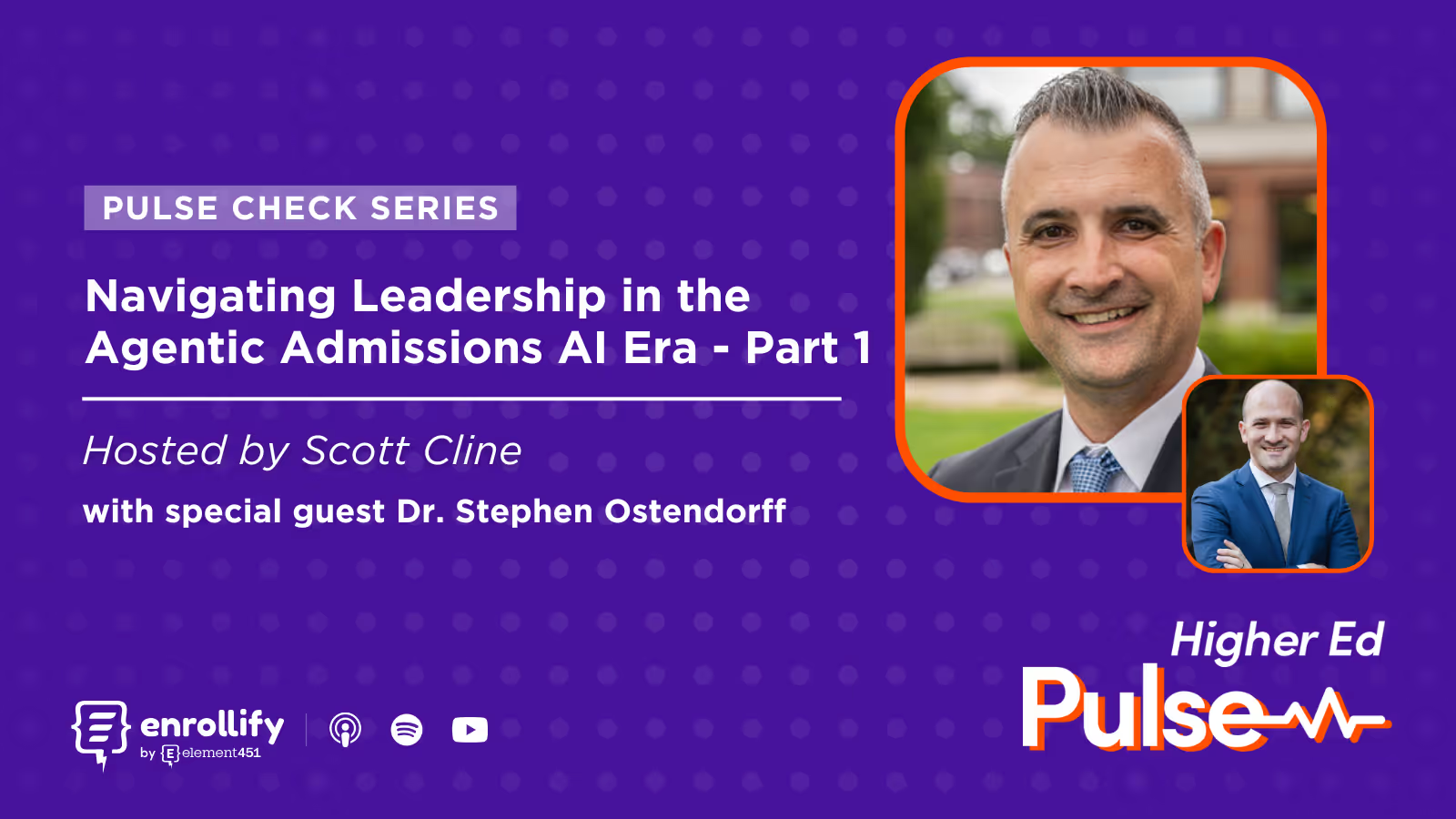




About the Episode
About The Episode:
Artificial intelligence isn’t a “what if” in admissions anymore—it’s already here. From email campaigns to application review, AI tools and AI agents are reshaping how colleges recruit, engage, and support students.
Scott Cline sits down with Dr. Stephen Ostendorff, Dean of Admissions at Molloy University and a seasoned enrollment leader, to unpack the real opportunities and challenges of adopting AI in admissions. With over two decades of experience driving enrollment growth, CRM adoption, and ethical AI use, Dr. Ostendorff offers a candid, future-focused perspective on where higher ed is headed.
Where AI is Already Making an Impact
According to Dr. Ostendorff, AI is no longer experimental—it’s woven into nearly every part of the admissions funnel:
- Communications: Drafting personalized emails, texts, and even phone outreach at scale.
- Application processing: Helping staff review files faster while surfacing deeper insights about students.
- Financial aid and advising: Automating complex processes to free up human staff for high-touch work.
- Recruitment outreach: AI-powered “agents” qualifying prospects and connecting them with counselors.
For institutions slow to adopt, the message is clear: the train is moving. “If you’re not incorporating AI into your admissions process,” Dr. Ostendorff warns, “you’re going to get hit by the train.”
Why Leaders Shouldn’t Fear AI
Skepticism is natural—but Dr. Ostendorff believes AI should be viewed like past innovations that once caused hesitation: websites, email, social media. Each was met with resistance, and now each is indispensable.
What’s more important, he argues, is focusing on ethical implementation:
- Getting student permission.
- Setting clear guardrails.
- Double-checking AI outputs.
- Training both humans and systems effectively.
“It’s not about whether AI replaces staff,” he says. “It changes the nature of work, but it hasn’t replaced a single person at our institution.”
Tackling Fears and Misconceptions
Dr. Ostendorff acknowledges the anxieties circulating in executive conversations behind closed doors:
- Will AI cost jobs? No, but it will reshape roles and expectations.
- Is there environmental impact? Yes—but opting out of AI means losing influence on how companies address those issues.
- Will institutions lose their identity? Only if AI is implemented without strategic leadership and cultural alignment.
Perhaps the most charged issue is student use of AI in essays and applications. His take? The debate often reveals more about socioeconomic inequities than academic integrity. Wealthier students have always had access to expensive admissions consultants; AI simply democratizes support. The real task for colleges: teach students how to use AI responsibly, just as past generations learned how to search library catalogs or Google effectively.
Meeting Students Where They Are
Whether it’s a high school senior calling at 9 p.m. after sports practice or an adult learner juggling work and family, AI tools expand institutional availability. “The school that can answer the question at 10 p.m.,” Dr. Ostendorff notes, “is the school that student will choose.”
By handling after-hours inquiries and automating routine outreach, AI doesn’t diminish human interaction—it creates space for better conversations between counselors and students.
Advice for Higher Ed Leaders
Dr. Ostendorff’s guidance for his peers is straightforward:
- Be a lifelong learner. Attend conferences, webinars, and podcasts with an open mind.
- Start small. Pilot AI in communications or one office before scaling.
- Be transparent. Use AI openly and thoughtfully to build trust with staff and students.
- Focus on ROI. Frame AI not just as a cost-saving tool but as a revenue and retention driver.
Enrollify is produced by Element451 — the next-generation AI student engagement platform helping institutions create meaningful and personalized interactions with students. Learn more at element451.com.
Register for the AI Engage Summit — Oct 15–16, 2025
👉 Join us online from 12–4 PM ET each day for two afternoons of AI insights and training. Free to attend with on-demand access included. Register now.





.svg)
.svg)
