






About the Episode
About The Episode:
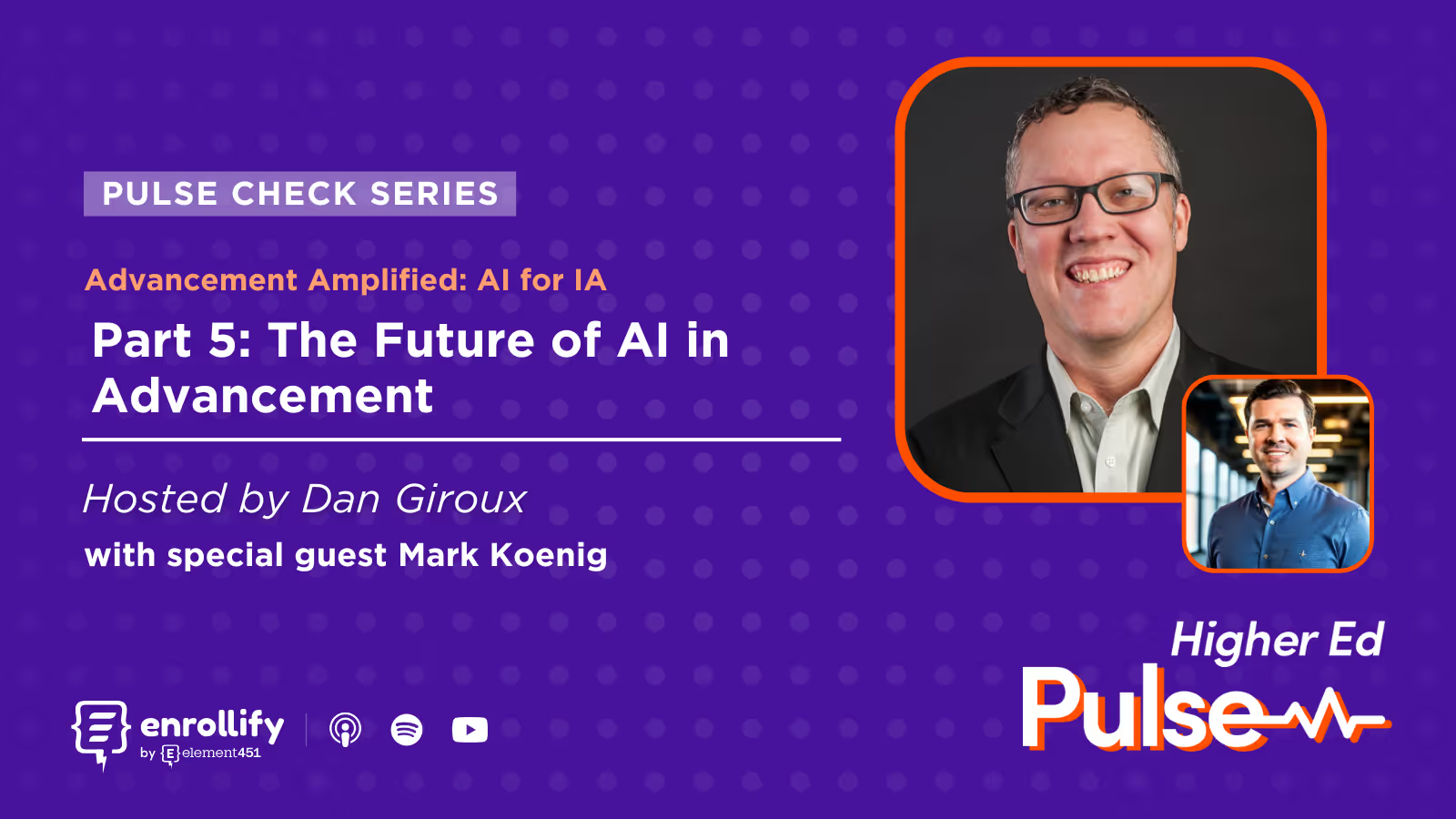
In the final episode of Advancement, Amplified: AI for IA, host Dan Giroux is joined by Mark Koenig, Chief Innovation Officer at Oregon State University Foundation, to explore the future of AI in alumni and donor engagement. Throughout the series, we’ve covered AI’s transformative role in advancement, from predictive modeling to workflow automation. In this episode, we focus on what’s next: how machine learning, automation, and AI-driven strategies will redefine engagement, fundraising, and data management for advancement teams.
Key Takeaways
- AI is transforming advancement strategies – From predictive modeling to real-time analytics, AI enables institutions to engage alumni and donors more effectively.
- Integration is key – Universities must move toward unified platforms, like Microsoft Dynamics, to maximize AI's potential across applications.
- Data privacy is critical – Ethical data collection and management are essential as AI-driven strategies evolve.
- Advancement teams must innovate – Institutions must break free from legacy systems and embrace a culture of agile innovation.
- AI will redefine roles – Machine learning is reshaping traditional advancement roles, from prospect research to stewardship and donor relations.
- The time to act is now – Higher ed institutions that delay AI adoption risk falling behind in engagement and fundraising effectiveness.
Why Is AI a Pivotal Opportunity for Advancement?
Artificial intelligence isn't just changing advancement—it’s reshaping every industry. Koenig emphasizes that AI and machine learning allow advancement teams to work smarter, not harder. OSU Foundation, for example, has leveraged AI for predictive modeling, improving donor engagement by automating the identification of key prospects. Universities that fail to embrace AI will struggle to keep pace with evolving donor expectations and engagement strategies.
How Can Universities Best Integrate AI into Their Advancement Tech Stack?
Successful AI adoption hinges on integration. Many universities rely on fragmented systems, but the future lies in centralized platforms that unify CRM, analytics, and communication tools. Koenig points to platforms like Microsoft Dynamics, which incorporate AI-driven automation across multiple applications, allowing advancement teams to streamline workflows, personalize outreach, and generate insights more efficiently.
What’s the Role of Data Privacy in AI-Driven Advancement?
Data is the lifeblood of advancement, but privacy regulations are becoming more stringent. With laws like the Oregon Consumer Privacy Act (OCPA) mirroring GDPR, institutions must prioritize ethical data collection and transparency. OSU Foundation has embraced an opt-in model, allowing donors to control how their data is used. By segmenting communications based on alumni preferences, they improve engagement while avoiding the pitfalls of mass email blasts that erode trust.
Which Advancement Roles Will AI Transform the Most?
Machine learning is redefining advancement roles across the board:
- Prospect Research & Pipeline Development – Traditional research teams are being replaced by AI-driven prospect identification and segmentation.
- Donor Stewardship – Personalized AI-generated videos and automated outreach campaigns are making engagement more meaningful.
- Gift Officer Strategy – AI is enhancing real-time donor insights, allowing gift officers to focus on high-impact conversations.
Koenig predicts that "list-pulling" reporting roles will soon be obsolete as AI automates data queries and analytics, allowing advancement professionals to focus on relationship-building.
How Can Advancement Leaders Drive Innovation?
Advancement professionals must adopt an entrepreneurial mindset. Higher education has traditionally been slow to embrace technology, but Koenig warns that institutions can no longer afford to lag behind. He encourages leaders to look beyond higher ed for inspiration—studying best practices from tech firms, retail, and professional sports organizations to modernize their engagement strategies.
What’s Next for AI in University Advancement?
Looking ahead, Koenig anticipates major AI-driven efficiencies in gift administration, donor engagement, and fundraising strategy. He also predicts a shift toward highly specialized advancement roles, similar to modern sales organizations, with dedicated teams focused on donor acquisition, engagement, and stewardship. The key takeaway? Universities that leverage AI today will have a competitive advantage in donor relations and fundraising in the years to come.
Enrollify is produced by Element451 — the next-generation AI student engagement platform helping institutions create meaningful and personalized interactions with students. Learn more at element451.com.
Attend the 2025 Engage Summit!
The Engage Summit is the premier conference for forward-thinking leaders and practitioners dedicated to exploring the transformative power of AI in education.
Explore the strategies and tools to step into the next generation of student engagement, supercharged by AI. You'll leave ready to deliver the most personalized digital engagement experience every step of the way.
👉🏻 Register now to secure your spot in Charlotte, NC, on June 24-25, 2025!




.svg)
.svg)
