






About the Episode
About The Episode:
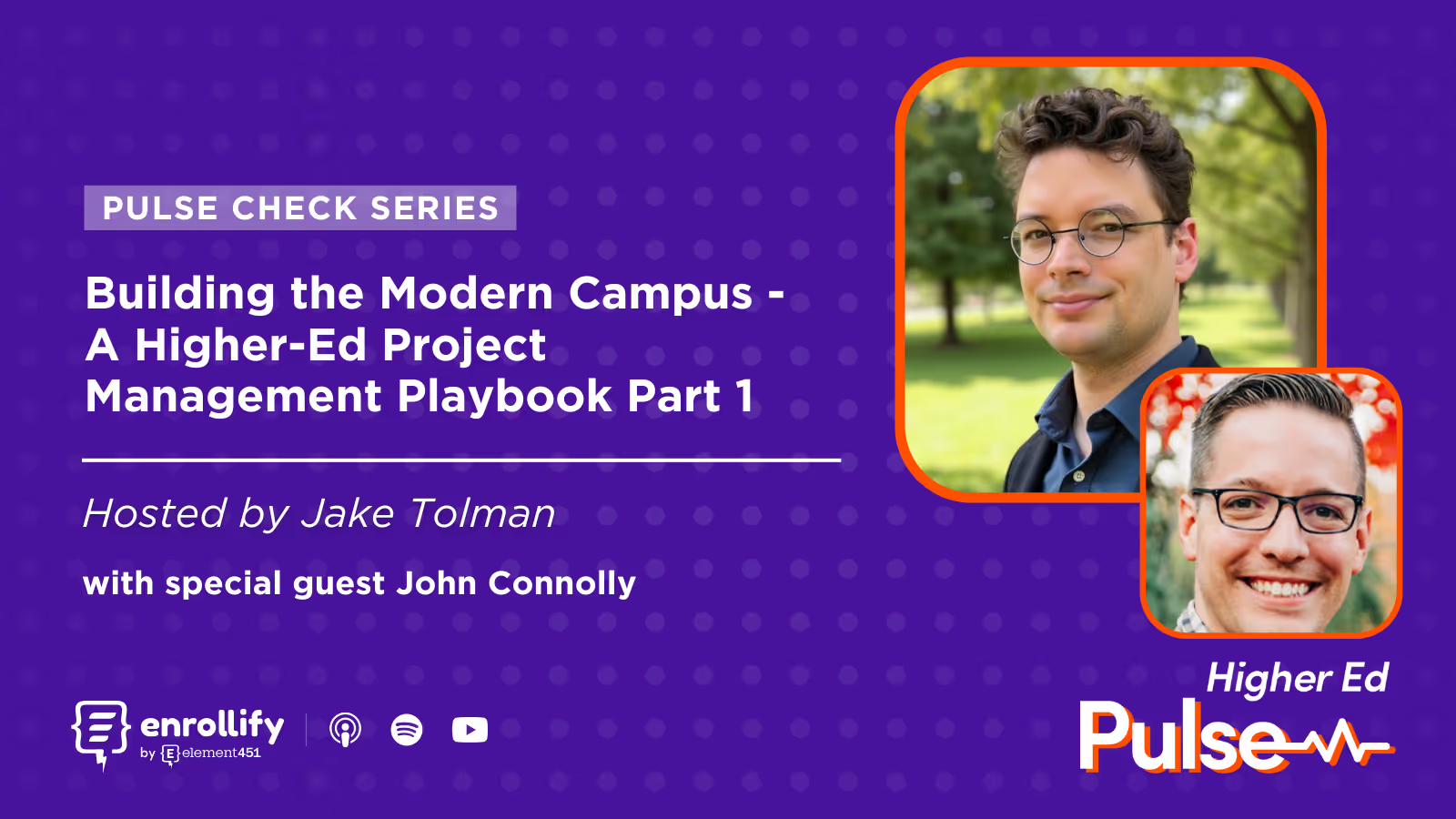
Jake Tolman, CEO of MainForm Consulting, kicks off a four-part pulse check series from Enrollify with guest John Connolly of PMO Delivery Partners. Together, they explore how the traditional Project Management Office (PMO) in higher education is evolving amidst digital transformation and the rise of AI. With deep insights on project governance, organizational learning, and AI's growing role in project management, this episode sets the stage for how institutions can future-proof their project work and governance models.
Key Takeaways
- The traditional PMO is outdated — campuses must evolve from command-and-control models to learning-and-adapting structures.
- AI in higher education project management is no longer optional; it's changing how we manage scope, cost, schedule, and quality.
- Higher ed institutions are siloed — PMOs can bridge those gaps through cross-functional integration and organizational learning.
- Adoption of AI must be intentional — having a plan, purpose, and metrics is critical for success.
- Campus culture change starts with people — grassroots influence, trust, and system thinking are essential for transformation.
- Risk management will be AI’s superpower — using predictive models to spot issues before they derail progress.
- PMOs in higher education must become central to strategy, not just execution — the focus is now on alignment, not just governance.
Episode Summary
What is the purpose of a modern PMO in higher education?
The modern Project Management Office (PMO) must shift from simply enforcing governance and standards to enabling learning, adaptability, and alignment across the institution. As Jake and John discuss, if a PMO was built before 2020, its primary function likely revolved around controlling variance. But in today’s rapidly evolving environment—particularly with AI and digital transformation—PMOs need to enable organizations to grow, innovate, and collaborate. The modern PMO must be a strategic partner, not a bureaucratic bottleneck.
How is governance changing with the rise of AI?
Governance is no longer about setting rigid policies and enforcing them. As John notes, modern governance must center around organizational alignment. This includes creating a shared understanding across executive leadership, project managers, academic departments, IT, and vendors. AI is now fueling this shift by transforming governance into a living, breathing process that focuses on risk management, performance indicators in education, and issue resolution before problems escalate.
Where can a PMO add value on a higher ed campus?
On campus, departments like admissions, housing, advising, and academics often work in silos. The PMO can serve as the connective tissue between these functions, particularly through IT and systems integration. Jake emphasizes that every department has projects, even if they lack formal project managers. The PMO is the hub that can help these projects align with institutional goals and foster a culture of shared learning. John suggests capturing and sharing lessons learned from past initiatives to drive organizational learning and avoid repeating mistakes.
How does AI impact project fundamentals: scope, cost, schedule, and quality?
John breaks it down:
- Scope and quality: AI can help synthesize complex documentation and bridge communication gaps between technical and business stakeholders.
- Cost and schedule: Predictive analytics and automation can forecast risks earlier, reducing rework and preventing scope creep.
- The game-changer? AI tools can now detect patterns and raise red flags in real-time—essentially acting as a "smoke detector" for project risks.
What role does communication play in successful project management?
Project management is 90% communication, Jake reminds us. One compelling example from the episode involves a colleague using basic AI tools to build a knowledge bot. This bot connected technical documentation, business rules, and past tickets into a single interface, enabling seamless communication across stakeholders. The result: less time drafting, more time leading. It’s a perfect use case for how AI in higher education can support—not replace—human leadership and collaboration.
What does being “AI-ready” look like for a new PMO?
To be AI-ready, John advises starting with a strong foundation:
- Plan for AI: Don't just adopt it—design your implementation around specific use cases.
- Build a business case: Know your ROI, success metrics, and how AI will solve real problems.
- Guardrails matter: Have policies in place for compliance, privacy, and data usage.
He shares a story of how AI was used to analyze business cases at the PMO level—leading to the cancellation of costly projects with no ROI. That’s the kind of data-backed decision-making that’s only possible with smart implementation of AI tools.
How can higher ed professionals champion project-based thinking on campus?
Even if you're not ready to build a full PMO, John suggests starting with behavior. Begin mapping out influential stakeholders, develop cross-departmental relationships, and start conversations. Focus on “sideways” communication—not just vertical hierarchies. Jake emphasizes that universities don’t change—people do. If you're trusted, results-driven, and system-minded, you can be the grassroots leader that drives collaboration and innovation on your campus.
What’s the difference between M-form and P-form organizations?
M-form organizations (like most higher ed campuses) are structured in silos: marketing, IT, admissions, etc., each working largely independently. P-form organizations are project-based—dynamic, cross-functional, and innovation-driven. John explains that moving toward a P-form mindset means breaking down silos, capturing lessons learned, and allowing for fluid knowledge transfer. The PMO acts as a catalyst in this transformation.
What mindset shifts do higher ed leaders need to adopt for AI readiness?
Jake and John both agree on four key shifts:
- Be curious – Ask smart, critical questions before choosing tools.
- Be adaptable – AI changes fast; your mindset should too.
- Build subject matter expertise – Don’t just rely on AI; verify everything.
- Think in systems – AI should fit into your broader system of value creation.
John adds: beware of “AI for AI’s sake.” Without a clear "why" behind the "how," adoption will stall. Just like any tool, AI must serve a purpose—and that purpose should be informed by your institution’s specific goals and realities.
Enrollify is produced by Element451 — the next-generation AI student engagement platform helping institutions create meaningful and personalized interactions with students. Learn more at element451.com.




.svg)
.svg)
