


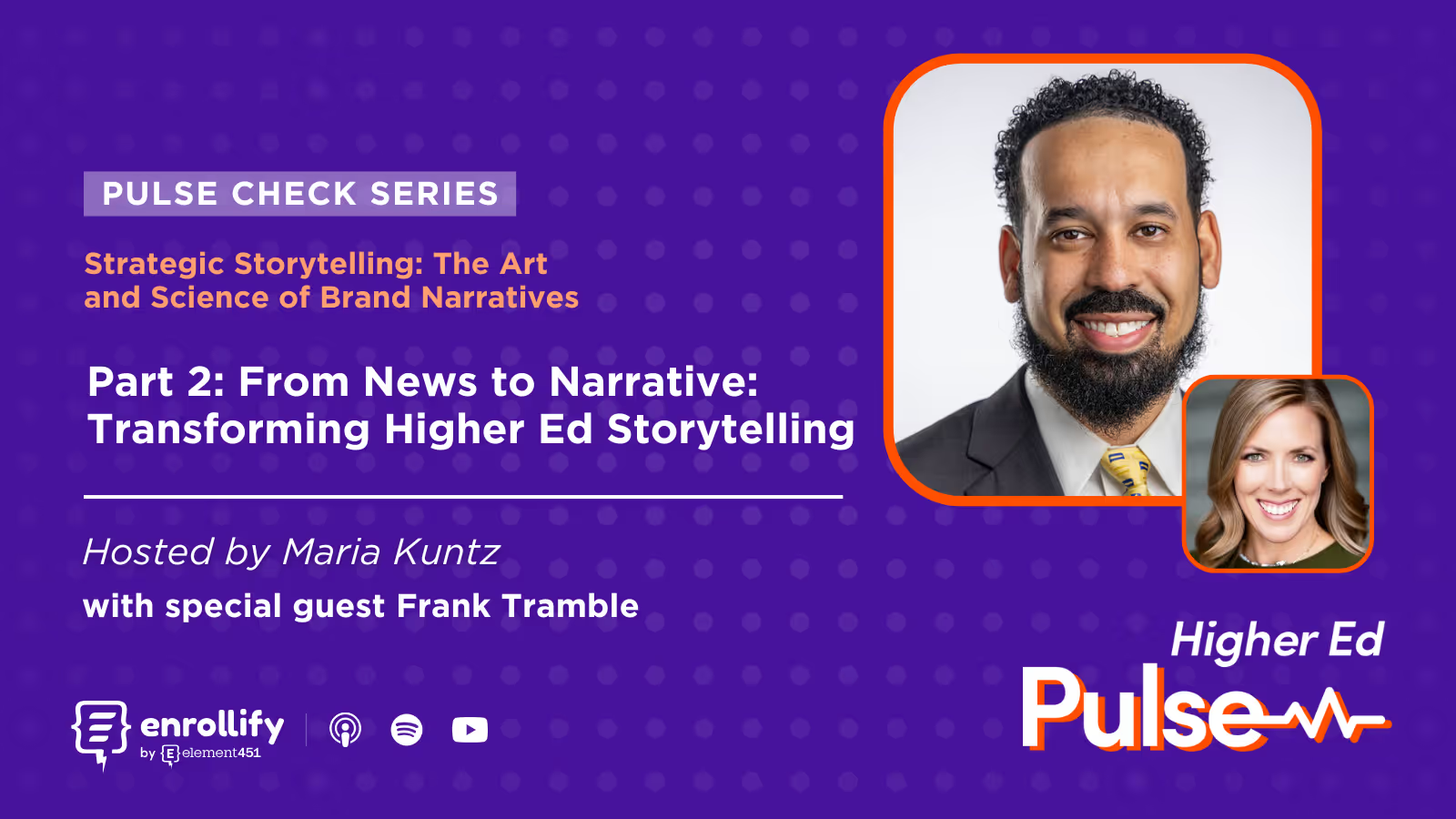




About the Episode
About The Episode:
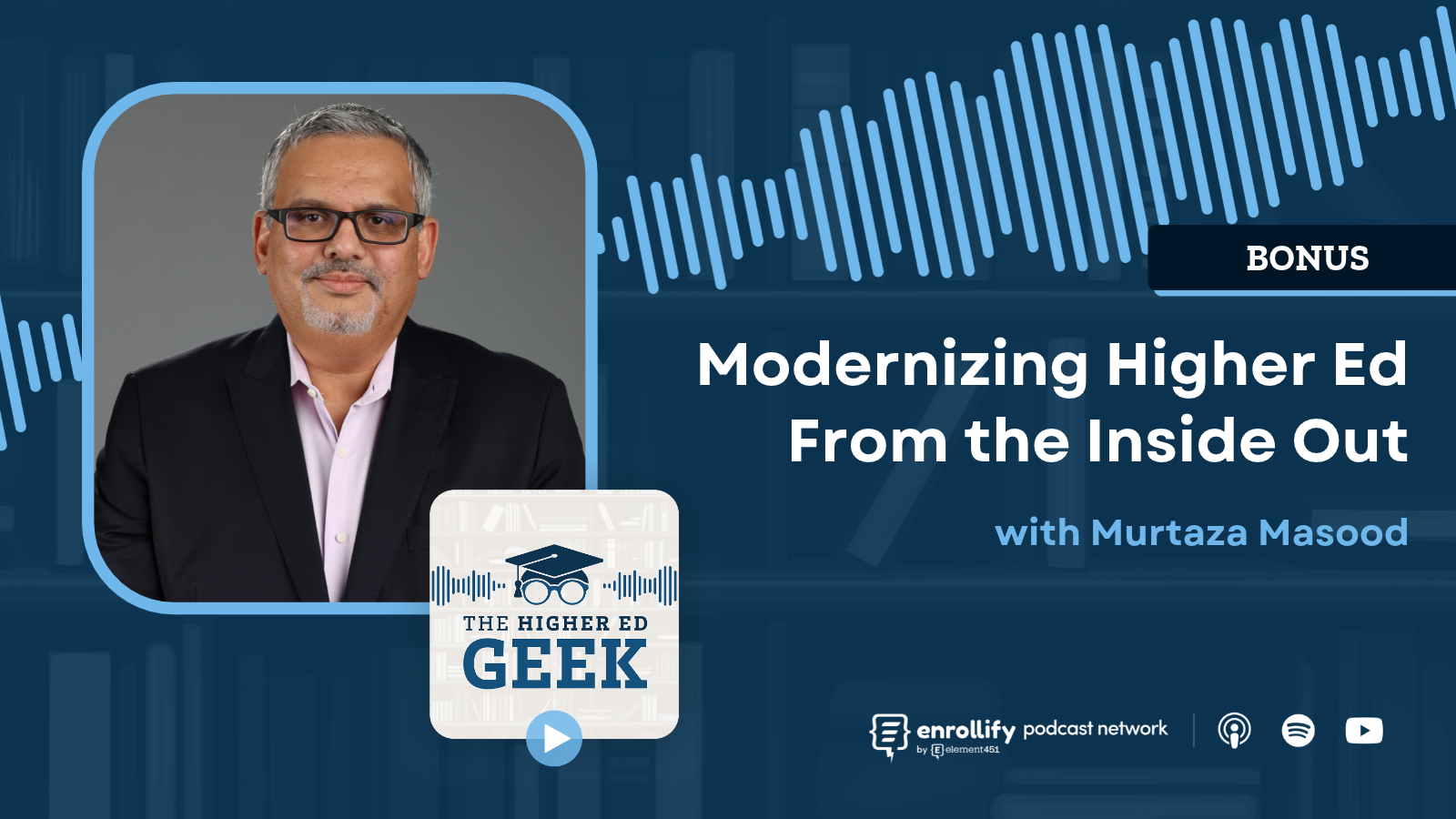
Frank Tramble shares about the importance of an integrated marketing and communications strategy, understanding your audience's core motivations to create more impactful messages and the need to always to be learning.
Key Takeaways
- News vs. Brand Storytelling: News shares "what's happening," but brand storytelling filters this through the institution’s values and strategic priorities.
- Audience-first strategy is key: Higher ed marketers must focus on their audience’s behaviors and interests rather than assumptions about what their institution finds important.
- Define clear filters for storytelling: Use strategic priorities and organizational goals to determine which stories to amplify at scale.
- It’s not about doing more—it’s about doing better: Deep storytelling and targeted campaigns are more impactful than shallow, scattered efforts.
- Experimentation fuels growth: Testing new strategies and tools, even with the possibility of failure, is essential for staying relevant in an ever-evolving marketing landscape.
What’s the Difference Between News and Brand Storytelling?
The evolution of media has fundamentally shifted the way audiences engage with higher education institutions. Frank Tramble explains that traditional news storytelling primarily shared what was happening at an institution—through newspapers, local TV, or campus updates. However, in today’s digital landscape, with social media and 24-hour news cycles, the focus has shifted to strategic brand storytelling.
Brand storytelling is about aligning institutional narratives with core values and priorities, ensuring every story communicates the "why" behind the institution’s identity. For example, a news story might celebrate a campus event like planting a tree, but a brand story would dig deeper, exploring the significance of the tree to the university’s history, its symbolism, or its impact on sustainability initiatives. Frank emphasizes that both formats have value, but brand storytelling must resonate with audience interests and behaviors to have the greatest impact.
How Can Higher Ed Marketers Decide Which Stories to Tell?
With hundreds of potential stories at their fingertips, how do higher ed marketers determine which ones to prioritize? Frank suggests applying "filters":
- Strategic Vision and Priorities: Align stories with the institution’s mission, such as interdisciplinary collaboration or innovation.
- Audience Relevance: Focus on what resonates most with prospective students, alumni, and other key stakeholders.
- Ecosystem Role: Central marketing teams should focus on the “big picture” brand story, while departmental teams can tell more specific narratives.
At Duke, Frank's team considers interdisciplinary collaboration a core value. For a new academic program, for example, the central team might emphasize how it connects multiple schools and impacts the broader institution. Filters like this ensure consistency across campaigns and prevent duplication of efforts across departments.
Why Should Higher Ed Marketing Be Audience-First?
Frank highlights the importance of understanding the psychology behind audience behavior. Drawing from his background in advertising and psychology, he explains that successful campaigns rely on identifying the key motivators driving action. For instance, while a student might not be swayed by rankings alone, showcasing a vibrant student community or unique academic opportunities might resonate more.
A critical insight? The rule of seven: audiences need to encounter a message at least seven times before it sticks. That’s why campaigns that deliver a cohesive message across multiple platforms—social media, email, web, and in-person events—are far more effective than one-off stories. This steady drumbeat of storytelling helps build familiarity and trust over time.
How Can Marketers Balance Tradition with Innovation?
One of Frank’s key lessons is the importance of questioning tradition. He advocates for regularly evaluating long-standing processes and asking two critical questions:
- Why are we still doing this?
- Should we still be doing this?
While traditions can be valuable, they should never hold back innovation. Frank encourages teams to stay adaptable, especially in the face of evolving tools like AI and social media platforms. For example, while considering platforms like Threads or BlueSky, his team first ensures they have a six-month content plan before fully committing resources.
The key to success? Embrace experimentation. Higher ed marketers should feel empowered to test new strategies and accept that failure is part of the learning process. A failed, well-planned effort teaches valuable lessons, while a randomly successful campaign might not provide the insights needed for future replication.
What’s the Role of Campaigns in Higher Ed Storytelling?
Campaigns are a cornerstone of strategic storytelling, allowing institutions to dive deep into specific narratives while creating memorable touchpoints for their audience. Frank emphasizes that everything in marketing can be viewed as a campaign, whether it’s a mini-campaign spread across two channels or a long-term effort spanning years.
Campaigns should focus on depth rather than breadth. Instead of scattering resources across multiple disconnected messages, prioritize a steady, consistent message that builds awareness and connection over time. For example, rather than simply announcing a university’s research ranking, a campaign might explore the people behind the research, the societal impact, and how it connects to prospective students' lives.
By centering campaigns on audience needs and behaviors, higher ed marketers can craft stories that not only inform but inspire action and loyalty.
Enrollify is produced by Element451 — the next-generation AI student engagement platform helping institutions create meaningful and personalized interactions with students. Learn more at element451.com.
Attend the 2025 Engage Summit!
The Engage Summit is the premier conference for forward-thinking leaders and practitioners dedicated to exploring the transformative power of AI in education.
Explore the strategies and tools to step into the next generation of student engagement, supercharged by AI. You'll leave ready to deliver the most personalized digital engagement experience every step of the way.
👉🏻 Register now to secure your spot in Charlotte, NC, on June 24-25, 2025! Early bird registration ends February 1st.



.svg)
.svg)
