






About the Episode
The AI Engage Summit is a free, virtual experience built to help higher ed leaders actually do something with AI. Over two afternoons, you’ll hear from peers, see practical demos, and walk away with ideas you can use immediately — no travel required, no cost to attend. If you’re ready to move AI from “interesting” to “impactful,” this is the place to be. Register now, don't miss out.
About The Episode:
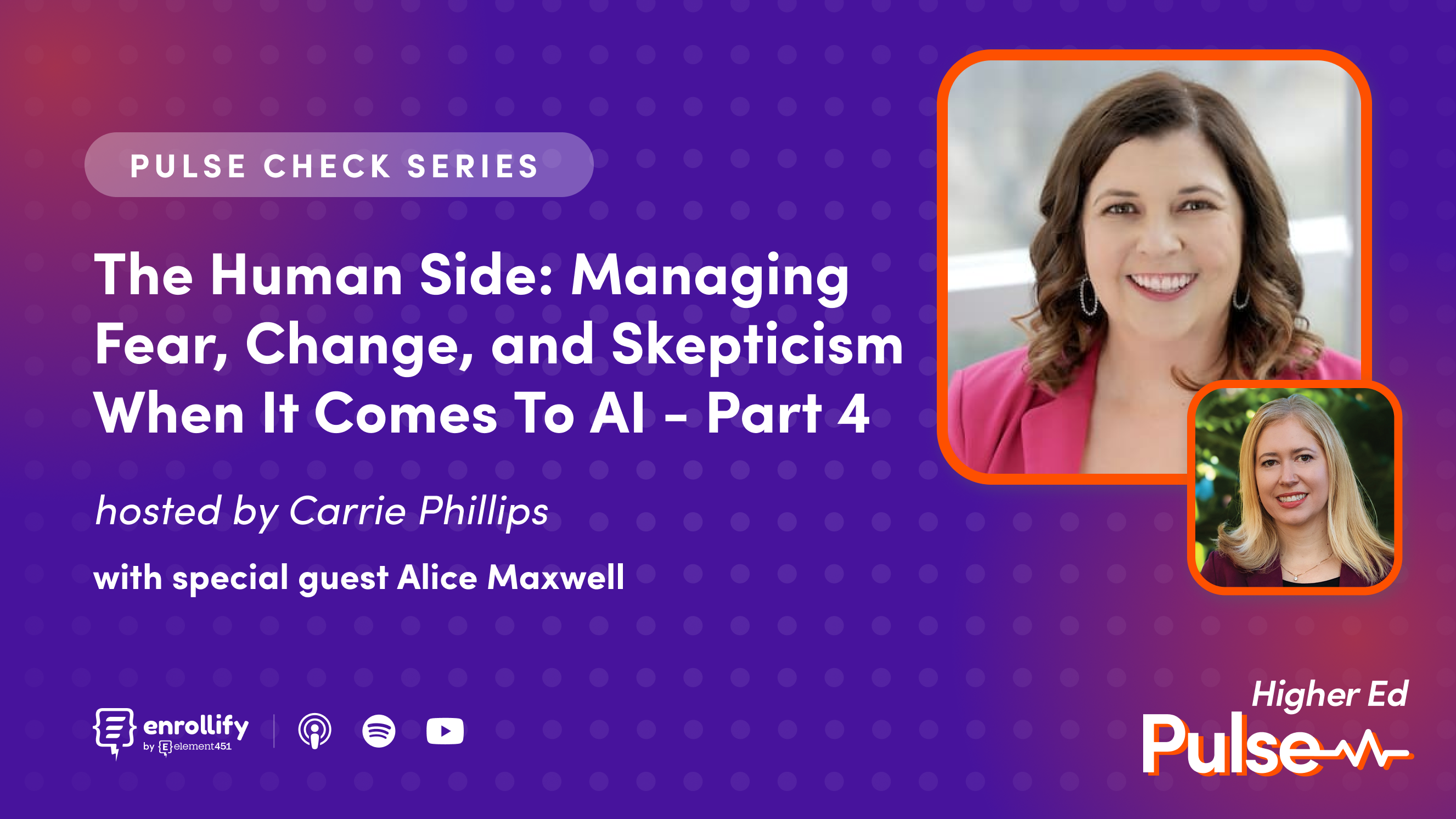
Carrie Phillips chats with Alice Maxwell to discuss how AI intersects with student-centered work. As someone who leads a marketing and communications team within student affairs, Alice shares how she’s thinking about AI through the lens of trust, communication, and bringing people along through change. They talk honestly about skepticism, what’s working, and how to use AI without losing the human connection that matters so much in Student Affairs. If you’re navigating AI in roles where people come first, this conversation will feel familiar, in a good way.
Key Takeaways
- AI adoption in student-facing marketing teams requires a blend of empathy, experimentation, and communication transparency.
- Trust and authenticity are critical when integrating AI into student engagement strategies.
- Student Affairs teams can use AI for more than marketing—AI can support retention, personalized support, and career readiness.
- Cross-campus collaboration (especially with IT departments) accelerates AI integration and innovation.
- Empowering staff with AI education and hands-on training helps reduce skepticism and fosters a growth mindset.
Episode Summary: What You’ll Learn About AI and Communication in Student Affairs
How is AI showing up differently in student-facing communications versus centralized marketing?
Unlike centralized marketing offices that often focus on recruitment and brand messaging, student affairs teams are deeply people-focused and student-facing. Alice Maxwell explains that this nuance shapes how her team approaches AI. With a strong background in both centralized marketing and student affairs, she highlights that using AI requires balancing technological efficiency with a commitment to human connection. AI tools like Sprout Social and Salesforce Marketing Cloud help her team streamline processes and personalize student outreach, without losing the personal touch.
What AI tools are being used in student affairs marketing teams?
Alice shares a range of practical tools her team uses regularly. These include Sprout Social for AI-enhanced caption writing, Salesforce Marketing Cloud for journey-based email communications, and Adobe’s AI features for faster photo and podcast editing. Her team also experiments with tools like Co-Pilot and Gemini, always with support from their IT department. Importantly, they focus on using AI already embedded in their existing platforms—a key insight for teams unsure where to start with ed tech tools.
How do you manage fear and skepticism around AI in higher education?
Alice emphasizes the importance of creating a safe space for exploration. She notes that student affairs professionals may initially resist AI due to concerns over privacy, creative integrity, or simply fear of the unknown. To address this, her division launched a Professional Growth and Innovation Summit, inviting neighboring institutions and featuring sessions on AI literacy, prompting workshops, and productivity boosts. They also host monthly division-wide marketing meetings to showcase real-world AI use cases and encourage curiosity and experimentation.
What role does leadership play in guiding teams through AI adoption?
Leaders need to act as “horizon scanners,” says Alice. That means staying up-to-date with trends in higher education content marketing and being open to tools that enhance—not replace—the human elements of communication. She suggests leaders help their teams understand AI’s potential for streamlining work so they can spend more time with students, not less. Alice recommends following trusted voices in the space, like CASE and Claire Brady, for digestible updates and credible insights.
How can AI be used beyond marketing—for retention and student success?
Alice and her team are expanding the use of AI to predict student behaviors and support retention. She explains how AI can track indicators like students searching for information on how to drop a class, then trigger timely interventions with supportive resources. They're also working on using AI to help students align career paths with required academic steps, offering tailored guidance based on individual interests and aspirations. It’s a fresh reminder that AI in higher education isn’t just about recruitment—it’s about student success.
What advice would you give to other higher ed leaders just starting their AI journey?
Start small, stay curious, and follow credible sources. Alice encourages leaders to plug into trusted networks, read industry articles, and subscribe to short-form updates from AI-savvy professionals. She believes momentum grows when teams feel safe to experiment and when leadership champions ongoing learning. Her approach is a testament to building a culture of innovation rooted in people-first practices.
Enrollify is produced by Element451 — the next-generation AI student engagement platform helping institutions create meaningful and personalized interactions with students. Learn more at element451.com.



.svg)
.svg)
