






About the Episode
About The Episode:
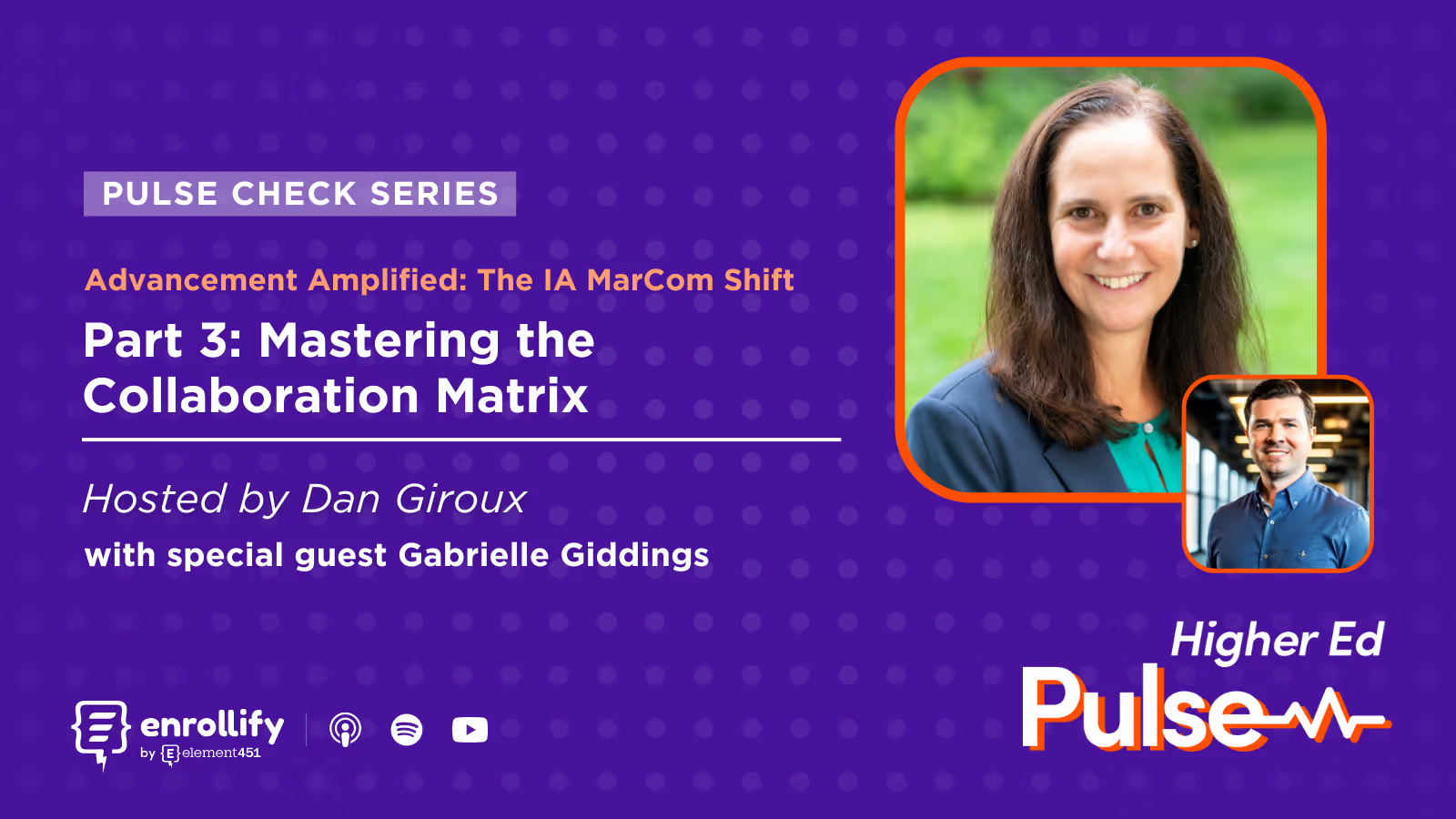
Dan Giroux sits down with Gabrielle Giddings, Associate Vice Chancellor for Campaigns at the University of Denver, to explore the ever-relevant challenge of cross-campus collaboration in higher ed marketing and communications. The episode is part of a five-part pulse check on how advancement marcom teams can evolve from reactive order-takers to proactive strategic partners. In this installment, Gabrielle shares how her team supports DU’s billion-dollar “Denver Difference” campaign by building trust, leveraging shared systems, and aligning priorities across a complex matrix campus.
If you’ve ever struggled with silos, unclear ownership, or misaligned timelines in your advancement shop, this episode offers practical strategies and real-life case studies to help you recalibrate.
Key Takeaways
- Matrixed campuses demand matrixed relationships. Successful collaboration begins with understanding the unique roles, goals, and pressures of various units, from admissions to advancement to faculty.
- Relationship-building is the foundation. Formal authority is rare in advancement MarCom, so influence must be earned through trust and consistency—not hierarchy.
- Strategic planning enables agility. When teams proactively map out communications and events calendars, they can better accommodate last-minute high-impact requests without derailing everything.
- Project management tools are critical—but only if people use them. DU uses platforms like Asana, Wrike, and TeamUp to coordinate work, but success hinges on continuous education and usability.
- Customized intake processes improve outcomes. A one-size-fits-all form won’t cut it—flexibility and conversation-based approaches are essential to uncovering the real needs behind a request.
- Saying “no” isn’t the point—saying “yes, but not yet” with transparency is. Having a centralized view of current priorities helps teams make smart trade-offs collaboratively.
- Brand collaboration can pay off big. DU’s “Denver Difference” campaign identity was co-developed with central marketing and is now being used in student recruitment as well—a rare and powerful alignment.
- Successful stories can translate to donor dollars. A recent donor gift was directly attributed to a compelling campaign-related magazine article—showing how storytelling and fundraising go hand-in-hand.
Episode Summary: FAQs from the Conversation
Where does cross-campus collaboration most often break down?
Gabrielle points to the lack of relationship-building as the key failure point. When teams don’t understand each other’s roles or pressures—especially in a decentralized model—silos emerge. Add to that the speed and complexity of information flow in higher ed, and it’s easy for communication to fracture.
What does the “matrix” environment look like at DU?
At the University of Denver, advancement communications works alongside central marketing, admissions marketing, faculty, and frontline development officers. Each group has its own priorities—from enrollment to research visibility to donor relations—and while those goals may seem in conflict, Gabrielle emphasizes they can be made complementary with intentional planning and shared storytelling frameworks.
What systems and tools does DU use to manage collaboration?
DU’s advancement marcom team uses Asana for internal project management, while staying synced with the university’s Wrike editorial calendar. They also maintain an open-access calendar in TeamUp to promote visibility across advancement units. While these systems are helpful, Gabrielle stresses that their success depends on consistent use and proactive communication—not just tech implementation.
How does DU manage campaign-related communications across units?
Gabrielle shares how her team co-developed the “Denver Difference” campaign identity in close partnership with central marketing and unit-level communicators. Each school and unit received personalized materials and story placements for the launch, ensuring the campaign felt “owned” by all, not just advancement. This inclusive approach helped increase buy-in, visibility, and momentum across campus.
How does the team balance planned work with unpredictable high-priority requests?
Through intentional annual planning and proactive pipeline mapping, DU’s team can distinguish between urgent, reactive, and poor planning requests. When a request arrives mid-stream, Gabrielle emphasizes the value of honest conversations about trade-offs, capacity, and real urgency—supported by transparent project lists that make prioritization more objective.
What about intake processes? Are forms still useful?
Gabrielle’s team is rethinking intake entirely. While forms help collect vital info, they can’t replace a strategy conversation. And for some partners, a form may be a barrier rather than a facilitator. Her team is working on striking the balance between scalable systems and human connection, while also acknowledging that some partners may never fill out a form—and that’s okay.
How do they navigate limited authority in a decentralized environment?
Without formal power over other departments, Gabrielle’s team leads with influence. By providing visibility into their workload, having regular check-ins with unit leaders, and engaging in honest trade-offs, they build credibility over time. Partnering with senior advancement leadership in these decisions gives the team more leverage when tough prioritization conversations arise.
How do they demonstrate impact and share wins?
From event ROI to proposal outcomes to alumni engagement, Gabrielle’s team tracks a range of success metrics. But not all wins are measurable. The reduction in alumni magazine complaints after a collaborative list refresh? That’s a win. A donor making a six-figure gift after reading a campaign article? That’s a win. And they share these stories upward and outward to reinforce the value of their work.
The Advancement Strategic Communicators Network is a growing national hub for higher education philanthropic communicators. Learn more on the ASC website (https://asc.ucdavis.edu/) or join the ASC Linkedin Group (https://www.linkedin.com/groups/12740101/) to get connected.
Enrollify is produced by Element451 — the next-generation AI student engagement platform helping institutions create meaningful and personalized interactions with students. Learn more at element451.com.






.svg)
.svg)
