


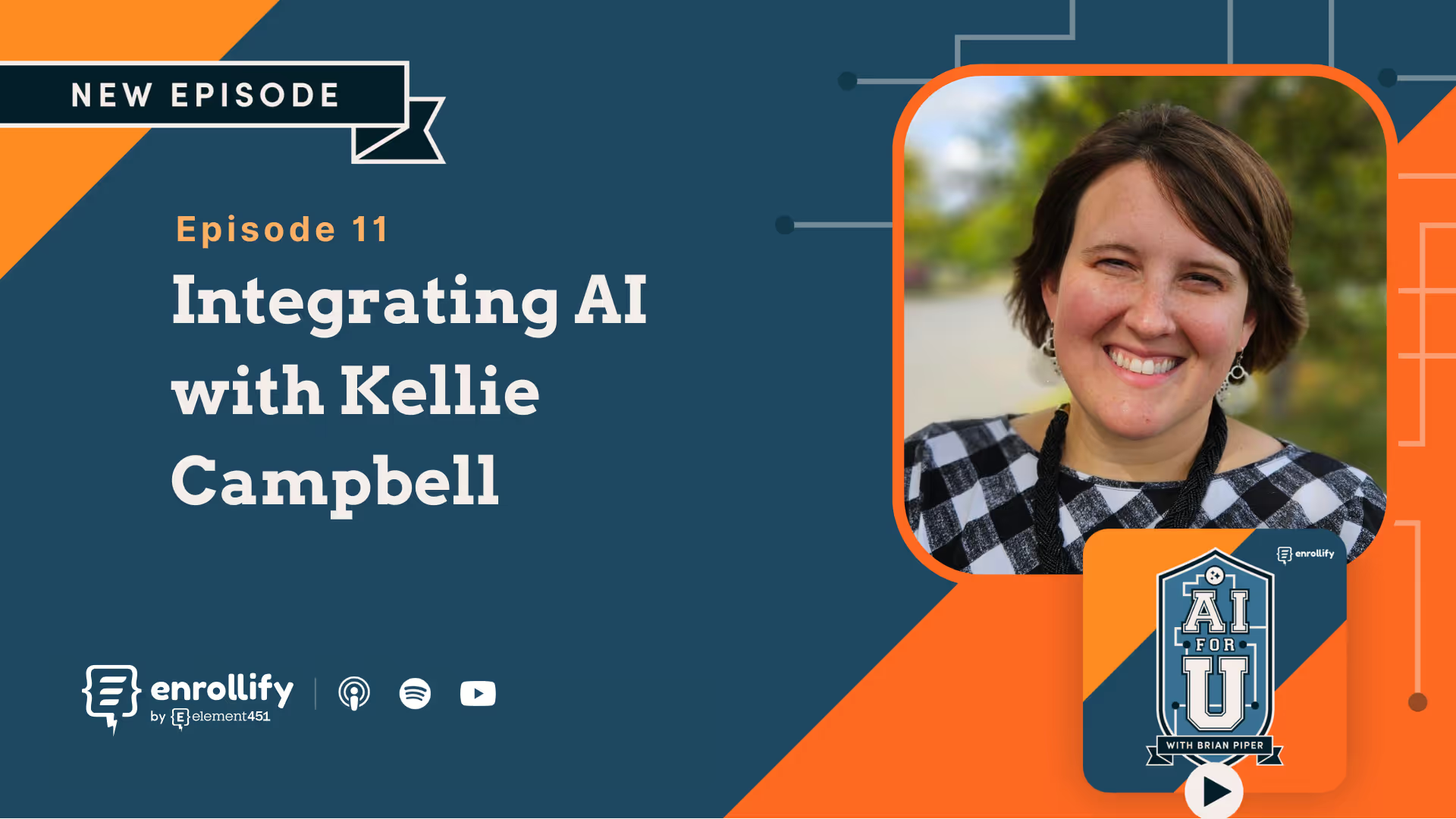




About the Episode
Got a story to tell? An innovative idea to share? Fill out our guest nomination form and let's chat!
About The Episode:
Join us as Kellie Campbell, CIO of Vermont State Colleges System, shares insights on building AI readiness across multiple institutions. Learn about creating system-wide approaches to AI adoption, preparing institutional data foundations, and developing strategies for workforce preparation.
Episode prompt:
You are an experienced higher education HR professional specializing in job description development at [school name] [provide url if using chatGPT]. Before creating the job description, ask me the neccesary questions ONE AT A TIME in order to gather all the information needed about the job based on the sample job descriptions that have been provided. After I provide a response, ask the next relevant question. Do not move on until you have gathered the necessary information to create a new job description based on the supplied example.
Potential Information Gathering Questions:
1. Position Basics
- What is the position title?
- Which department/unit?
- Who does this position report to?
- Is this full-time, part-time, or temporary?
- What is the FLSA status (exempt/non-exempt)?
- Are there any special work arrangements (hybrid, remote, etc.)?
2. Role Context
- What is the primary purpose of this position?
- What strategic goals does this role support?
- What challenges is this role meant to address?
- What makes this role unique at your institution?
3. Team Structure
- How many direct reports (if any)?
- What other positions will they work closely with?
- What committees or working groups will they serve on?
- What stakeholders will they interact with regularly?
4. Requirements
- What required education level?
- What required years of experience?
- What specific technical skills are required?
- What certifications or licenses are needed?
- What soft skills are essential?
5. Responsibilities
- What are the primary duties?
- How is time typically divided between different duties?
- What are the key deliverables?
- What routine tasks are involved?
- What strategic initiatives will they lead?
6. Institution-Specific
- What values should be emphasized?
- Are there any special institutional requirements?
- What unique aspects of your culture should be highlighted?
- Any specific DEI commitments to include?
After gathering this information, I will:
1. Analyze your sample job description to match style and format
2. Draft a comprehensive description following your institutional template
3. Include any standard language or sections from your sample
4. Ensure all required compliance statements are included
5. Maintain consistent tone and terminology
Important Reminders:
- All language will be inclusive and unbiased
- Skills will be clearly marked as required vs. preferred
- Responsibilities will be action-oriented and specific
- Format will match institutional standards from the supplied example
- Salary range will be included if required by law
- Equal opportunity and accessibility statements will be included
Begin asking the necessary questions. Do NOT ask a question from the list above unless it is specifically required in the example job description, and then, take your time creating the new job description in the same format as the example.
Key Takeaways
- AI Readiness Requires a Holistic Approach: Institutions should consider governance, data integrity, and workforce readiness when starting their AI initiatives.
- Customization Across Institutions: Community colleges and four-year universities may adopt AI differently based on their unique missions and student demographics.
- Cross-Departmental Adoption: Administrative teams and academic faculty are exploring AI in distinct ways, from streamlining workflows to rethinking student assessments.
- Data and Content Governance is Critical: Clean, updated, and accessible data is a foundational step for effective AI integration.
- Strategic Starting Points: Small proofs of concept and frameworks like EDUCAUSE's Generative AI Readiness can help institutions begin the conversation around AI.
- AI as a Workforce Tool: Beyond automation, AI is an opportunity to enhance human productivity and shift focus to high-impact tasks.
Episode Summary
What Is Vermont State Colleges’ Approach to AI Integration?
Kellie Campbell explains how Vermont State Colleges System, formed through a consolidation of multiple institutions, is approaching AI integration system-wide. The priority is readiness—aligning policies, resources, and workforce training while acknowledging varying levels of adoption readiness among campuses. By fostering collaboration across institutions, the system seeks to build a unified yet flexible strategy for AI implementation.
What Are the Key Differences in AI Adoption Across Institutions?
According to Kellie, Vermont’s community colleges are naturally more agile and open to rapid AI adoption due to their unique mission of serving diverse and nontraditional students. Meanwhile, the four-year institutions are adopting a more measured pace, focusing on long-term integration that aligns with academic goals. This dual approach allows for tailored solutions that respect each institution's culture and needs.
Where Do Enthusiasm and Resistance Arise in AI Adoption?
Faculty reactions vary widely, from enthusiastic experimentation with AI tools to concerns over changes in student learning assessments. Administrative teams, particularly in student services, are eager to leverage AI for streamlining tasks like answering common student inquiries. Leadership buy-in remains essential, and Kellie highlights the importance of framing AI as a student-centered investment to overcome resistance.
Why Is Data Governance a Critical Step?
Kellie emphasizes that clean, well-organized data is foundational to successful AI adoption. Vermont State Colleges System is undergoing significant data cleanup as part of their enterprise resource planning (ERP) project, addressing legacy systems and siloed data. She also highlights readiness efforts in their Microsoft 365 environment, ensuring data security and accessibility for AI tools.
How Can Institutions Begin Their AI Journey?
For institutions unsure where to start, Kellie suggests using frameworks like EDUCAUSE’s Generative AI Readiness. Convening diverse stakeholders to discuss governance, security, and priorities can reveal actionable starting points. Small-scale pilots or proofs of concept can demonstrate AI's value and build momentum for broader adoption.
What Are the Ethical Considerations Around AI in Higher Ed?
Kellie stresses the importance of diversity, equity, and inclusion in AI development and deployment. Ensuring diverse perspectives in data creation and decision-making processes can mitigate biases and improve outcomes. She challenges higher education institutions to lead the way in addressing these ethical concerns.
How Is AI Being Used for Academic and Administrative Tasks?
Examples range from AI-powered student services chatbots to virtual academic tutors that provide just-in-time learning support. On the administrative side, tools like Microsoft Co-Pilot are enhancing productivity by summarizing emails, taking notes, and automating repetitive tasks. These innovations free up time for more strategic initiatives.
Connect With Our Host:
Brian Piper
https://www.linkedin.com/in/brianwpiper/
About The Enrollify Podcast Network:
AI for U is a part of the Enrollify Podcast Network. If you like this podcast, chances are you’ll like other Enrollify shows too!
Some of our favorites include Generation AI and Mastering the Next.
Enrollify is produced by Element451 — the next-generation AI student engagement platform helping institutions create meaningful and personalized interactions with students. Learn more at element451.com.
Attend the 2025 Engage Summit!
The Engage Summit is the premier conference for forward-thinking leaders and practitioners dedicated to exploring the transformative power of AI in education.
Explore the strategies and tools to step into the next generation of student engagement, supercharged by AI. You'll leave ready to deliver the most personalized digital engagement experience every step of the way.
👉🏻 Register now to secure your spot in Charlotte, NC, on June 24-25, 2025! Early bird registration ends February 1st.



.svg)
.svg)
