






About the Episode
Got a story to tell? An innovative idea to share? Fill out our guest nomination form and let's chat!
About the Episode:
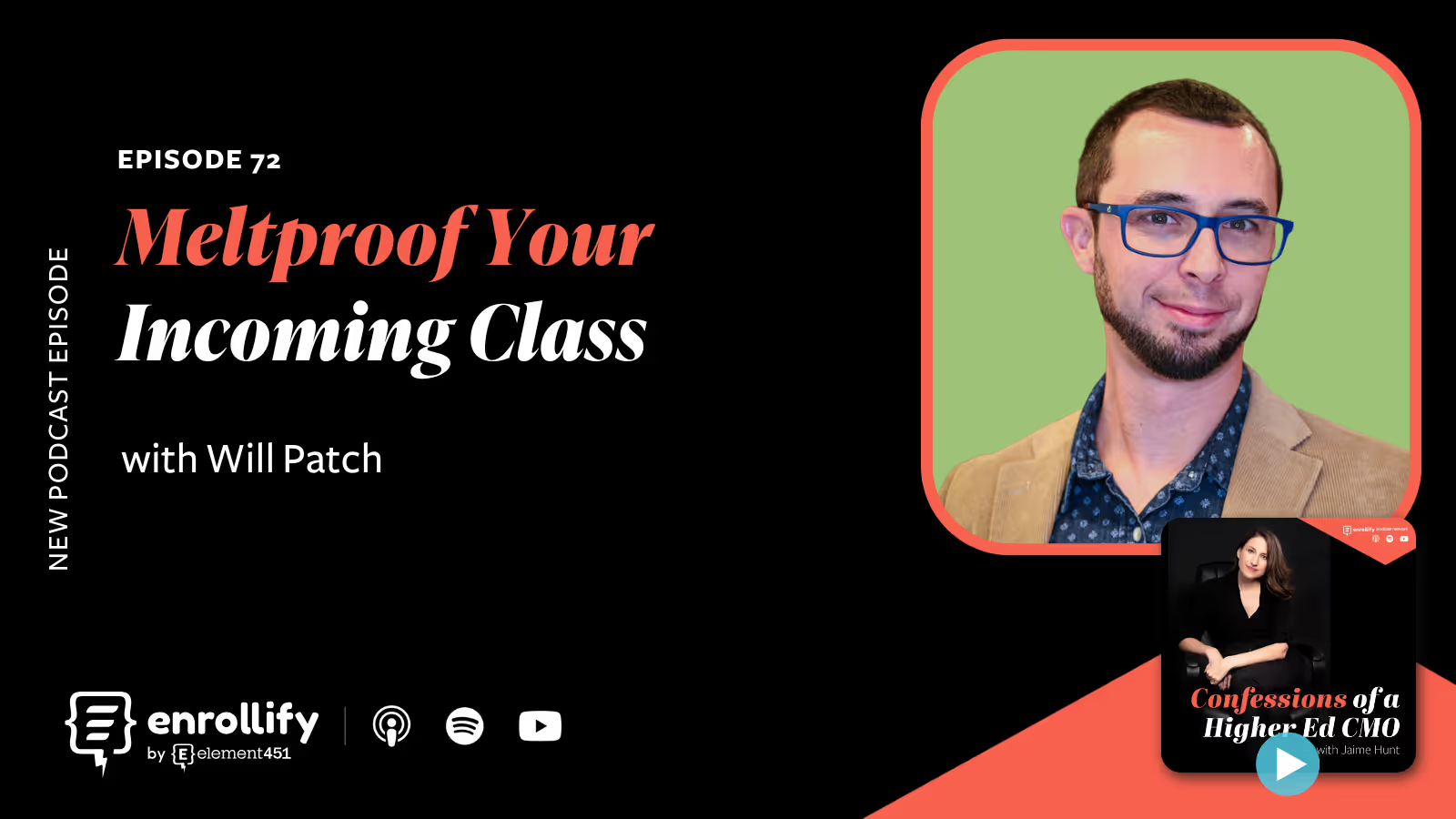
In this episode of Confessions of a Higher Ed CMO, host Jaime Hunt sits down with enrollment marketing expert Will Patch to tackle a critical issue in higher education—summer melt. They explore the key reasons why admitted students fail to enroll in the fall and share actionable strategies to combat melt before it happens. From financial aid misunderstandings to social anxieties, they discuss how institutions can proactively support students and improve yield. If you’re looking for ways to refine your enrollment marketing and retention strategies, this conversation is packed with valuable insights.
Key Takeaways
- Summer melt is preventable—but strategies must start early, long before June.
- Financial barriers are a major cause of melt, especially for first-generation and low-income students. Clear, proactive financial aid communication is crucial.
- Social anxieties play a significant role—helping students feel a sense of belonging early can make a difference.
- Parents are key influencers—providing them with resources and guidance can help reinforce their student’s decision.
- A strong anti-melt communication flow should include personalized outreach, two-way conversations, and content that addresses student concerns.
- Mental health support is critical—institutions should ensure students know where and how to access resources.
- Data-driven strategies should guide enrollment marketing efforts, ensuring institutions focus on what truly moves the needle.
What Is Summer Melt and Why Does It Happen?
Summer melt refers to the phenomenon where students commit to a college (through a deposit or other means) but ultimately do not enroll in the fall. While some melt is inevitable, a large portion is preventable with the right strategies. The two biggest contributors to melt are financial challenges and social anxieties.Financially, many students and families realize too late that they are unable to afford the costs, or they misunderstand their financial aid package. Socially, students may feel uncertain about their ability to succeed, worry about fitting in, or struggle with the idea of leaving home. These fears can be exacerbated if they don’t feel connected to the institution before they arrive.Additionally, intentional melt has become more common, with students placing deposits at multiple institutions to keep their options open. This makes yield forecasting more difficult and further complicates enrollment strategies.
How Can Institutions Reduce Summer Melt?
1. Build Early Affinity and Belonging
To prevent summer melt, institutions must start fostering a sense of community early—before a student even deposits. Strategies include:
- Engaging students with faculty, staff, and current students through personalized outreach and virtual meetups.
- Encouraging early participation in campus events, online forums, and social media groups to build connections.
- Assigning student mentors or ambassadors to check in and answer questions.
The more "sticky" relationships a student builds with a college—whether through faculty, staff, or peers—the less likely they are to back out before the fall.
2. Improve Financial Aid Communication
Financial uncertainty is one of the biggest drivers of summer melt. Colleges need to ensure that students and families clearly understand their financial aid packages by:
- Providing easy-to-read financial aid letters that differentiate between grants, loans, and scholarships.
- Hosting financial literacy workshops or Q&A sessions for admitted students and parents.
- Reaching out proactively to discuss payment plans, emergency aid, and alternative financing options.
- Training admissions and financial aid teams to have direct, transparent conversations about affordability.
Students who feel confident about their financial situation are far less likely to melt.
3. Engage Parents in the Enrollment Process
Parents are one of the most influential factors in a student’s college decision. Universities can strengthen parental involvement by:
- Creating parent-specific communications (emails, newsletters, or social media groups) with key deadlines and resources.
- Providing guides on how to support their student—covering topics like homesickness, academic struggles, and roommate conflicts.
- Encouraging parent participation in orientation programs to ease concerns.
When parents feel informed and supported, they are more likely to encourage their student to follow through with enrollment.
4. Monitor Engagement and Intervene Early
Tracking student engagement over the summer can help identify those at risk of melting. Indicators include:
- Not registering for orientation or choosing a later session.
- Failing to engage with emails, texts, or calls from the admissions team.
- Delays in completing financial aid paperwork or housing forms.
For students showing signs of disengagement, schools should reach out directly—not just with automated emails, but with personal phone calls, text messages, and invitations to one-on-one conversations.
5. Address Mental Health and Well-Being
An increasing number of students experience mental health challenges, which can make the transition to college overwhelming. Universities should:
- Clearly communicate available mental health resources and counseling services.
- Provide peer support programs to connect incoming students with those who have successfully navigated similar challenges.
- Offer flexible support options, such as teletherapy or online workshops, for students who may not be able to access in-person services.
Proactively addressing mental health concerns can help students feel more secure in their decision to enroll.
6. Use Data to Guide Strategy
Successful melt prevention strategies rely on data-driven decision-making. Institutions should:
- Analyze past melt trends to identify common risk factors among students who didn’t enroll.
- Use chatbot transcripts, search console data, and social media engagement to uncover student and parent concerns.
- Monitor response rates and adjust communication strategies based on engagement levels.
By leveraging real-time data, institutions can proactively address student concerns before they result in summer melt.
To hear this interview and many more like it, subscribe on Apple Podcasts, Spotify, or our website, or search for Confessions of a Higher Ed CMO in your favorite podcast player.
Connect With Our Host:
Jaime Hunt
https://twitter.com/JaimeHuntIMC
About The Enrollify Podcast Network:
Confessions of a Higher Ed CMO is a part of the Enrollify Podcast Network. If you like this podcast, chances are you’ll like other Enrollify shows too!
Some of our favorites include Talking Tactics and Higher Ed Pulse.
Enrollify is produced by Element451 — the next-generation AI student engagement platform helping institutions create meaningful and personalized interactions with students. Learn more at element451.com.
Attend the 2025 Engage Summit!
The Engage Summit is the premier conference for forward-thinking leaders and practitioners dedicated to exploring the transformative power of AI in education.
Explore the strategies and tools to step into the next generation of student engagement, supercharged by AI. You'll leave ready to deliver the most personalized digital engagement experience every step of the way.
👉🏻 Register now to secure your spot in Charlotte, NC, on June 24-25, 2025!






.svg)
.svg)
