






About the Episode
Got a story to tell? An innovative idea to share? Fill out our guest nomination form and let's chat!
About the Episode:
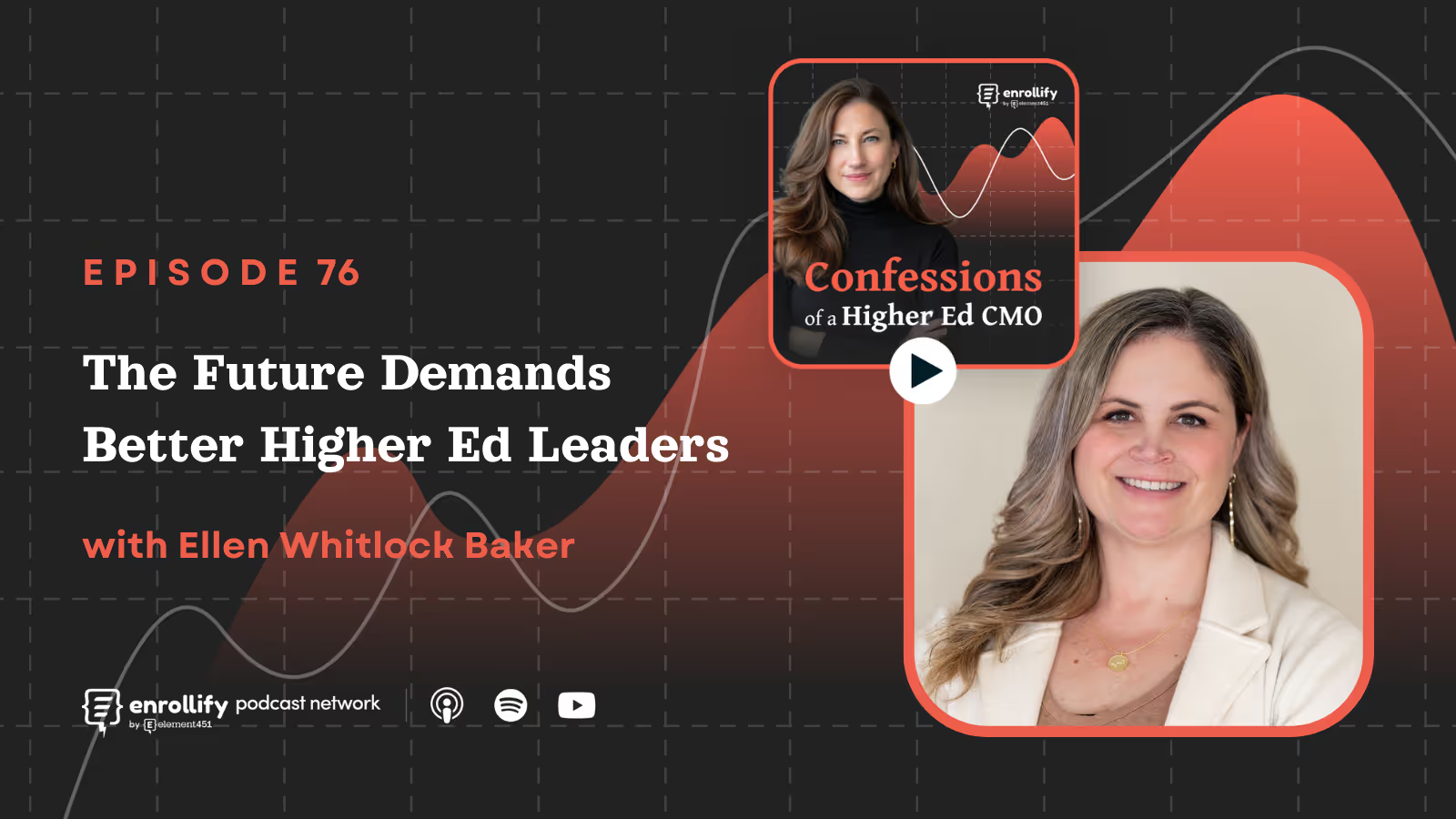
Jaime Hunt sits down with Ellen Whitlock Baker — executive coach, leadership consultant, and founder of EWB Coaching — for a candid, no-holds-barred conversation on what truly makes a good leader in higher education. They tackle toxic workplace norms, explore the role of empathy in leadership, and dig into how AI and generational shifts are reshaping leadership expectations. If you're rethinking what it means to lead well in this evolving higher ed landscape, this is your blueprint.
Key Takeaways
- Leadership in higher ed must evolve, moving away from toxic norms rooted in outdated ideas of professionalism.
- Empathy is not optional — it’s a foundational leadership skill that drives loyalty, trust, and team performance.
- AI in higher education can reduce busywork and free up time for strategic, human-centered leadership — but only if adopted with playfulness and curiosity.
- Psychological safety is critical for innovation, creativity, and authentic workplace culture.
- Women, especially women of color, face unique leadership challenges, and structural change is needed to create truly inclusive workspaces.
Why Empathy Is the Most Undervalued Leadership Skill in Higher Ed
Ellen Whitlock Baker opens the conversation with a personal truth: she left higher ed and only then realized how deeply toxic some workplace norms had become. From being told she didn’t “fit the mold” of a professional to witnessing (and experiencing) a culture that rewarded overwork and conformity, Ellen began to question the very definition of good leadership.
Together with host Jaime Hunt, they reflect on the invisible weight leaders — particularly women and women of color — often carry in trying to meet impossible expectations. Jaime shares how altering her natural voice to sound more “professional” led to long-term health consequences. The message? Professionalism, as historically defined, is rooted in systemic bias — and the cost of complying can be severe.
True leadership, they argue, starts with seeing the human being behind the employee. Empathy is more than offering sympathy — it’s actively working to support a person through complex, messy life circumstances. Whether it's offering flexible work arrangements, redistributing workloads, or simply checking in regularly, empathetic leadership creates a culture of loyalty and trust. And in today’s volatile workplace climate, that trust is everything.
The Broken Systems Keeping Higher Ed Leaders Stuck
A central theme in this episode is the mismatch between leadership ideals and institutional structures. Ellen and Jaime unpack the "mission-driven martyrdom" that plagues higher ed — where team members are expected to sacrifice well-being for the sake of the cause. Leadership training is minimal to nonexistent, and many leaders operate in survival mode — bouncing between micromanagement and neglect because they’ve never been shown how to lead effectively.
Ellen draws attention to a deeply entrenched scarcity mindset — where resources are limited, raises are hard-won, and requests for flexibility are met with resistance. Too often, institutional processes favor donors and optics over staff well-being. Jaime recounts a moment when she tried to redistribute a portion of her raise to a deserving team member — only to be told the only way to boost that employee’s pay was to wait for them to get a counteroffer. “We’ve made it so hard to even give people raises,” she says. “It’s just silly.”
They also spotlight the systemic barriers faced by marginalized professionals. From being judged more harshly when taking leave to not feeling safe showing up as their full selves at work, employees with less privilege face added emotional labor just to stay in the game. Leaders must not only create safe spaces — they must actively dismantle the systems that make work unsafe to begin with.
Reimagining Leadership in an AI-Enabled Future
Looking ahead, Ellen and Jaime explore how AI in higher education could transform leadership expectations — and possibly, leadership itself. Jaime argues that great leaders in the AI era will need two critical traits: strategic vision and tactical playfulness. They must be able to see how AI can reshape work, while also being curious and experimental enough to test new tools, delegate tasks differently, and iterate quickly.
But the rise of AI also requires a third trait: emotional intelligence. As AI handles more of the busywork, leaders are freed up to focus on the uniquely human parts of leadership — guiding change, building culture, and supporting teams through constant evolution. That’s why change management savvy and curiosity are going to be two of the most sought-after skills in the next generation of leadership.
Ellen highlights another upside of AI: it can level the playing field for people who are neurodiverse or have less experience with administrative tasks. It’s a shared tool that can democratize access to expertise — if deployed thoughtfully. But she cautions that AI won’t fix leadership dysfunction on its own. If leaders continue operating within outdated, hierarchical systems, the same toxic patterns will persist — just with more automated meeting notes.
Leading for the Future Means Dismantling the Past
Both Jaime and Ellen agree: higher ed needs to do more than keep up — it needs to break the mold. This means investing in real leadership development, prioritizing empathy, and letting go of performative programs in favor of meaningful cultural change. It also means calling out the unspoken norms that keep staff stuck in cycles of burnout, inequity, and silence.
One of the most powerful moments in the episode comes when Ellen references Jodi-Ann Burey's TED Talk, The Myth of Bringing Your Full Authentic Self to Work. The truth, she says, is that authenticity isn't equally safe for everyone. Leaders must do the hard work of creating spaces where playfulness, creativity, and vulnerability are not just allowed — they’re encouraged.
The call to action is clear: it’s time for leaders to stop replicating the models they inherited and start building something better. That means letting go of grind culture, rejecting scarcity mindsets, and shifting from toxic “family” dynamics to professional, human-centered teams.
To hear this interview and many more like it, subscribe on Apple Podcasts, Spotify, or our website, or search for Confessions of a Higher Ed CMO in your favorite podcast player.
Connect With Our Host:
Jaime Hunt
https://twitter.com/JaimeHuntIMC
About The Enrollify Podcast Network:
Confessions of a Higher Ed CMO is a part of the Enrollify Podcast Network. If you like this podcast, chances are you’ll like other Enrollify shows too!
Some of our favorites include Talking Tactics and Higher Ed Pulse.
Enrollify is produced by Element451 — the next-generation AI student engagement platform helping institutions create meaningful and personalized interactions with students. Learn more at element451.com.
Attend the 2025 Engage Summit!
The Engage Summit is the premier conference for forward-thinking leaders and practitioners dedicated to exploring the transformative power of AI in education.
Explore the strategies and tools to step into the next generation of student engagement, supercharged by AI. You'll leave ready to deliver the most personalized digital engagement experience every step of the way.
👉🏻 Register now to secure your spot in Charlotte, NC, on June 24-25, 2025!






.svg)
.svg)
