






About the Episode
Got a story to tell? An innovative idea to share? Fill out our guest nomination form and let's chat!
About the Episode:
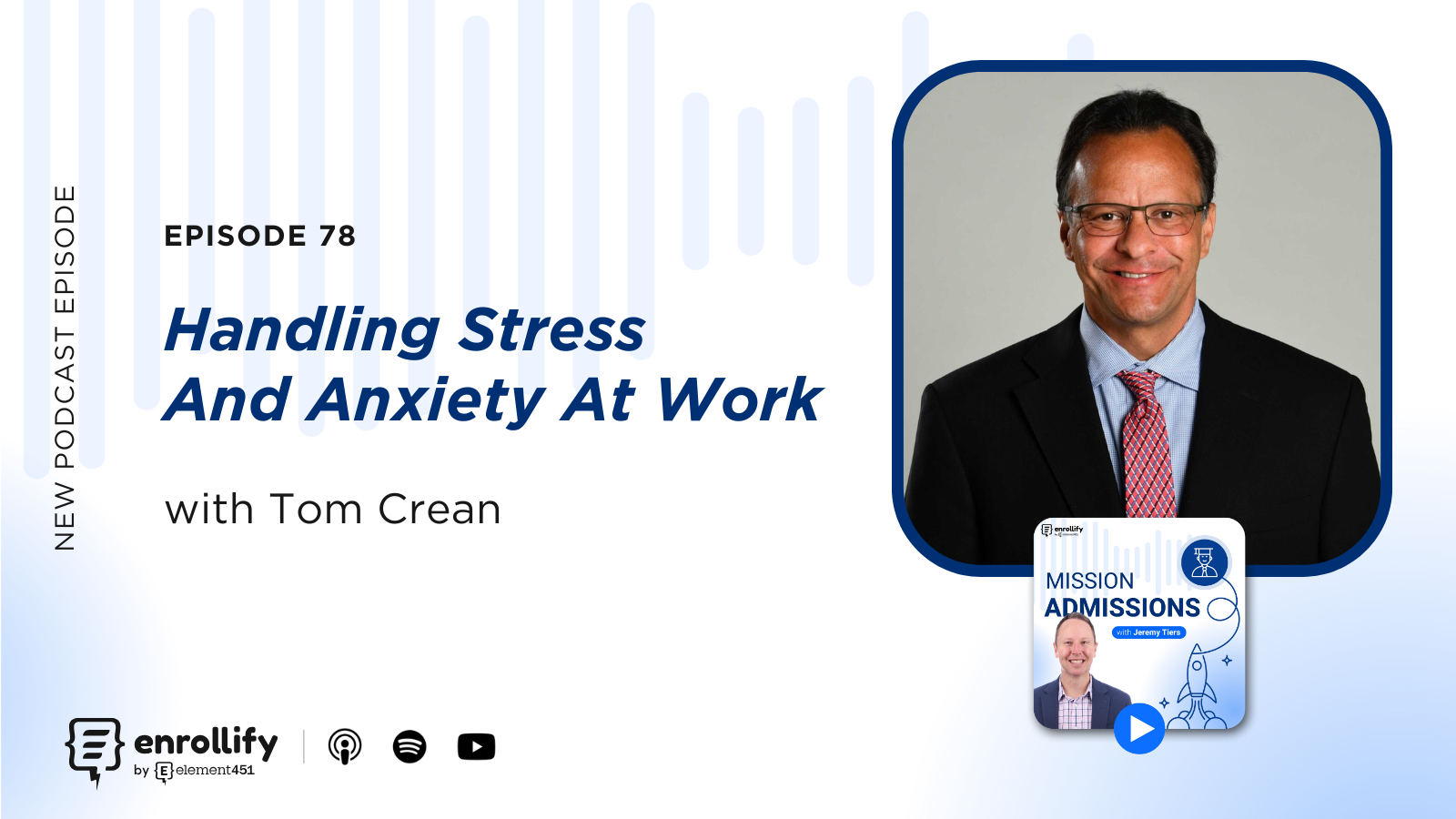
In this episode of Mission Admissions host Jeremy Tiers talks with well known former college basketball head coach Tom Crean about handling stress and anxiety in a high pressure work environment.
Key Takeaways
- Good stress vs. bad stress: Learn how to identify and convert harmful stress into productive energy.
- Preparation is everything: Crean breaks down how habits, mindset, and preparation reduce anxiety in high-stakes moments.
- Leadership through pressure: Explore how to support your team while managing your own stress as a leader.
- Managing up: Hear how to initiate honest conversations with supervisors when you're overwhelmed.
- The importance of reminders: Discover why even high performers need constant reminders to stay focused and confident.
- How energy shifts mindset: Simple changes — like physical activity or outreach to a colleague — can drastically reframe your stress levels.
- Stress and student recruitment: Draw parallels between game-day coaching and high-stakes admissions decisions.
Episode Summary: Stress, Success, and the Mindset of a Leader
What’s the difference between good and bad stress — and how can you tell?
Tom Crean opens the episode by breaking down the psychological and physiological differences between good stress (the kind that motivates) and bad stress (the kind that paralyzes). Good stress, Crean argues, often appears before meaningful moments — interviews, presentations, big recruitment visits — and usually stems from caring deeply about the outcome. Bad stress, on the other hand, often shows up when we procrastinate or ruminate without action. His advice? Process your stress through writing, physical activity, or simply acknowledging it. The act of naming it is often the first step in regaining control.
How do you identify your personal stress triggers?
Recognizing your stressors isn’t always intuitive, especially when they become routine. Crean encourages listeners to observe moments when a simple task (booking a flight, scheduling a meeting) weighs disproportionately on their mental energy. If you feel immediate relief after doing something, that was likely a stress trigger. The key is awareness — paired with proactive energy shifts. This might mean going for a walk, sending a quick thank-you text, or doing something unrelated to work that resets your mindset. For leaders and enrollment marketers, these micro-adjustments can keep your days from spiraling.
What are some practical tools for managing pressure during high-stakes moments?
Crean draws from one of the most iconic moments in recent college basketball history — Indiana’s buzzer-beating win over Kentucky in 2011 — to illustrate the power of preparation. “We had practiced that exact play,” Crean shares, “but the key was adjusting it in the moment and giving our players belief.” In pressure moments, whether you’re a coach or an admissions professional presenting to leadership, your preparation becomes your anchor. He emphasizes the importance of routines like breathing techniques, visualization, and rehearsed scenarios — all tactics that apply directly to the enrollment marketing cycle.
How should leaders help their teams manage stress?
The onus is on leaders to create open dialogue, especially when they sense pressure building. But rather than simply giving solutions, Crean stresses the importance of asking the right questions. Helping team members develop their own internal problem-solving processes builds long-term resilience. “You can’t give all the answers — they won’t learn how to think for themselves,” he says. Creating an environment where reflection, curiosity, and vulnerability are normalized will keep your team engaged — and less burned out.
What if the stress is coming from your boss — and you're afraid to speak up?
This is one of the most vulnerable questions in the episode — and Crean doesn’t shy away. His advice? Don’t enter the conversation emotionally charged. Instead, take time to breathe, reflect, and approach the dialogue with calm clarity. Whether your leader is empathetic or narcissistic, maintaining emotional control allows you to advocate for yourself without being dismissed. If possible, start with someone outside your workplace you trust — a friend, mentor, or spouse — and rehearse the conversation. Above all, Crean emphasizes, don’t isolate yourself.
When is it time to ask for help?
Stress becomes dangerous when it's chronic, and when the people closest to you are surprised by your struggles. “That means you shut them out too early,” Crean warns. Don’t wait until it’s unmanageable to reach out. He suggests identifying one person — inside or outside your organization — who can be your sounding board. Whether it’s a podcast, a sermon, or a personal check-in, consistent external input helps prevent stress from becoming overwhelming. Asking for help is not a sign of weakness — it’s a proactive step toward longevity.
Connect With Our Host:
Jeremy Tiers
https://twitter.com/CoachTiers
About The Enrollify Podcast Network: The Higher Ed Pulse is a part of the Enrollify Podcast Network. If you like this podcast, chances are you’ll like other Enrollify shows too!
Some of our favorites include Generation AI and Confessions of a Higher Education Social Media Manager.
Enrollify is produced by Element451 — the next-generation AI student engagement platform helping institutions create meaningful and personalized interactions with students. Learn more at element451.com.







.svg)
.svg)
