






About the Episode
About the Episode:
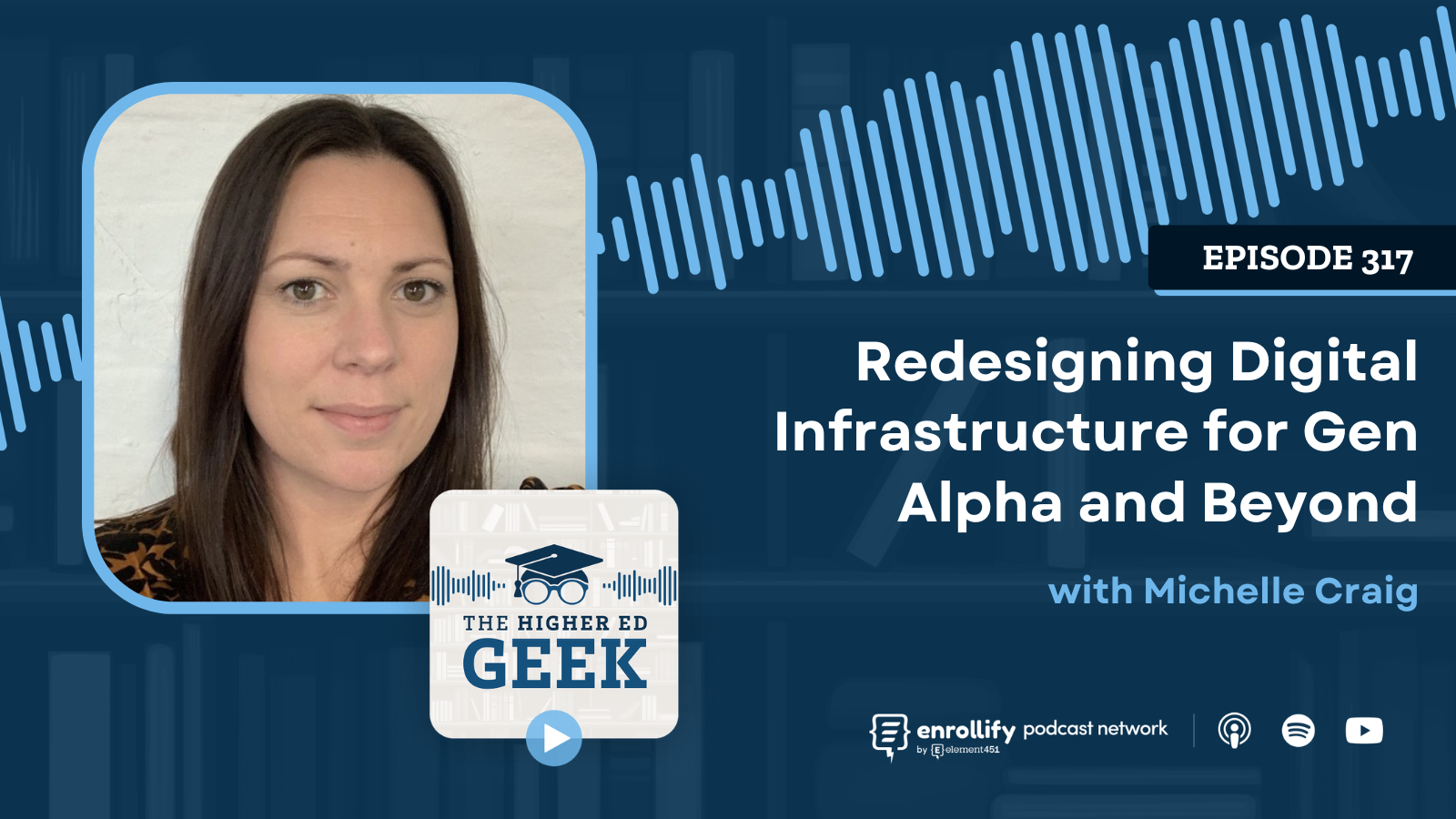
In this episode, Dustin chats with Michelle Craig, Director of Marketing at AppsAnywhere, about how institutions can better support today’s digitally fluent, mobile-first students. They explore the critical need for flexibility in how students access learning tools and why digital equity isn’t just a nice-to-have — it’s a must. From device agnosticism to smarter infrastructure investments, this conversation gives IT leaders and enrollment pros alike actionable ways to align tech strategy with student realities.
Key Takeaways
- Digital equity begins with flexible access — Today’s students expect 24/7, anywhere-anytime access to educational software, regardless of device.
- Student expectations are changing fast — 96% of Gen Alpha expect institutions to provide or loan a device for learning, raising the stakes for campus tech provisioning.
- Device-agnostic delivery is the future — Institutions must move beyond fixed computer labs and embrace cloud-based, platform-agnostic solutions to ensure software access for all.
- Right-sizing digital infrastructure is critical — IT leaders must use real-time data to reassess hardware, software, and space investments for maximum impact and sustainability.
- Data drives smarter decisions — Visibility into software usage and lab capacity helps IT teams reallocate resources, reduce waste, and improve digital experiences.
- Hybrid learning is here to stay — Students want seamless transitions between physical and online learning environments, making consistent digital experiences across platforms a necessity.
What does AppsAnywhere do, and why is it important to student success?
AppsAnywhere is a platform designed to deliver educational software to any student, on any device, at any time. As Michelle Craig explains, the mission behind the product is rooted in equity—ensuring every student has equal access to the digital tools they need to succeed, regardless of their location or personal device. By virtualizing applications and enabling access from anywhere, AppsAnywhere removes common barriers to student success, such as limited computer lab access or outdated devices.
Craig emphasizes the shift from traditional, location-based software access to a more student-centered model. Today’s learners, often balancing part-time jobs or commuting, need flexibility in how and when they engage with course materials. AppsAnywhere enables institutions to support this evolving reality by offering seamless, equitable access across diverse device ecosystems.
Why is digital flexibility now non-negotiable in higher education?
Student expectations for flexibility aren’t just preferences—they’re prerequisites for success. According to survey data discussed in the episode, students value the ability to move fluidly between in-person and online experiences. With 70% of students working part-time and learning happening at all hours, centralized physical access to software no longer meets their needs.
Michelle underscores that flexibility supports more than convenience—it drives equity. Whether students are studying at 2 a.m. after a shift or completing labs remotely, institutions must ensure that their digital infrastructure supports these behaviors. The conversation highlights that flexibility and equity go hand-in-hand and that meeting students where they are is key to improving outcomes and satisfaction.
How are students’ early edtech experiences shaping their higher ed expectations?
The influence of K-12 digital ecosystems, especially 1:1 device programs, is shaping incoming student expectations. In fact, 96% of Gen Alpha students now expect their college or university to provide them with a device—either to borrow, loan, or keep. While this presents logistical and budgetary challenges for institutions, it also sets a new baseline for what’s considered a “normal” learning experience.
Michelle points out that these students are accustomed to streamlined, tech-integrated environments. They expect educational content to be accessible, consistent, and personalized—regardless of the hardware they’re using. Institutions that aren’t building device-agnostic, cloud-first strategies will struggle to meet these expectations and risk falling behind in both recruitment and retention.
What is “right-sizing” digital infrastructure, and why does it matter now?
With post-pandemic digital expansion comes the need for strategic reassessment. Institutions adopted tools rapidly during COVID-19, but now many are reevaluating which technologies remain relevant and sustainable. Michelle introduces the concept of “right-sizing” digital infrastructure—investing intentionally in the platforms, software, and spaces that deliver the highest impact.
Rather than cutting costs blindly, institutions should focus on making data-informed decisions. Are computer labs being used as expected? Could certain software licenses be reduced or reallocated? What tools are truly essential for first-year students in different programs? Craig shares that many IT teams are realizing they can do more with less by consolidating tools, reducing redundancy, and centralizing access.
This shift isn’t just about trimming fat—it’s about building a leaner, smarter digital ecosystem that reflects actual student behaviors and needs.
How does data visibility improve IT strategy?
A core theme of the conversation is the need for real-time, actionable data. Michelle shares how AppsAnywhere, combined with their new partnership with LabStats, provides visibility into software, hardware, and lab usage. This kind of insight allows IT teams to optimize campus resources—such as reallocating staff hours or repurposing underused spaces—based on actual demand.
Data also enables better planning for course expansion, particularly in STEM disciplines where software provisioning can be complex. Whether it’s managing licenses, forecasting hardware needs, or understanding how students engage across different devices, IT teams can make smarter, faster decisions with clear data. The end result? Better experiences for students and more sustainable operations for institutions.
About the Show: The Higher Ed Geek Podcast explores the impact of edtech on the student experience by speaking with diverse leaders from institutions, companies, and nonprofit organizations. Each week we aim to provide an engaging, fun, and relevant dose of professional development that honors the wide range of work happening all across the higher ed ecosystem. Come geek out with us! The Higher Ed Geek Podcast is hosted by Dustin Ramsdell and is a proud member of the Enrollify Podcast Network.
Connect With Our Host:
Dustin Ramsdell
Enrollify is produced by Element451 — the next-generation AI student engagement platform helping institutions create meaningful and personalized interactions with students. Learn more at element451.com.




.svg)
.svg)
