






About the Episode
About the Episode:
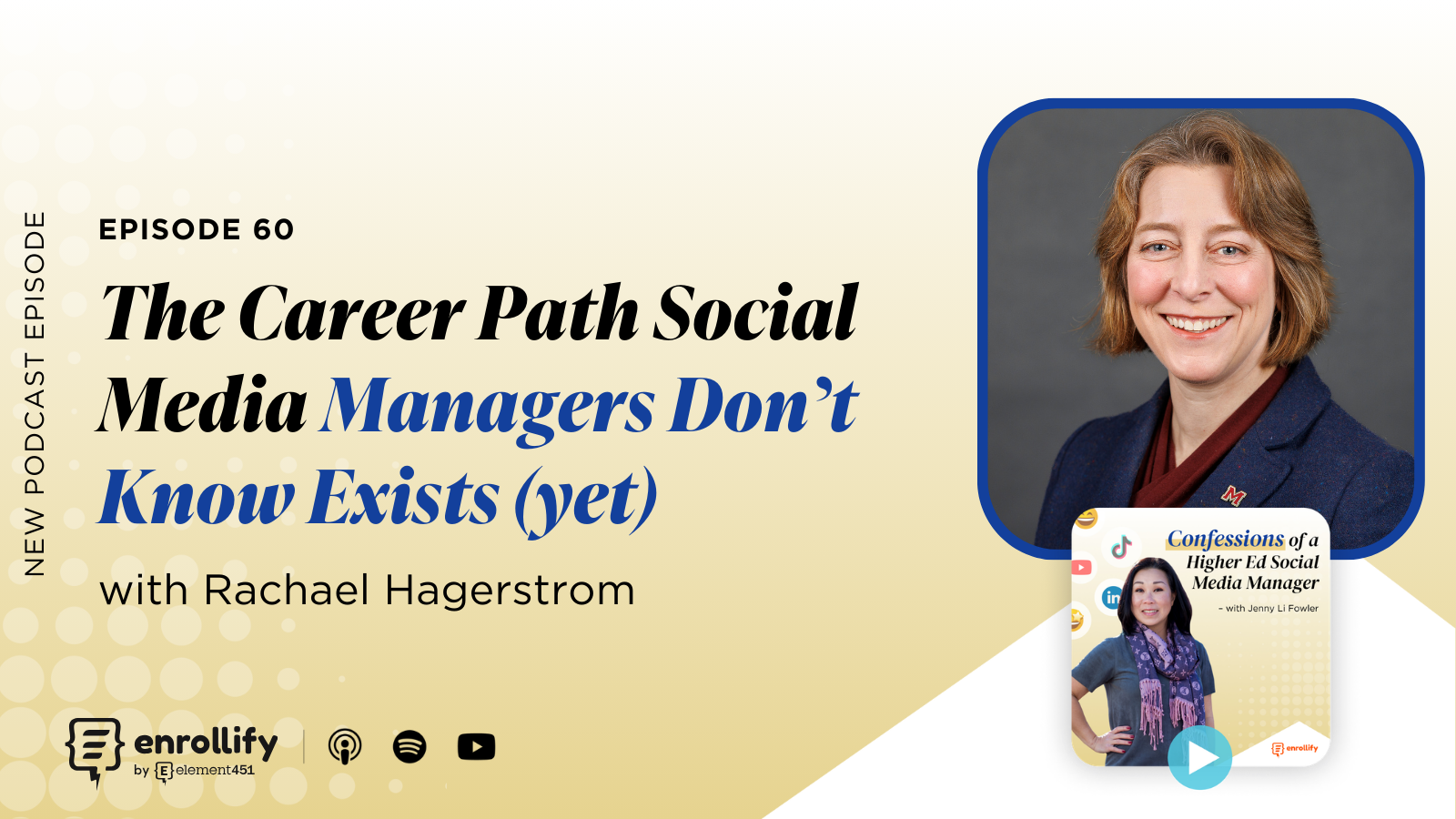
Jenny Li Fowler sits down with Rachael Hagerstrom of the University of Massachusetts Amherst to explore an often-overlooked yet critical area of institutional communications: issues management. In this conversation, Rachael shares how her journalism and social media background uniquely prepared her for a role focused on monitoring, anticipating, and mitigating potential reputation threats before they escalate. This episode is a must-listen for any higher ed communications pro wondering what’s next in their career.
Key Takeaways
- Issues management is NOT crisis management — it's about identifying early warning signs and arming leadership with accurate information before problems arise.
- Social media managers are uniquely positioned to transition into issues management roles thanks to their experience in community monitoring and trend analysis.
- Listening is a full-time job. Effective issues management depends on real-time monitoring across platforms like Yik Yak, Reddit, X (formerly Twitter), and TikTok.
- Cross-campus partnerships are crucial. Building trusted relationships across departments enables better coordination and information gathering.
- Issues management helps leadership act faster by supplying digestible, accurate briefings—saving time and avoiding reputational damage.
- This emerging role is a career evolution for social media professionals, opening up new strategic pathways beyond content creation.
Episode Summary
What is issues management in higher education, and how is it different from crisis management?
Issues management focuses on identifying and monitoring early signals of potentially disruptive situations on campus before they snowball into full-blown crises. According to Rachael, issues management isn’t about putting out fires in real-time (that’s crisis management); it's about gathering the right intel early, anticipating reputational risks, and helping leadership navigate strategically. Think of it as being the university's internal radar—watching for ripple effects before they become waves.
Crisis management, on the other hand, aims to return a campus to "normal" after a disruptive event. Issues management is about avoiding the disruption in the first place by proactively managing perceptions and messaging.
What qualifies as an “issue” and how are they spotted?
Using social listening tools like Sprout and horizon scanning across platforms like Reddit, TikTok, Instagram, X, and even Yik Yak, Rachael scans for emerging conversations that may signal brewing concerns. She looks for patterns in volume, repetition, and relevance, and considers the potential legal, reputational, or operational impact of those discussions.
An issue could be something like increasing student complaints about a dining hall—or, as Rachael shared, panic spreading on campus over a mistaken ICE sighting. These scenarios don’t start as full crises, but they can quickly evolve into one without proactive communication.
How does the issues management team at UMass Amherst operate?
At UMass Amherst, issues management is a two-person team under the strategic communications umbrella. They act as internal consultants, delivering briefings and backgrounders to leadership. Their goal is not to make decisions but to enable leaders to make well-informed ones.
When an issue is flagged, Rachael and her team consult subject-matter experts across campus, gather context, and create materials like FAQs or strategy documents. Sometimes the response is quiet—internal updates, website tweaks. Other times, it includes a coordinated communication rollout across departments and social platforms.
What tools and platforms are used for issues management?
Sprout Social plays a big role in social listening, but human context is everything. The team also relies on input from the university’s broader communications network, including faculty and staff, to determine whether an issue has legs. Being plugged into internal networks is just as important as scanning external ones.
In addition to digital platforms, the team monitors national trends and federal updates, especially those that could impact international students or financial aid—anything that could lead to confusion, concern, or reputational risk if mishandled.
What kind of background is ideal for this kind of role?
Rachael’s background in journalism and social media made her a perfect fit. Her ability to separate fact from fiction, identify narrative threads, and anticipate what communities will care about next is critical to her work.
She encourages current social media managers feeling "stuck" in their roles to realize how transferable their skills are. If you’re good at reading audience sentiment, translating concerns for leadership, and staying ahead of trends, issues management might be your next big move.
What happened in the ICE rumor incident, and how did issues management help?
In one striking example, students at UMass began posting photos of white vans on social media, fearing that ICE agents were on campus. The fear escalated quickly, spreading across platforms and even reaching faculty.
Because of Rachael’s monitoring and internal relationships, she was able to verify that the van belonged to a Defense Department agent performing a standard background check—totally unrelated to ICE. Her team coordinated a campus-wide update, and just like that, the panic was quelled.
This moment illustrated the true power of issues management: connecting dots, verifying facts, and getting ahead of fear-based misinformation.
What should institutions consider if they want to build an issues management function?
Rachael suggests identifying the communication pain points on campus—where do students or faculty feel confused, uninformed, or misled? And where is leadership lacking insight that could help them make better, faster decisions?
If social media managers are constantly flagging problems, but those flags are going nowhere, it's time to formalize the process. A role like Rachael’s ensures those flags turn into strategic action items that can save institutions from unnecessary turmoil.
Connect With Our Host:
https://twitter.com/TheJennyLi
Enrollify is produced by Element451 — the next-generation AI student engagement platform helping institutions create meaningful and personalized interactions with students. Learn more at element451.com.







.svg)
.svg)
