






About the Episode
Got a story to tell? An innovative idea to share? Fill out our guest nomination form and let's chat!
About the Episode:
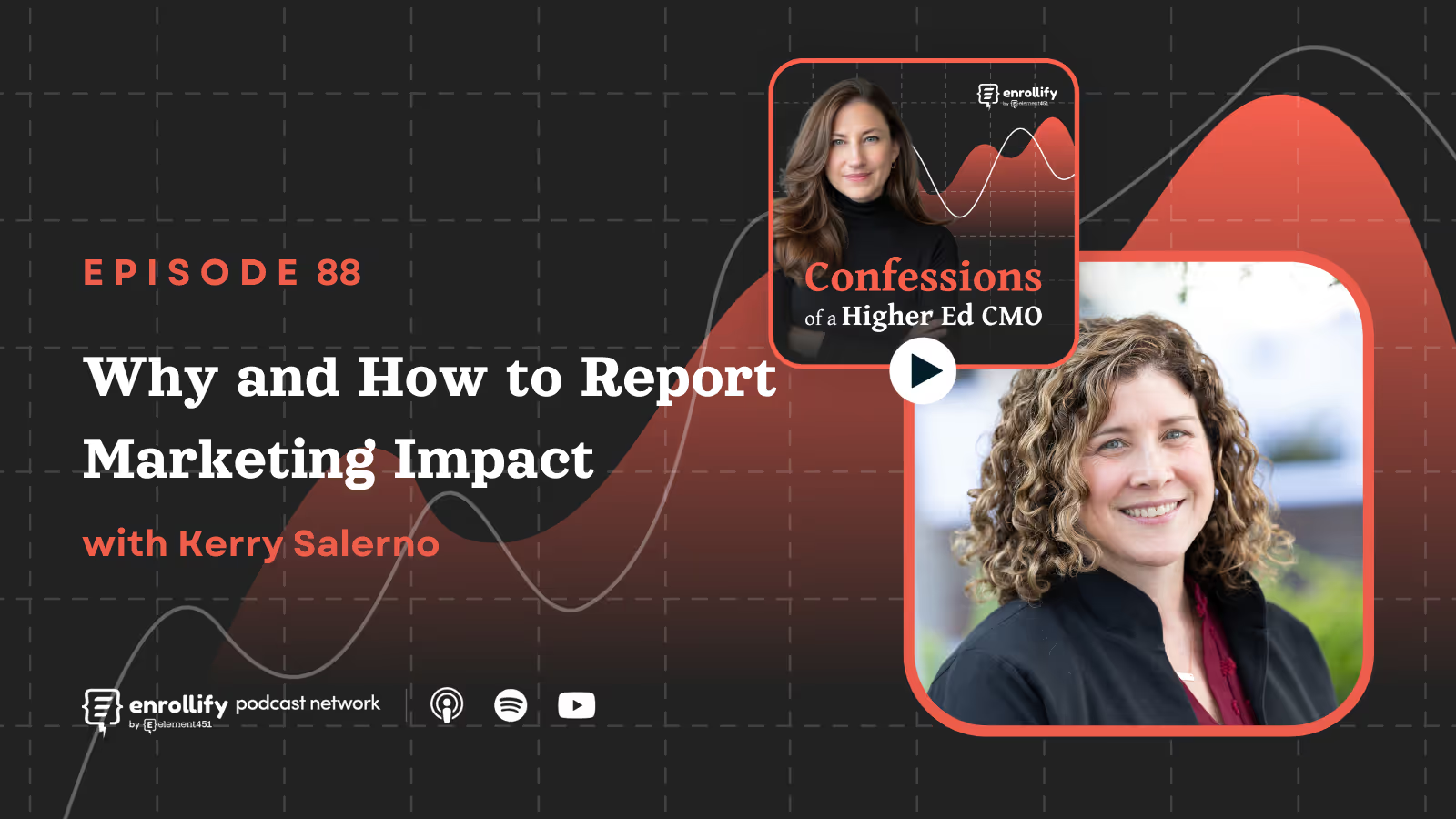
Jaime Hunt sits down with Kerry Salerno, Chief Marketing and Communications Officer at Babson College, to explore the power of data-driven marketing. Together, they dive into how Kerry's team leverages impact reports and key performance indicators (KPIs) to align marketing strategies with institutional goals. From agile team structures to quarterly dashboards and annual reports, this episode is packed with insights on building a high-performance marketing culture. If you’ve ever struggled to quantify the impact of your marketing work—or convince leadership it matters—this episode is a must-listen.
Key Takeaways
- Learn how performance indicators in education can be used to tell compelling marketing impact stories.
- Discover the structure of Babson’s data analytics in higher education dashboards and how they inform quarterly and annual reporting.
- See why context—not just numbers—matters in impact reports, especially for non-marketing stakeholders like boards and faculty.
- Find out how Kerry built a data-driven marketing culture from the ground up, starting with agile teams and intentional hiring.
- Gain tips for using data storytelling to secure budget, buy-in, and visibility across campus.
- Explore how to shift your team away from a “service” model and into a strategic value partner mindset.
Episode Summary: Building a Data-Driven Marketing Culture at Babson
What is Babson College’s Marketing Impact Report and why is it important?
The Impact Report is a 30-page annual deliverable that showcases the marketing team’s contributions to Babson’s institutional goals. But as Kerry explains, the report is just the tip of the iceberg—it’s the culmination of a year-round data strategy built on a quarterly dashboard of KPIs. These dashboards track awareness, engagement, and revenue metrics and are reported directly to the college president and leadership team. The report itself is a celebration of outcomes, built not only for leadership and trustees but also as a motivational tool for the team. Its real power lies in how it tells stories with data, using context to make KPIs accessible and actionable for a variety of campus audiences.
Which KPIs matter most for higher ed marketers?
Babson’s marketing team organizes KPIs into three core buckets: awareness and reputation, brand engagement, and enrollment/revenue. These aren’t just vanity metrics—they’re tied to strategic outcomes, like earned media mentions (not impressions), SEO rankings, and conversions. For instance, a Wall Street Journal ranking spike triggered a massive jump in visibility, which was contextualized using Google Trends. Kerry emphasizes that providing narrative around data—like why a number matters or what caused a spike—is essential when reporting to non-marketing stakeholders.
How do agile teams support performance-driven marketing?
At Babson, agility isn’t a buzzword—it’s a team structure. Kerry reimagined her team by breaking down silos and reorganizing into cross-functional agile pods, each aligned with business goals rather than disciplines. This approach encourages collaborative decision-making, nimble execution, and prioritization based on strategic objectives, not requests. Agile workflows have been embedded into Babson’s marketing DNA, allowing team members from different backgrounds (creative, analytical, strategic) to co-create and iterate in real time. This not only makes the annual Impact Report easier to assemble but also ensures the entire team sees the relevance of their work in institutional outcomes.
What’s the role of a marketing analyst in higher ed?
Kerry made a strategic choice to hire a dedicated marketing data analyst, transforming how Babson’s team thinks about measurement. This role, now a Director of Marketing Analytics, partners closely with enrollment and IT to ensure that campaign performance, audience behavior, and trends are surfaced regularly. For example, spotting a drop in engagement on Instagram or a shift in SEO performance due to AI doesn’t have to wait for the annual review. Kerry's team uses these insights to adjust in real time, maximizing ROI and reducing guesswork.
How do you foster a data-literate culture on your team?
It wasn’t always like this. When Kerry arrived, Babson’s marketing team was operating in a traditional waterfall model with clear disciplinary silos. She knew that to modernize, she needed to invest in professional development—not just new hires. Writers learned SEO fundamentals. Content creators learned how to connect storytelling to engagement metrics. Social media managers learned how to tie analytics to content decisions. Kerry also worked with HR to assess team members’ cognitive styles and build out more analytical (or “blue”) thinking across the group. Over time, this evolved into a cultural shift toward analytics as a shared language—not just a job for one person.
What impact has the report had on leadership perception and campus culture?
The results speak for themselves. The report is distributed to the board of trustees, the president’s cabinet, and campus partners, helping shape the narrative around marketing’s strategic value. Kerry notes that while not everything can be measured in metrics, the feedback has been overwhelmingly positive. Leadership now sees the marketing team as a modern, professional, data-savvy partner. Even more importantly, the report has helped shift the campus’s perception of marketing from a service center to a strategic driver of enrollment and brand value.
Connect With Our Host:
Jaime Hunt
https://twitter.com/JaimeHuntIMC
About The Enrollify Podcast Network:
Confessions of a Higher Ed CMO is a part of the Enrollify Podcast Network. If you like this podcast, chances are you’ll like other Enrollify shows too!
Some of our favorites include Talking Tactics and Higher Ed Pulse.
Enrollify is produced by Element451 — the next-generation AI student engagement platform helping institutions create meaningful and personalized interactions with students. Learn more at element451.com.
Register for the AI Engage Summit — Oct 15–16, 2025
👉 Join us online from 12–4 PM ET each day for two afternoons of AI insights and training. Free to attend with on-demand access included. Register now.





.svg)
.svg)
