






About the Episode
Got a story to tell? An innovative idea to share? Fill out our guest nomination form and let's chat!
About the Episode:
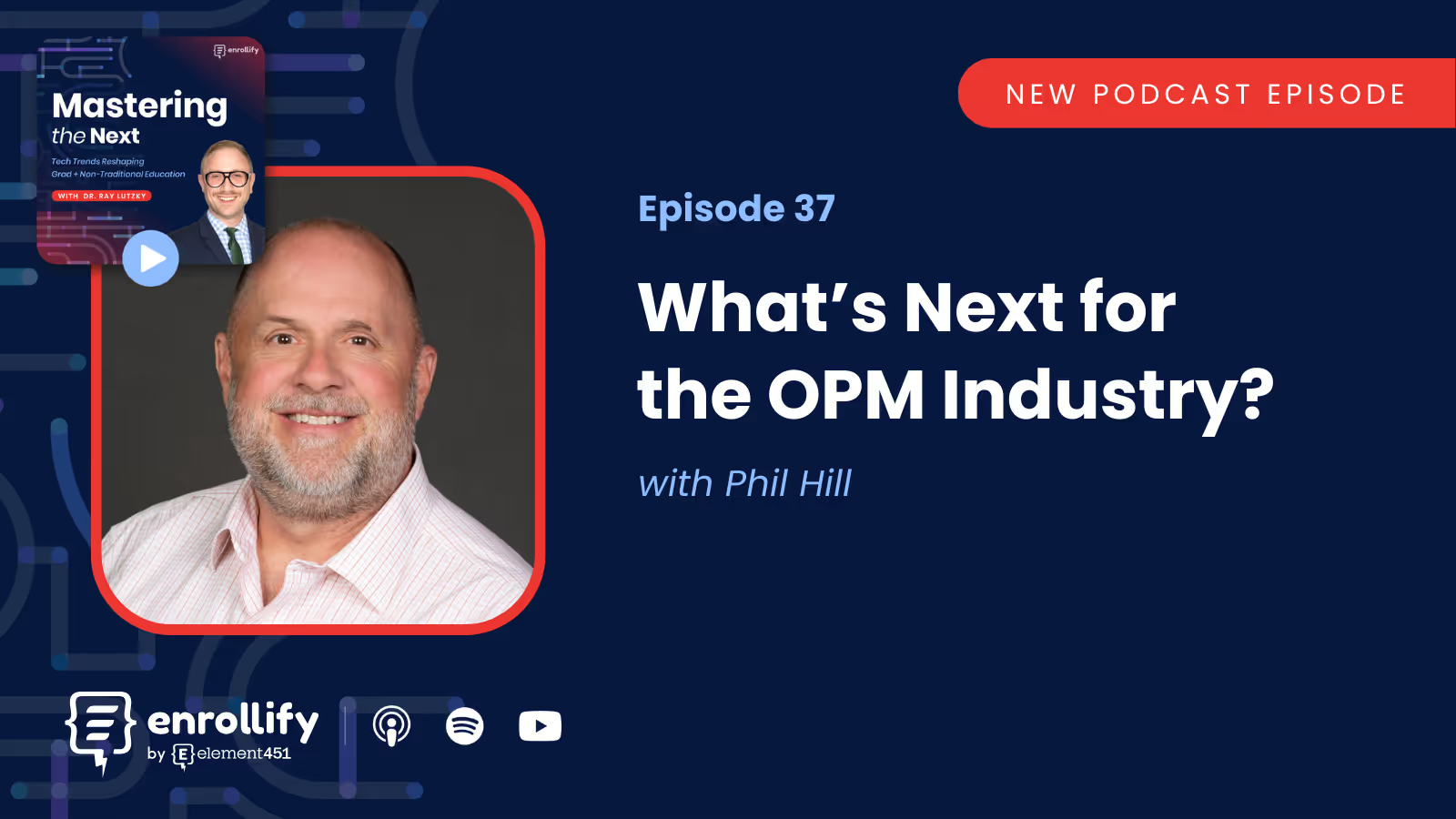
The landscape of online program management companies (or OPM) is undergoing significant transformation, with universities facing complex strategic decisions and OPM companies merging and shifting business strategies. Political and regulatory changes are creating both challenges and opportunities for higher education institutions seeking to expand their online learning offerings. To help us unpack these critical dynamics, Ray is joined by Phil Hill, Publisher of the On EdTech blog and Partner at Phil Hill & Associates – one of the leading experts in the evolving world of online education partnerships.
Key Takeaways
- Revenue Share Models Are Still in Demand: Despite criticism, rev share remains the most sought-after OPM business model, but institutions must carefully negotiate contract terms.
- Regulatory Changes Are Moving to the States: Federal pressure on OPMs is declining, but state-level laws, like Minnesota’s recent legislation, are reshaping the rules.
- Strategic Self-Reflection Is Crucial: Universities must align their OPM partnerships with their long-term goals, whether they’re pursuing revenue growth or expanding access to online education.
- Faculty Engagement Is Essential: Change management is key to navigating faculty concerns, with a balance between listening to input and maintaining institutional decision-making authority.
- The Role of AI and CRM in Student Success: Advanced technologies like AI and better use of CRM tools will be pivotal in improving both retention and recruitment strategies for OPM providers and universities alike.
- OPMs Deserve Credit for Advancing Online Education: While critiques are valid, OPMs have played a critical role in pushing traditional institutions to embrace online education and innovate in student success.
What Should University Leaders Know About OPM Partnerships Today?
Phil Hill emphasizes that universities need to grasp the fundamentals of OPM partnerships before diving in. Despite ongoing narratives suggesting that revenue share models are outdated, Hill clarifies that these arrangements remain popular because they align the financial goals of universities and their OPM partners. However, universities must ensure contracts are carefully structured with considerations for rev share percentages, contract length, and exit clauses.
Hill also stresses the importance of internal self-reflection. Universities must identify their primary motivations—whether it's expanding access to underserved populations or boosting long-term revenue—and set realistic expectations. For example, if a university expects immediate financial returns, an OPM partnership may not be the right fit.
How Are Political and Regulatory Changes Impacting OPMs?
The regulatory spotlight on OPMs, once led by the U.S. Department of Education, is shifting to the state level. Hill notes that states like Minnesota are introducing legislation banning rev share agreements, creating a patchwork of compliance requirements for institutions. While blue states may lead this charge, he points out that bipartisan interest in regulating OPMs exists, citing similar efforts in Florida.
Universities need to be vigilant about these shifts and understand how state-specific laws might affect their OPM contracts. The role of federal regulators may diminish under new administrations, but scrutiny of OPMs isn’t going away.
Are OPMs Adapting to Market and Regulatory Pressures?
According to Hill, while the OPM market is ripe for innovation, most companies have yet to undergo a fundamental reimagining of their approaches. Rising digital marketing costs have pushed some OPMs, like 2U, to invest in alternative strategies such as leveraging MOOCs and email lists to reach prospective students more cost-effectively.
Hill also highlights the need for a shift in focus from aggressive student recruitment to retention. This approach not only improves financial sustainability for OPMs but also aligns with student success goals. Technologies like AI and CRM tools can play a transformative role here, offering real-time insights to both universities and their OPM partners on what's working and what isn't.
How Can Universities Address Faculty Resistance to OPM Partnerships?
Faculty resistance is a common challenge when implementing OPM partnerships, often driven by a lack of early engagement or broader tensions within the institution. Hill advises universities to prioritize upfront communication with faculty, ensuring their input is heard while maintaining a clear decision-making structure.
However, he warns against leaving decisions solely in the hands of faculty committees, which can lead to delays or muddied strategies. Instead, effective change management involves balancing transparency with leadership-driven decision-making, avoiding common pitfalls like surprise announcements or overly decentralized governance.
Do OPMs Deserve Their Bad Reputation?
Hill acknowledges that some criticisms of OPMs—such as overspending on digital marketing and contributing to student debt—are valid. However, he argues that universities themselves often play a larger role in these issues, such as setting high tuition rates. Moreover, OPMs have been instrumental in breaking down resistance to online education within traditional higher education, enabling colleges and universities to serve nontraditional students more effectively.
Despite the critiques, Hill believes OPMs have been unfairly maligned. Their role in advancing online education and aligning their business models with student success goals demonstrates their importance in the ecosystem. Universities, he suggests, should focus on building healthier partnerships rather than dismissing OPMs outright.
Connect With Our Host:
About The Enrollify Podcast Network: Mastering the Next is a part of the Enrollify Podcast Network. If you like this podcast, chances are you’ll like other Enrollify shows too!
Some of our favorites include The EduData Podcast and Generation AI.
Enrollify is produced by Element451 — the next-generation AI student engagement platform helping institutions create meaningful and personalized interactions with students. Learn more at element451.com.
Attend the 2025 Engage Summit!
The Engage Summit is the premier conference for forward-thinking leaders and practitioners dedicated to exploring the transformative power of AI in education.
Explore the strategies and tools to step into the next generation of student engagement, supercharged by AI. You'll leave ready to deliver the most personalized digital engagement experience every step of the way.
👉🏻 Register now to secure your spot in Charlotte, NC, on June 24-25, 2025! Early bird registration ends February 1st.






.svg)
.svg)
