






About the Episode
Got a story to tell? An innovative idea to share? Fill out our guest nomination form and let's chat!
About the Episode:
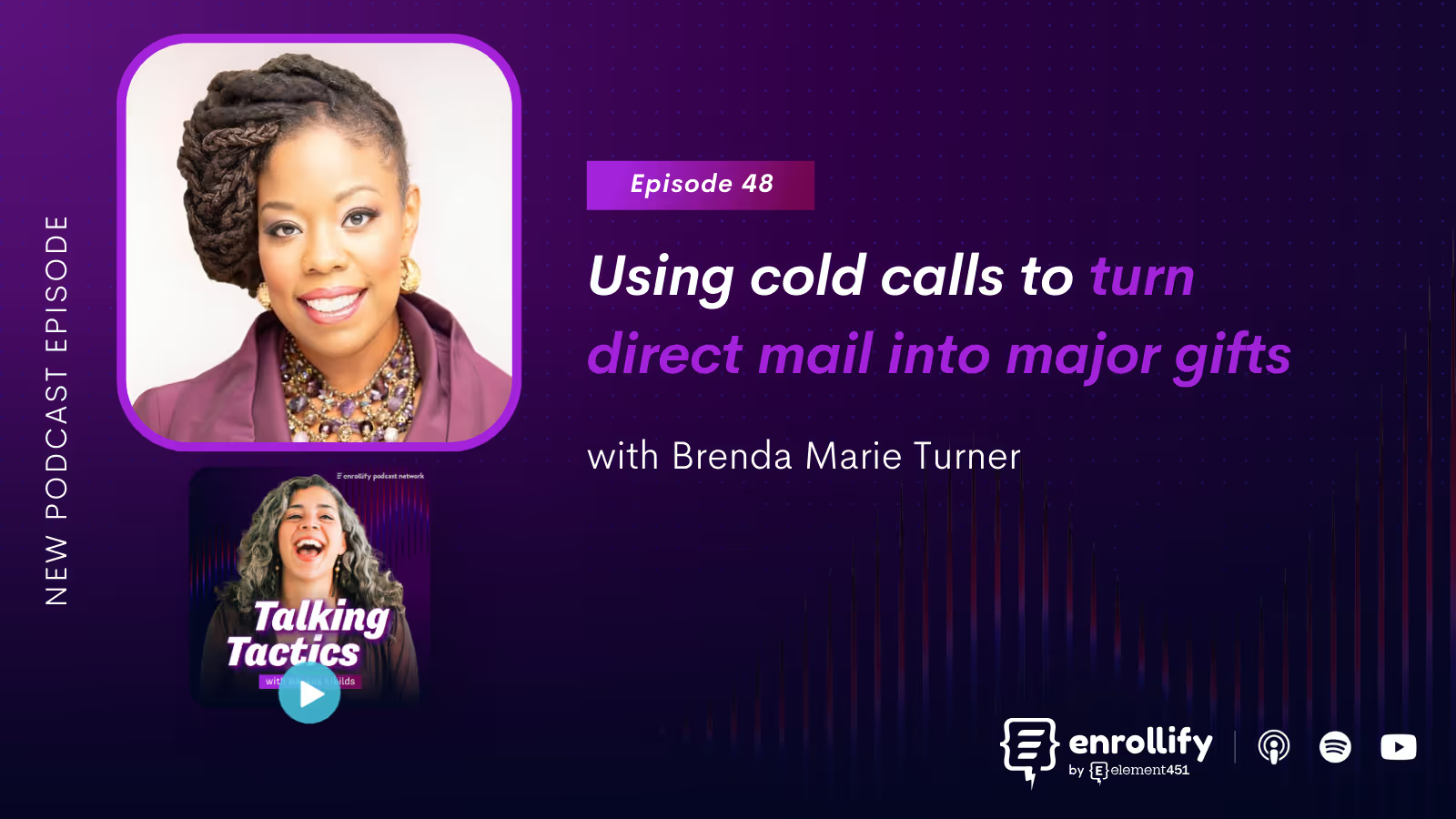
Most fundraisers accept a 1.5% response rate from direct mail as standard. But Brenda Turner? She used cold calls to push that number to a staggering 20%, securing four major donors from just 37 letters.
Brenda, a certified fundraising executive with 16+ years of experience and nearly $1 billion raised, shares the exact tactic that made her outreach so effective. She breaks down her approach—from writing an “audacious” letter to making fearless follow-up calls—and explains why phone calls are an underutilized secret weapon in fundraising.
Key Takeaways:
- Be bold in your outreach. Brenda’s letters directly addressed potential donors, closing with an unapologetic ask.
- Follow up with a phone call. The unexpectedness of a call (especially in today’s digital age) increased response rates dramatically.
- Timing matters. Calling in the morning often means you’ll hit voicemail—giving you a chance to leave a well-prepared message.
- Use AI to write scripts. If making calls feels intimidating, generate sample voicemails and responses to common questions to build confidence.
- Persistence pays off. Even when donors didn’t initially respond, they stayed on the list for future opportunities.
- Research is key. The better you target your outreach, the higher your chances of securing a yes.
How Can You Use Phone Calls to Amplify Direct Mail Results?
Brenda’s strategy started with old-school tools—physical mail and actual phone calls—but with a modern, purpose-driven twist. Working in a new region with no existing donor base, Brenda crafted personalized packets to 37 high-potential prospects. Each packet included an audacious letter explaining who she was, the mission she was advocating for, and why this outreach mattered. Weeks later, she followed up with personal phone calls. The results? A 20% response rate and four new major donors. The tactic proves that unexpected channels—when executed authentically—can cut through the noise.
What Did the Outreach Letter Say, and Why Did It Work?
The power of Brenda’s letter wasn’t just in the format—it was in the vulnerability and mission alignment. At the end of each letter, she acknowledged the boldness of reaching out cold. “I don’t mind being audacious on behalf of my community,” she wrote, sharing her own story as a Black woman who overcame challenges through education. One donor even told her that this paragraph was the reason they took her call. The takeaway? When your passion aligns with your pitch, your message stands out—even in a crowded mailbox.
Is Cold Calling Still Relevant in Fundraising?
Cold calling may sound dated—or terrifying—but Brenda reframed it as an opportunity, not an obstacle. Yes, it’s awkward. Yes, it takes courage. But it also delivers results that other channels often miss. One donor she reached had been on the organization’s wishlist for years, but no one had simply picked up the phone. Brenda did—and that donor now supports the cause. Her advice: call early in the morning to leave a voicemail (fewer chances they’ll pick up if you’re nervous), use a clear script under 30 seconds, and always follow up via email.
What Was the ROI of This Fundraising Campaign?
Of the 37 mail recipients, Brenda got 10 direct responses—four of whom became new donors, resulting in hundreds of thousands of dollars in grants and gifts. While the execution was simple, the success hinged on deep research and a clear understanding of who the prospects were and what they cared about. For those considering similar outreach, Brenda emphasizes the importance of narrowing your list and tailoring your message. Quality beats quantity every time.
How Can Fundraising Teams Empower Everyone to Contribute?
Brenda's story is also a reminder that fundraising doesn't have to be siloed. From development officers to program staff, everyone in an organization has the potential to gather insights and build donor relationships. One example Brenda shared involved a teacher casually talking to a parent and uncovering critical info that unlocked a major gift. When organizations give staff the tools and confidence to have these conversations, fundraising becomes a team effort—not just a department function.
Attend the 2025 Engage Summit!
The Engage Summit is the premier conference for forward-thinking leaders and practitioners dedicated to exploring the transformative power of AI in education.
Explore the strategies and tools to step into the next generation of student engagement, supercharged by AI. You'll leave ready to deliver the most personalized digital engagement experience every step of the way.
👉🏻 Register now to secure your spot in Charlotte, NC, on June 24-25, 2025!






.svg)
.svg)
