






About the Episode
Got a story to tell? An innovative idea to share? Fill out our guest nomination form and let's chat!
About the Episode:
Champlain College partners with Anthropic to advance artificial intelligence in higher education
Business schools ease their resistance to AI
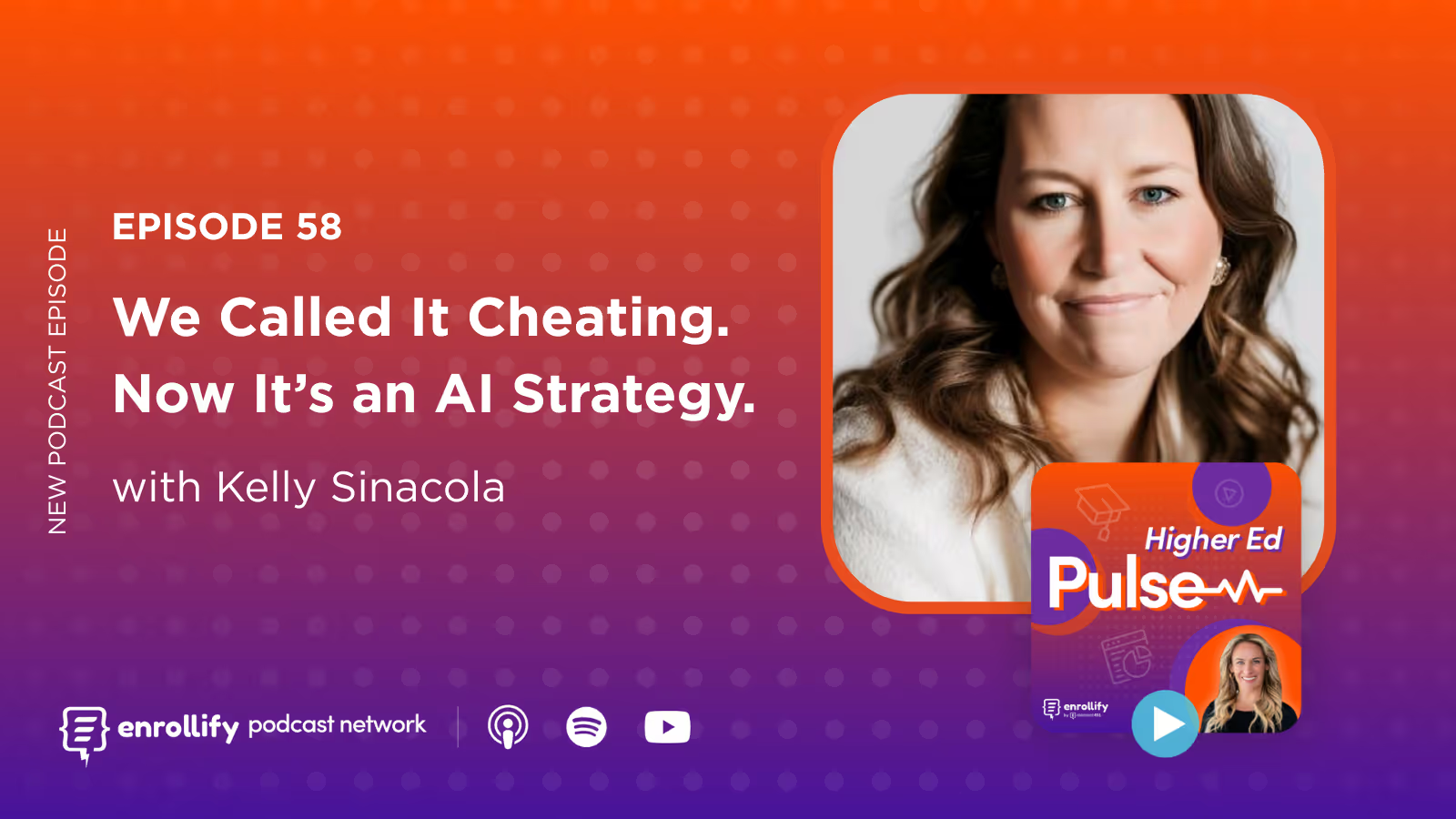
In this episode of Higher Ed Pulse, Mallory Willsea welcomes Kelly Sinacola, VP of Solution Engineering and Integration at Element451 and one of ASU+GSV’s “Leading Women in AI,” to unpack higher ed’s ever-evolving relationship with artificial intelligence. From student support bots to responsible AI partnerships, this episode explores how institutions are moving from resistance to full-on adoption. The conversation dives into what true AI literacy looks like, why trust is key, and where the next wave of innovation may hit.
Key Takeaways
- AI in higher education is shifting from panic to purposeful integration. Institutions are moving beyond fears of cheating to adopt AI as a real teaching and learning tool.
- AI literacy isn’t just about prompting—it’s about ethical, responsible use and understanding limitations. Business schools are leading the charge, but faculty buy-in is essential for wider adoption.
- Anonymous AI chat tools can foster more open, honest student engagement. Students are more willing to ask “embarrassing” questions to bots, helping improve support and mental health outreach.
- Trust and transparency are key to AI adoption. Schools need to balance innovation with clear communication about how tools are being used and what data is collected.
- Responsible AI is becoming a major focus. Institutions like Champlain College are prioritizing ethics and humanity-in-the-loop approaches in their partnerships with companies like Anthropic.
- AI is already saving time and improving staff efficiency. Element451 clients are reporting tens of thousands of minutes saved—without sacrificing student trust.
Is Higher Ed really embracing AI, or are a few schools just ahead of the curve?
The tide is turning. Business schools and institutions like Champlain College are not just tinkering with AI—they’re embedding it deeply into academic and student services. And no, this isn’t about cheating detectors anymore. As Kelly explains, AI is finally being accepted as a tool that can enhance learning, not just police it. There’s still some resistance, especially in IT and administrative departments, but across teaching and learning? Momentum is building.
What does AI literacy actually mean?
Spoiler: It’s not just about writing good prompts. Kelly breaks it down—AI literacy includes understanding when to use AI, why it matters, how it works, and its ethical implications. Unfortunately, many institutions still block tools or avoid training due to security concerns, which keeps students (and staff) from building these critical skills. Before students can be AI-literate, faculty and staff need to get there first.
Are students really engaging with AI tools?
Yes—and often in surprising ways. Mallory recalls how students would ask awkward questions via anonymous tour Q&As. Now, AI bots are filling that gap. Kelly adds that students are willing to confide in AI assistants, asking questions they wouldn’t feel comfortable bringing up in a group or in person. The anonymity makes them more open, and the tech can even help flag mental health concerns in real-time.
What is “responsible AI” and how should colleges think about it?
Kelly defines responsible AI as the intentional, ethical use of tools that avoids bias, theft, and misuse. It’s not just about what the tool can do—it’s about what it should do. Schools need to ensure they’re not reinforcing existing inequities and that they’re transparent with how AI is used. The future of responsible AI will require community transparency, similar to the shift that’s happened in cybersecurity.
How is AI being used to build trust rather than erode it?
Early adopters working with Element451 are seeing AI-powered assistants create more trust with students, not less. Why? Because students are getting fast, accurate answers without waiting for office hours or being redirected three times. For staff, the payoff is real: one campus saved more than 184,000 minutes of team time by using AI to handle FAQs and basic support. Students aren’t fooled—they know it’s a bot—but they appreciate the quick help.
What’s next for AI in the student experience?
If a part of the student journey hasn’t been touched by AI yet, it likely will be soon. Kelly and Mallory agree: asking students if they’d prefer a human is the wrong question. The better one? “Would you like help now or later?” In an on-demand world, immediacy trumps tradition. The next frontier will be ensuring that every student interaction—whether with a human or a bot—feels intentional, ethical, and supportive.
Connect With Our Host:
Mallory Willsea
https://www.linkedin.com/in/mallorywillsea/
https://twitter.com/mallorywillsea
About The Enrollify Podcast Network: The Higher Ed Pulse is a part of the Enrollify Podcast Network. If you like this podcast, chances are you’ll like other Enrollify shows too!
Some of our favorites include Generation AI and Confessions of a Higher Education Social Media Manager.
Enrollify is produced by Element451 — the next-generation AI student engagement platform helping institutions create meaningful and personalized interactions with students. Learn more at element451.com.
Attend the 2025 Engage Summit!
The Engage Summit is the premier conference for forward-thinking leaders and practitioners dedicated to exploring the transformative power of AI in education.
Explore the strategies and tools to step into the next generation of student engagement, supercharged by AI. You'll leave ready to deliver the most personalized digital engagement experience every step of the way.
👉🏻 Register now to secure your spot in Charlotte, NC, on June 24-25, 2025!






.svg)
.svg)
