


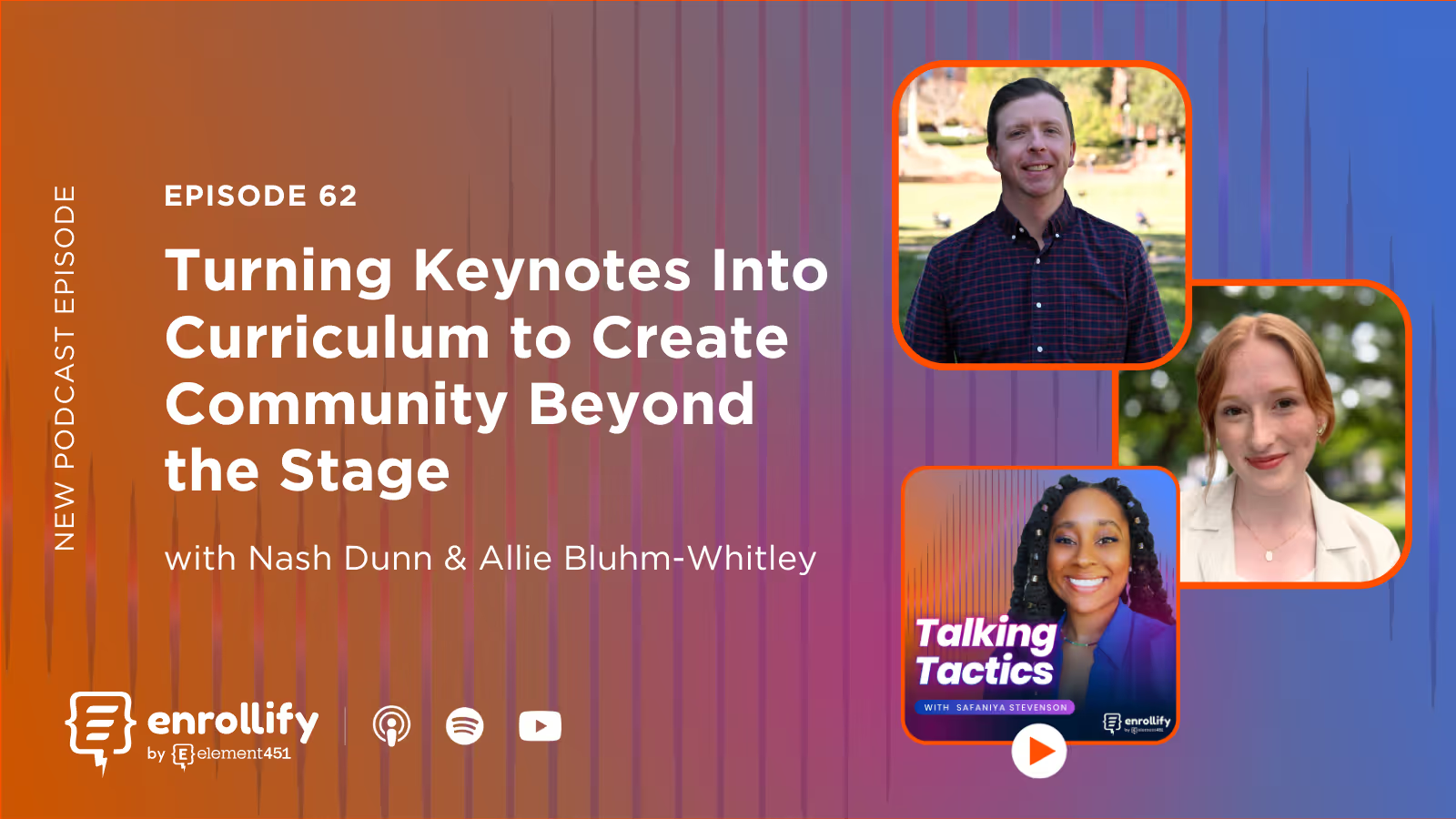




About the Episode
Got a story to tell? An innovative idea to share? Fill out our guest nomination form and let's chat!
About the Episode:
NC State University sold out 700 tickets in just two days when they brought Alton Brown to campus, but that was only the beginning. Nash Dunn and Allie Bluhm-Whitley share how NC State’s College of Humanities and Social Sciences transformed a single keynote into a year-long initiative that engages students, alumni, donors, and faculty across multiple touchpoints. Discover the tactical framework behind "The Human Factor" speaker series and why your next keynote should be more than just a one-night event.
Key Takeaways
- Keynotes Are Just the Beginning: NC State used its speaker series to go beyond entertainment by building curriculum, service events, and faculty engagement around the keynote topic.
- Brand Activation Done Right: The event was a strategic pillar of CHASS’s brand refresh, helping the liberal arts college stand out at a STEM-centric university.
- Cross-Channel, Multi-Audience Messaging: From alumni to students to donors, targeted marketing tactics (like print ads and digital signage) were used to drive full-campus engagement.
- High ROI Through Donor-Funded Innovation: The event series was fully funded through private donations—showcasing how philanthropy can fuel impactful marketing.
- Sustainable Programming Model: The Human Factors Series isn’t a one-off—it’s a repeatable framework blending entertainment and thought leadership to position CHASS as essential to solving real-world problems.
Episode Summary
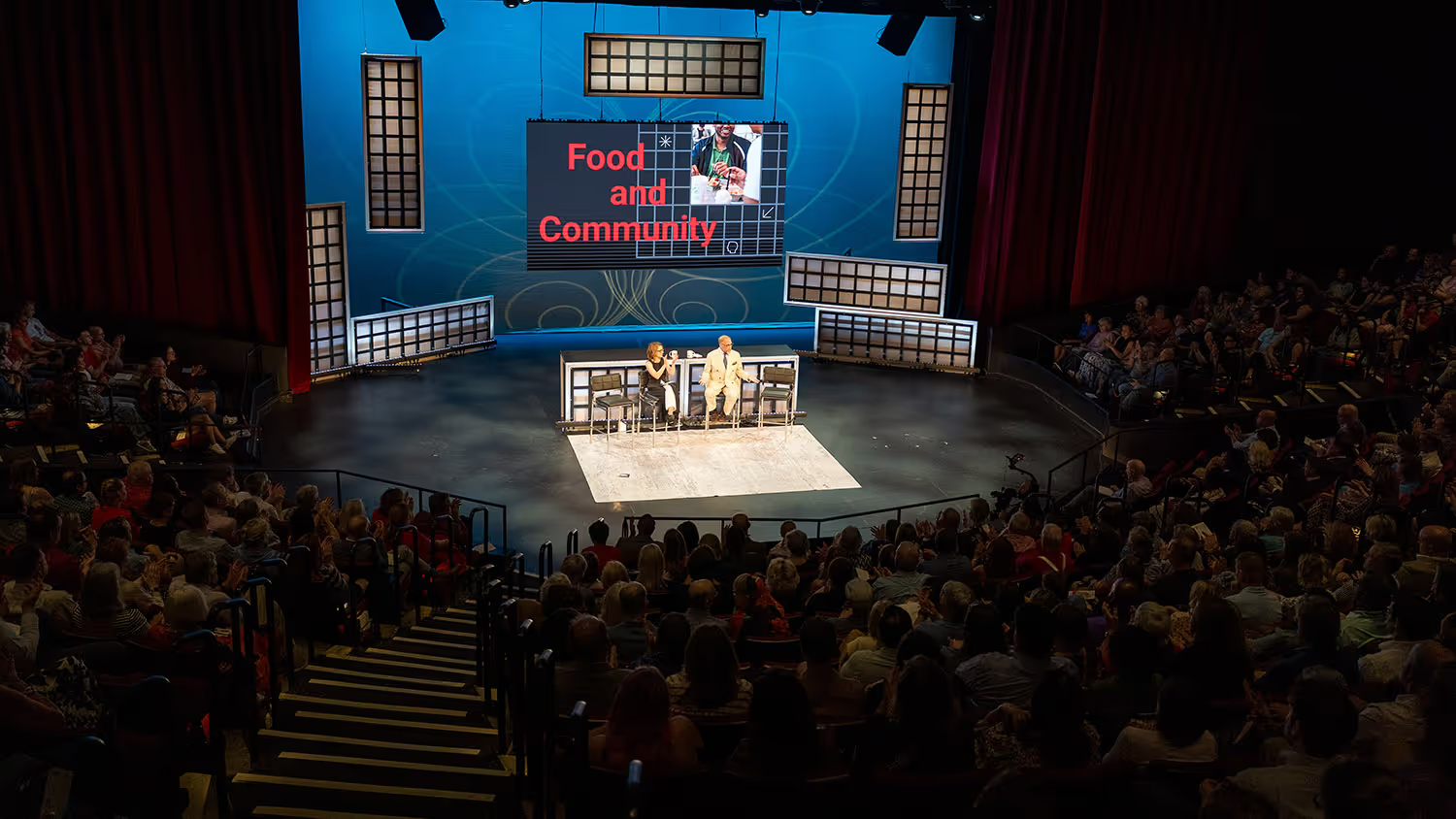
What is the Human Factors Speaker Series at NC State?
The Human Factors Speaker Series is a new flagship event launched by NC State’s College of Humanities and Social Sciences. The goal? To demonstrate the relevance of the liberal arts in addressing pressing societal issues—through the lens of culture, community, and creativity. The inaugural theme was “Food in the Future,” and the series featured headliner Alton Brown alongside a curated lineup of student projects, faculty panels, and community partnerships.
The series represents a broader brand activation strategy tied to both college and university-wide brand refresh efforts. Nash Dunn, Director of Communications and Marketing, explains that the program is designed not just to attract audiences but to deepen engagement with stakeholders ranging from alumni to prospective donors, and current students to faculty.
How did NC State turn one keynote into year-long programming?
Rather than treating Alton Brown’s appearance as a one-and-done event, NC State built an entire ecosystem of engagement around the keynote. This included a week of student-led service opportunities with food-related nonprofits, alumni panels featuring chefs and entrepreneurs, and faculty-designed curricula tying food to communication, community, and culture. The approach also included an interactive “Learning Lounge” series and VIP receptions showcasing student and faculty innovation.
This strategy allowed the college to target different audience segments with programming specifically tailored to them. For instance, a service week engaged students and staff, while alumni events brought back former graduates with industry experience. Meanwhile, donors and VIPs experienced a curated reception featuring mozzarella ice cream, edible bugs, and even an ancient Mesopotamian beer brewed in collaboration with a local brewery and a CHASS history professor.
How did the team market the event to different audiences?
Effective marketing strategy was essential to the event’s success—and that meant segmentation. Allie Bluhm-Whitley, Assistant Director of Communications, explained that digital channels like email and social media were heavily utilized for student outreach, while more traditional outlets like the alumni magazine were key for older demographics. Notably, a print ad in the alumni magazine drove significant ticket sales, reinforcing the importance of channel diversification in enrollment marketing.
On-campus signage and digital billboards helped maintain message consistency, while strategic ad placements on local NPR and sponsored email campaigns increased regional visibility. Ultimately, the event sold out within days—proving that when aligned with clear goals and audience strategy, integrated marketing works.
What role did donor funding play?
Perhaps most impressively, the entire initiative was funded by donor contributions. A visionary donor interested in supporting brand growth enabled CHASS to take bold steps with the series. This backing covered everything from speaker fees to event production to integrated marketing. Nash emphasized how rare it is to secure donor support specifically for marketing and communications—but also how powerful it can be when aligned with institutional values.
Donor-funded innovation meant that the CHASS team didn’t need to rely on limited state funding or department budgets, freeing them up to build something impactful from day one. It also provided confidence to experiment with large-scale ideas—helping NC State craft a model that other institutions can emulate.
What lessons can other higher ed marketers learn from this?
There were several big takeaways for enrollment marketers and communication professionals. First, listen to experts inside and outside your institution—cross-functional collaboration made this effort possible. Second, invest in experienced event producers who can bring the strategic vision to life with professional execution. And finally, remember that one keynote can spark a movement when approached as a platform rather than an endpoint.
CHASS created a repeatable structure that highlights liberal arts relevance, bridges campus silos, and builds community—all while supporting the college’s long-term brand equity. In an environment where resources are tight and attention spans are shorter than ever, that’s no small feat.
Connect With Our Host:
About The Enrollify Podcast Network: The Higher Ed Pulse is a part of the Enrollify Podcast Network. If you like this podcast, chances are you’ll like other Enrollify shows too!
Some of our favorites include Generation AI and Confessions of a Higher Education Social Media Manager.
Enrollify is produced by Element451 — the next-generation AI student engagement platform helping institutions create meaningful and personalized interactions with students. Learn more at element451.com.



.svg)
.svg)
