






About the Episode
Got a story to tell? An innovative idea to share? Fill out our guest nomination form and let's chat!
About the Episode:
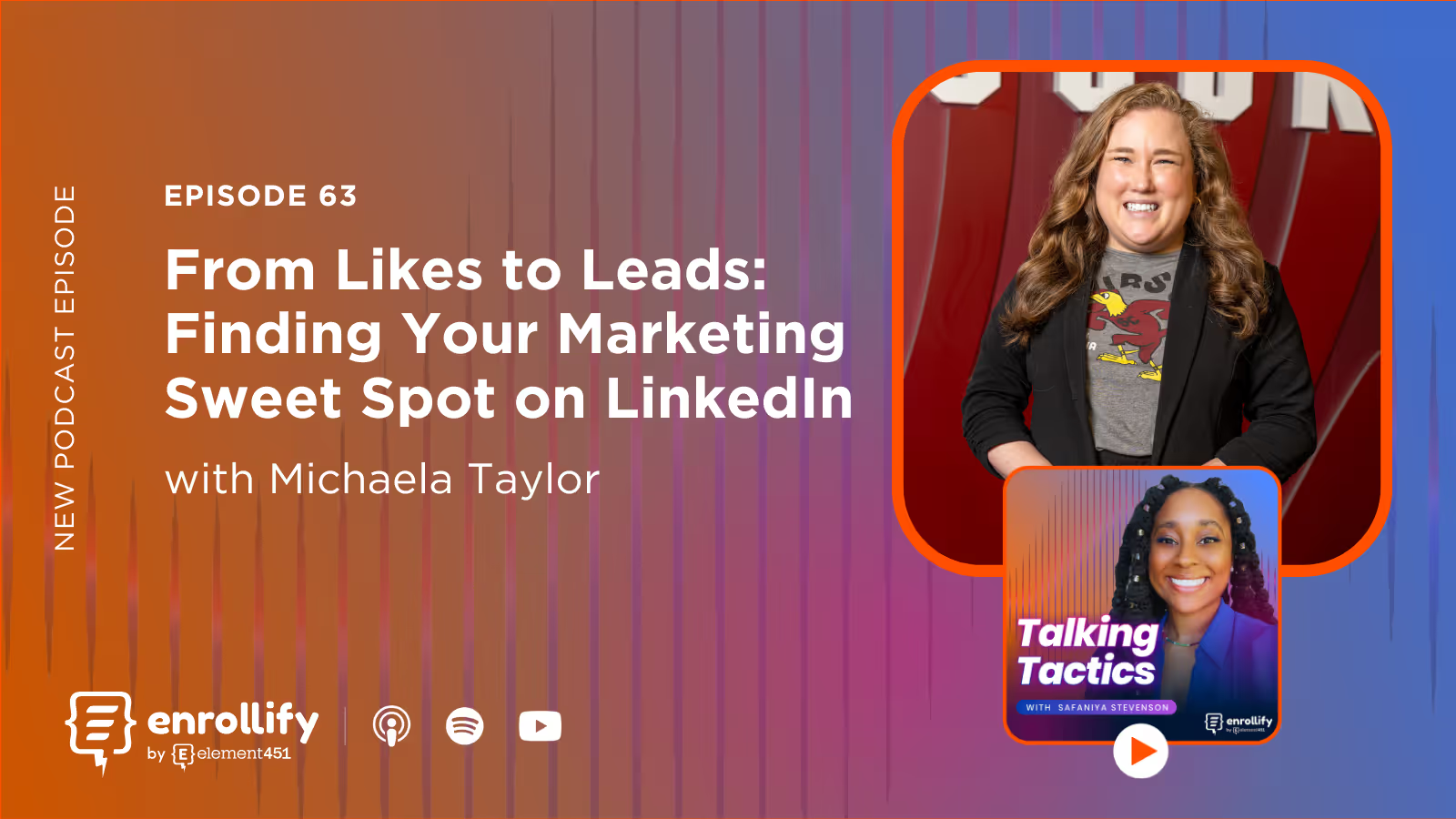
This week on Talking Tactics we’re talking social media championships and test kitchens? We’re joined by Michaela Taylor, Senior Social Media Strategist at the University of South Carolina—home of Rival IQ’s back-to-back social media champs. She’s breaking down how a “try it on LinkedIn” mindset turned into a growth engine for the university’s digital strategy. Whether you're managing a university account or just trying to figure out if facilities services really needs its own Instagram, this episode is packed with tactics that'll make you rethink everything you thought you knew about LinkedIn for higher education marketing.
Key Takeaways
- LinkedIn is higher ed’s most underrated social platform. The University of South Carolina’s LinkedIn account has been its fastest-growing channel for engagement and audience growth for two consecutive years.
- The “Try It on LinkedIn” mindset encourages experimentation. Treat LinkedIn as a “test kitchen” to explore content types like photo galleries, videos, and even memes—without fear of flopping.
- Start small with new departmental pages. Use LinkedIn as a low-risk way for academic units or offices to learn how to manage social media before expanding to more demanding platforms like Instagram or TikTok.
- Paid social on LinkedIn works—even with modest budgets. A $1,000 test campaign aimed at parents of future engineering students generated over half a million in reach and undercut industry-standard CPC rates.
- LinkedIn’s algorithm is forgiving. Unlike Meta platforms, poor-performing posts don’t hurt your next one, making it ideal for departments still learning the ropes.
Episode Summary
What is the “Try It on LinkedIn” tactic?
Michaela and her team coined the phrase while applying for a PRSA award, recognizing that their content strategy on LinkedIn had evolved from traditional posts to a dynamic testing ground. Whenever the team had a great piece of content that wasn’t a natural fit for Instagram or X (formerly Twitter), they’d say, “Let’s try it on LinkedIn.” This approach led to surprising wins—like high engagement on photo galleries and campus life snapshots—proving that LinkedIn audiences crave authentic, human-centered storytelling.
Why does LinkedIn work so well for higher ed?
According to Michaela, LinkedIn is “a people platform.” With over a billion verified members and fewer bots than other social channels, it offers authentic engagement with real audiences. It’s also more forgiving for institutions still developing a voice or experimenting with content formats. The platform’s algorithm rewards consistency and genuine engagement rather than perfection or paid reach alone.
How does USC use LinkedIn to support other departments?
As the university’s social media liaison, Michaela often consults with academic units that want to start their own social channels. Her first recommendation? Start with LinkedIn. It’s a manageable platform for testing consistency, tone, and content strategy. Michaela compares it to “fostering a puppy before you adopt one”—a way to learn the daily discipline of social management without overwhelming teams or damaging brand cohesion.
What are common mistakes departments make when starting social accounts?
One of the biggest pitfalls is underestimating the time and planning required to sustain growth. Many assume running a university page mirrors running a personal profile—but in reality, it requires consistent posting, clear ownership, and strategic alignment with the university’s broader brand. Michaela’s team uses a checklist to help departments determine readiness, covering content planning, scheduling, and audience targeting before launch.
Why is LinkedIn more forgiving for new social media managers?
Unlike Meta’s algorithm, which can penalize underperforming posts, LinkedIn treats every post as a new opportunity. Michaela notes that even if a post “flops,” it won’t harm future reach. That flexibility helps newer teams experiment without fear—learning what resonates organically while still maintaining brand standards.
How did USC measure success on LinkedIn through paid campaigns?
The University of South Carolina tested a small-scale paid campaign on LinkedIn to promote a new undergraduate engineering major. Instead of targeting high schoolers, the team strategically aimed at parents and family members—a key influence group in college decision-making. Using LinkedIn’s advanced targeting filters for seniority, education level, and geographic region, USC achieved over 500,000 reach and nearly 1 million impressions from just $1,000 in ad spend.
What results did the team see beyond the campaign?
The paid campaign’s effects extended well beyond the two-month ad window. Michaela shared that even after the spend ended, the college’s organic engagement metrics remained elevated. The campaign not only filled recruitment goals but also boosted awareness of the program among LinkedIn’s highly relevant audience of parents, alumni, and professionals in related industries.
What tools or resources does Michaela recommend for getting started on LinkedIn?
For those interested in advertising on LinkedIn, Michaela recommends the platform’s free Marketing Labs—self-paced training modules that reveal the “secret sauce” behind LinkedIn’s ad strategy. Participants can even earn digital badges for their profiles. And for a fun twist, Michaela encourages everyone to try out LinkedIn Games—because who knows, maybe a round of Sudoku really does boost post performance!
Connect With Our Host:
About The Enrollify Podcast Network: The Higher Ed Pulse is a part of the Enrollify Podcast Network. If you like this podcast, chances are you’ll like other Enrollify shows too!
Some of our favorites include Generation AI and Confessions of a Higher Education Social Media Manager.
Enrollify is produced by Element451 — the next-generation AI student engagement platform helping institutions create meaningful and personalized interactions with students. Learn more at element451.com.






.svg)
.svg)
