






About the Episode
Got a story to tell? An innovative idea to share? Fill out our guest nomination form and let's chat!
About the Episode:
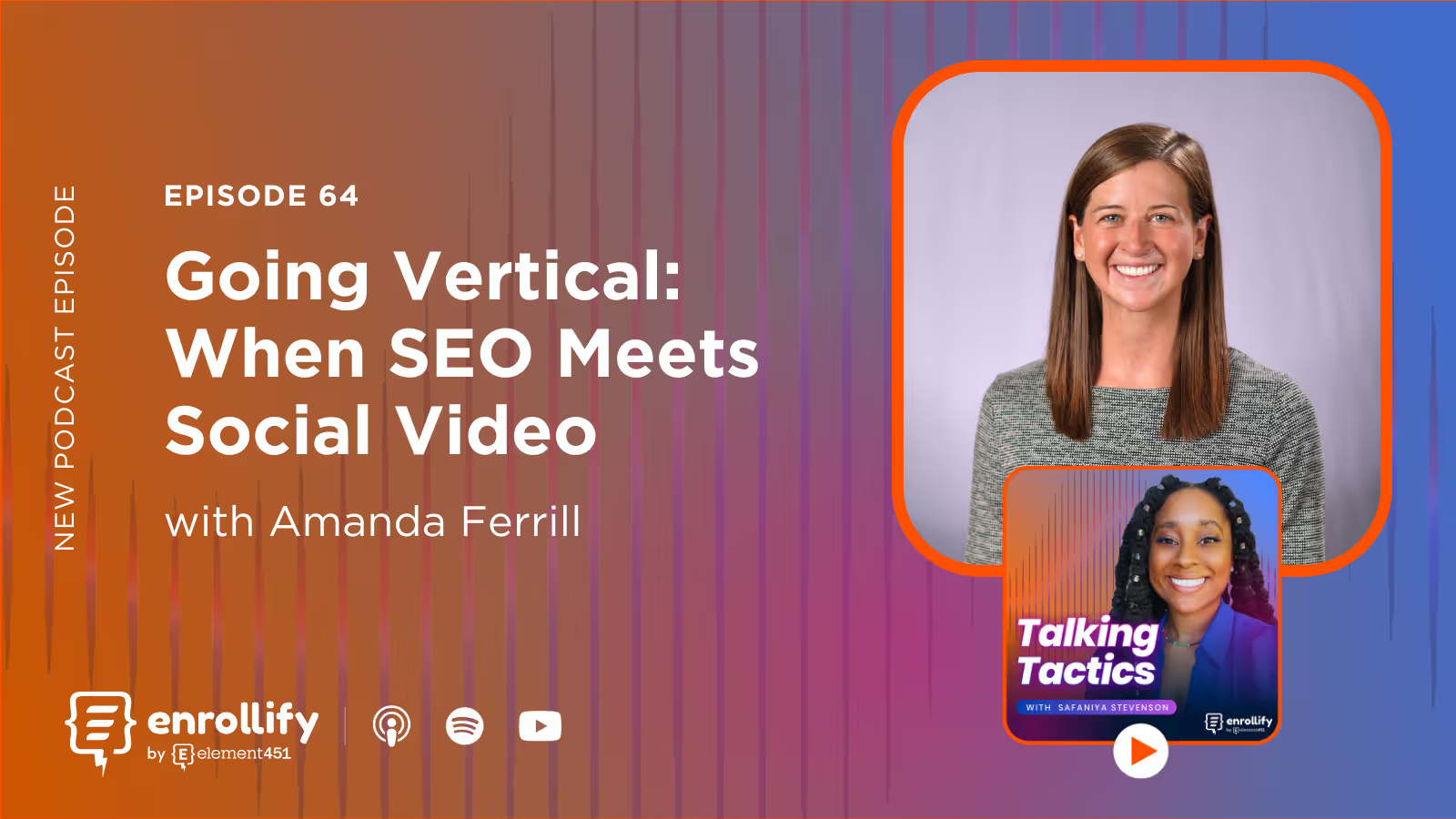
When TikTok bans threatened to upend their social strategy, one university's marketing team discovered an unlikely ally: their SEO colleagues. In this episode, Amanda Ferrill reveals how Temple University turned platform uncertainty into opportunity by marrying keyword research with vertical video content on YouTube Shorts. Learn why ditching cute captions for searchable titles might be the smartest move your social team makes this year. Plus, find out how a video aimed at parents became their surprise hit, all thanks to thinking like a search engine instead of just a content creator.
Key Takeaways
- YouTube Shorts = Search + Discovery: Temple University turned to YouTube Shorts as a future-proof alternative to TikTok, tapping into YouTube's powerful search engine for student and parent outreach.
- Social + SEO = Power Play: Collaboration with Temple’s SEO team helps ensure video titles, captions, and tags are optimized using real keyword data from target audiences.
- Vertical Video Isn't Optional: Short-form vertical video is the best-performing format for reach and impressions—and works across platforms like YouTube, TikTok, Instagram Reels, and Facebook.
- Trend Meets Brand: Temple balances trends with evergreen content by aligning topical, timely videos with long-term brand narratives.
- Student-Driven Insights: Temple leverages student workers as in-house trendspotters, ensuring content stays culturally relevant and authentic to Gen Z audiences.
- Repurpose, Don't Reinvent: Amanda advises not to overthink it—existing TikToks or Reels can be reused on YouTube Shorts with light edits for SEO, music licensing, and tagging.
Episode Summary
How did the TikTok bans influence Temple’s shift to YouTube Shorts?
When the specter of TikTok bans loomed, Temple’s social media team didn’t panic—they pivoted. Though they had dabbled in YouTube Shorts before, the bans became the catalyst for a full-on commitment to the platform. Amanda Ferrill and her team recognized that YouTube is still a dominant player among their target demographics—not just for entertainment, but for search. That searchability factor, combined with YouTube's algorithm and demographic reach, made it a natural home for their vertical video content. Temple’s approach isn’t just reactive—it’s strategic. Even if TikTok remains, they’re hedging bets by diversifying across platforms.
How does Temple’s social team work with SEO to optimize video content?
Amanda’s team took a proactive approach to integrate SEO best practices into their social strategy. Rather than relying on creative copy alone, they now use keyword research—thanks to a dedicated SEO coordinator—to craft titles and captions that match exactly what prospective students and parents are searching for. This means thinking less about “cuteness” and more about functionality. For example, instead of poetic titles, they choose straightforward phrases like “Temple University dorm tour” or “Advice for new Temple parents” to improve discoverability. This keyword-first mentality ensures that even short-form content has a long tail of relevance.
What does collaboration between social and video teams look like at Temple?
Temple has two distinct but collaborative teams: the social media team (where Amanda sits) and a separate multimedia video team. The key difference? Social-first video is all about speed and trend responsiveness, often in vertical formats optimized for quick consumption. These are the videos that go viral and drive impressions. The multimedia team, on the other hand, focuses on polished, evergreen content—think brand films, admissions videos, and other long-form storytelling. Amanda’s recent hire of a dedicated “social-first video” producer reflects the university’s growing investment in nimble, vertical-first content that can be turned around in hours, not weeks.
Who is Temple targeting with YouTube Shorts?
Surprisingly, it’s not just prospective students. YouTube’s user base is vast, and Temple has seen high-performing results from content targeting parents—a demographic usually reserved for Facebook. One parent-focused advice video unexpectedly became a top performer, underscoring the platform’s potential for multigenerational reach. Because YouTube Shorts is algorithm-driven, Temple doesn’t have to over-index their page for any one group. Instead, content is served to users based on behavior, not back-end content curation. That’s a win for institutions trying to reach multiple audiences without overwhelming their channel with segmented content.
How does Temple stay on top of video trends?
It’s not all about scrolling endlessly (though that’s part of it). Amanda’s team takes a grassroots approach by empowering student workers to serve as trend advisors. Their student ambassadors, vloggers, and video workers help the full-time staff identify culturally relevant content that resonates with Gen Z. While not every idea makes it into the final plan, this direct-from-source insight ensures Temple’s content feels timely, not forced. Amanda also notes that her team avoids jumping on every trend—especially when it doesn’t align with the university’s brand voice or messaging goals.
What’s Amanda’s advice for schools who want to start using YouTube Shorts?
“Don’t overthink it.” That’s Amanda’s core advice to any higher ed marketer looking to start—or scale—a YouTube Shorts strategy. If you’re already creating vertical video for TikTok or Instagram Reels, there’s no reason not to repurpose it for YouTube Shorts. Yes, you may need to adjust titles for SEO or swap out copyrighted music for royalty-free alternatives, but the content lift is minimal compared to the potential reach. In an unpredictable social media landscape, YouTube Shorts offers a stable platform with powerful discoverability and long-term shelf life.
Connect With Our Host:
About The Enrollify Podcast Network: The Higher Ed Pulse is a part of the Enrollify Podcast Network. If you like this podcast, chances are you’ll like other Enrollify shows too!
Some of our favorites include Generation AI and Confessions of a Higher Education Social Media Manager.
Enrollify is produced by Element451 — the next-generation AI student engagement platform helping institutions create meaningful and personalized interactions with students. Learn more at element451.com.






.svg)
.svg)
