






About the Episode
Got a story to tell? An innovative idea to share? Fill out our guest nomination form and let's chat!
About the Episode:
How AI Is Helping Students Find the Right College
How Babson College went all-in on AI in higher education
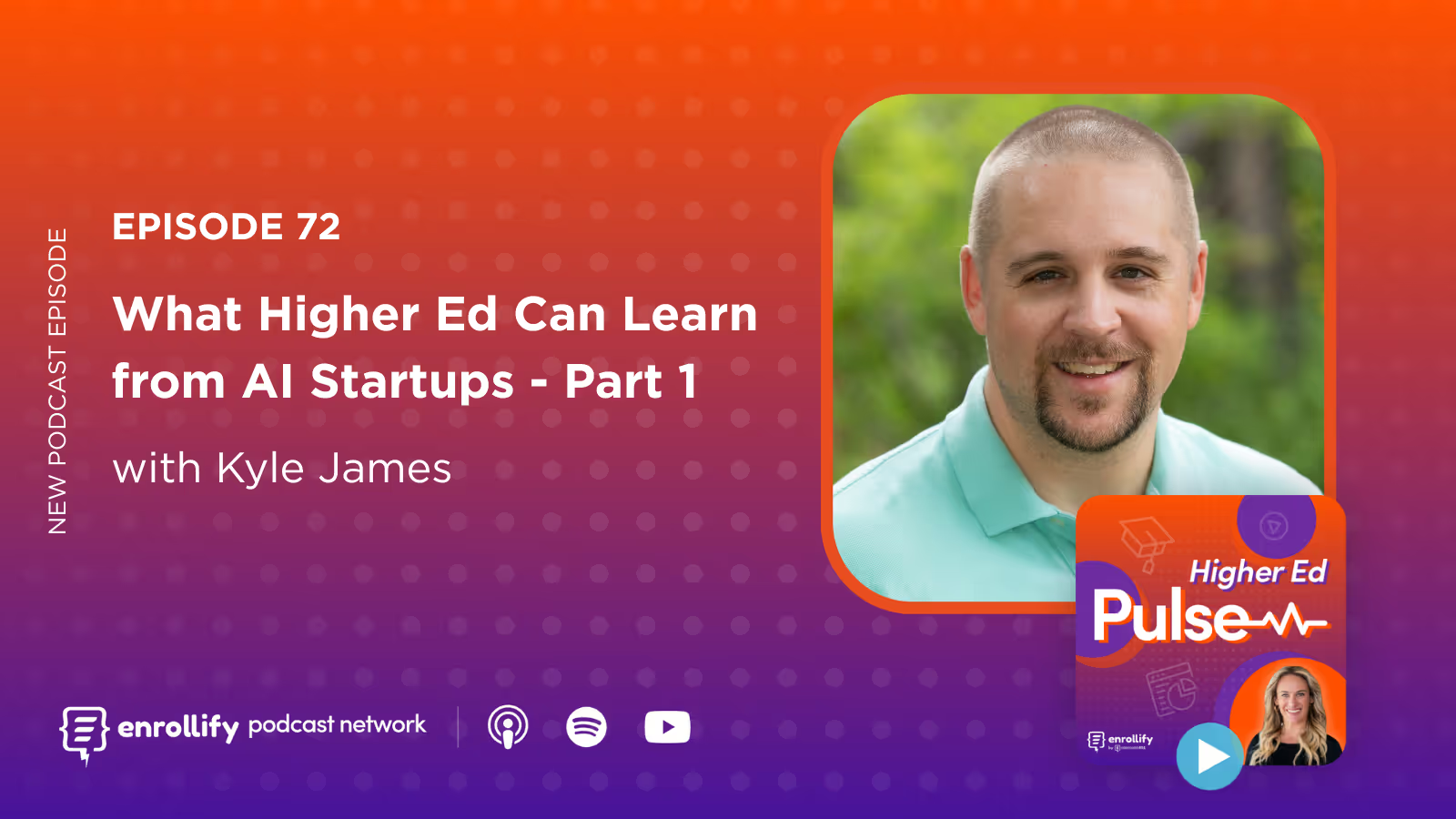
Mallory Willsea sits down with Kyle James — startup founder, product leader, and former college webmaster — to explore how AI is fundamentally reshaping the way business gets done. This high-energy conversation challenges higher ed professionals to ditch the pilot phase and start thinking like a startup. From automated call transcripts to no-code development and the future of white-collar work, this is a must-listen for anyone serious about innovation in higher education.
Key Takeaways
- Startups treat AI as infrastructure, not an experiment. They move fast, automate early, and cut what doesn’t work.
- Higher ed is stuck in pilot mode. While startups are deploying AI tools in production, many institutions are still forming task forces.
- AI is eating long-tail SEO. Tools that match students to colleges and scholarships are bypassing traditional search altogether.
- White-collar work is at risk. AI is already replacing junior roles, shifting the job market and forcing institutions to rethink how they prepare students.
- Generalists will thrive. In a world of hyper-specialized AI agents, it’s the humans who can connect the dots who’ll win.
- Transcripts are a goldmine. Startups use AI-powered transcripts from meetings to drive content creation, customer insight, and product decisions — higher ed should do the same.
- Liberal arts may make a comeback. As AI takes over routine tasks, human fulfillment may shift toward creative and philosophical pursuits.
- Higher ed needs a mindset shift. Rather than forming AI ethics committees, institutions need to start building, experimenting, and learning by doing.
Episode Summary: What Higher Ed Can Learn From Startups on AI Adoption
Why are startups so far ahead with AI implementation?
Startups don't overthink — they build. Kyle James explains how early-stage tech companies are integrating AI into every facet of their operations: sales, marketing, product development, and customer support. They’re leveraging AI not as a toy or trial, but as a foundational layer for operations. Rather than forming committees, startups deploy tools like AI-generated transcripts or low-code agents to accelerate execution. It’s a bias toward action that higher ed still struggles to embrace.
How is AI disrupting traditional SEO and student recruitment?
AI-powered platforms are already changing how students discover colleges, apply for scholarships, and get essay feedback. These tools are shifting influence away from traditional marketing and long-tail SEO strategies — a wake-up call for higher ed marketers. Kyle emphasizes that institutions must rethink how they attract and engage students in a world where search results are becoming AI-curated recommendations.
What roles are most threatened by AI — and what should institutions teach instead?
It’s not the plumbers losing their jobs — it’s the white-collar workers. Kyle highlights how AI is replacing entry-level positions in content creation, coding, and administrative work. This raises urgent questions for higher ed: Are we preparing students for roles that won’t exist in five years? The future will demand more from generalists and thinkers — the kind of skills liberal arts degrees often nurture — rather than narrow technical expertise.
Can AI tools like meeting transcriptions actually help higher ed teams?
Absolutely. Startups are using AI meeting assistants to automatically transcribe calls and mine insights for sales, marketing, and product teams. These transcripts help generate better content, inform persona development, and enrich CRM data. Higher ed recruitment teams could use similar tools to analyze prospective student conversations and tailor outreach — yet many institutions haven’t even considered the potential.
How does this shift affect human fulfillment and the future of work?
Mallory and Kyle reflect on how AI is not just a tool — it's a cultural shift. If AI takes over the repetitive work, will that free people to pursue creative passions? Or will it rob younger workers of the struggle and growth needed to develop expertise? There's a rising fear that without traditional entry-level roles, the next generation won't gain the experience needed to excel — or even find purpose.
Will liberal arts education become more relevant in the AI era?
Both Kyle and Mallory think so. As AI automates the routine and technical, human curiosity, creativity, and emotional intelligence may become more valuable than ever. Liberal arts teaches students how to think critically — and in an AI-dominated world, that might be our last competitive advantage. Educators and administrators should be thinking hard about how to preserve and promote those uniquely human skills.
Connect With Our Host:
Mallory Willsea
https://www.linkedin.com/in/mallorywillsea/
https://twitter.com/mallorywillsea
About The Enrollify Podcast Network: The Higher Ed Pulse is a part of the Enrollify Podcast Network. If you like this podcast, chances are you’ll like other Enrollify shows too!
Some of our favorites include Generation AI and Confessions of a Higher Education Social Media Manager.
Enrollify is produced by Element451 — the next-generation AI student engagement platform helping institutions create meaningful and personalized interactions with students. Learn more at element451.com.





.svg)
.svg)
