






About the Episode
Got a story to tell? An innovative idea to share? Fill out our guest nomination form and let's chat!
About the Episode:
AI Translation Platform Article
Example - AI Agents to write Free Resources for Users
Kate Reed Interview - "No Code Builder"
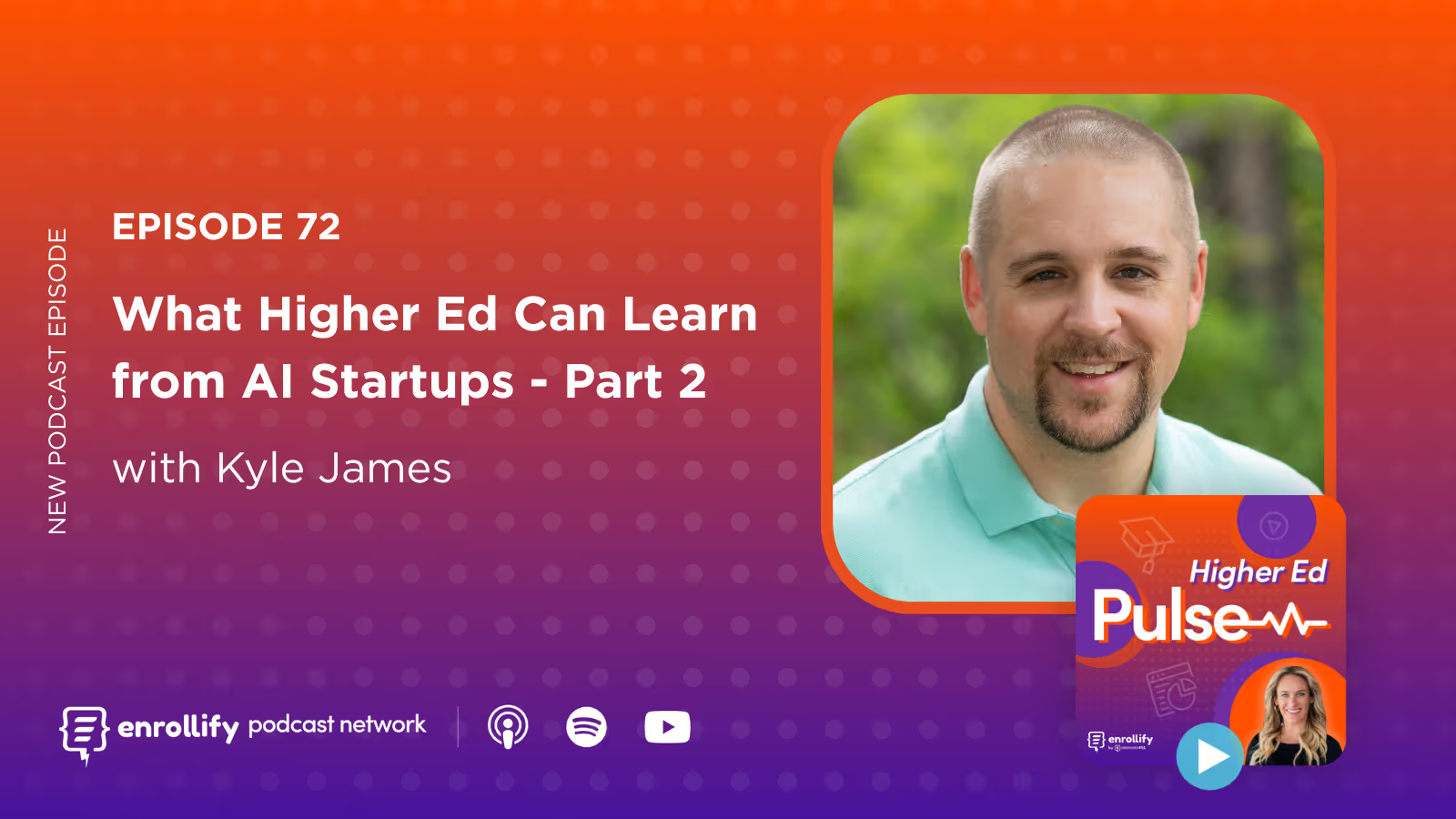
In this episode of Higher Ed Pulse, host Mallory Willsea sits down with Kyle James (again!) to tackle the deep divide between how startups and higher ed institutions adopt and implement AI. This conversation dives into why experimentation, failure, and iteration are the lifeblood of startup growth—and how higher ed can start borrowing from that playbook. From low-code/no-code AI tools to agile workflows and international student personalization, this episode is packed with actionable insights that challenge the higher ed status quo.
Key Takeaways
- Adopting a startup mindset can fast-track AI adoption in higher ed. Prioritize "progress over perfection" with faster experimentation cycles.
- Agile workflows and sprint planning drive more innovation than semester-based planning.
- Failure is a feature, not a flaw. Psychological safety is key to building a culture that supports testing and learning.
- AI tools act as co-pilots for everything from event planning to email writing. They provide judgment-free iteration support.
- Low-code and no-code AI platforms democratize innovation. Non-technical staff can now build apps, tools, and dynamic content—no developers required.
- Translation and localization tools powered by AI are redefining international recruitment. Now schools can personalize communication for overseas families—fast.
- Personalization at scale is finally real. With AI agents, marketers can deliver custom eBooks, campaign strategies, and user experiences in minutes.
- You don’t need to be an AI expert to get started. Just open a free account and ask a question. Prompting is just another form of writing a clear scope of work.
Why Higher Ed Needs to Embrace Startup Agility
Startups don't wait around for perfect solutions—they test fast, fail fast, and iterate even faster. Kyle and Mallory kick off the episode by comparing higher ed’s semester-based planning cycles to the rapid sprint cycles of startups. Startups run 52 iterations a year; colleges might run two or three. That alone creates a massive delta in how fast each can innovate. Kyle explains that in startup environments, agile frameworks like sprints and retrospectives are not just technical workflows—they're part of a cultural operating system that celebrates learning from mistakes and improving rapidly.
In contrast, higher ed institutions are risk-averse by design. That aversion slows down progress, especially when adopting transformative tech like AI. According to Kyle, it’s not enough to pilot an AI tool. Institutions need to rethink how they work, how they lead, and how they learn from what doesn't go well. The biggest shift isn't technological—it's cultural.
What Role Does Psychological Safety Play in AI Adoption?
Mallory makes a crucial point: you can’t fail fast if you’re afraid to fail. For higher ed teams to adopt the startup mindset, leaders must foster environments of psychological safety. That means creating spaces where employees can test ideas, report failures, and learn publicly without fear of judgment or punishment. AI tools can help here, Kyle says, because they offer something that most bosses don’t—nonjudgmental feedback. AI becomes the brainstorming partner that never rolls its eyes or pushes back with politics. It’s a place to explore “what went wrong” and “what could work better” without risking your job or your reputation.
This creates an opportunity to reframe AI not just as a tool but as a collaborator. Need to plan an event? Debrief a failed campaign? Create an action plan for the next one? Kyle argues that AI can serve as a co-strategist, helping you see the big picture and surface better alternatives in real time.
The No-Code Revolution Is Here. Is Higher Ed Ready?
One of the biggest unlocks in this conversation is the idea that you don’t need a technical background to build something meaningful with AI. Kyle shares stories of marketers and customer success pros—some without any coding experience—who are now building apps, writing agents, and creating custom content at scale. Tools like Windsor and Cursor are writing code for them based on prompts and project specs. That’s not the future—it’s happening now.
Kyle’s examples range from a “Pokemon Go for trees” app his friend built with AI for her daughter, to custom eBook generators that deliver hyper-personalized content based on user responses. The big takeaway? The bottleneck isn’t developers anymore—it’s creative thinkers who know what needs to be built. Higher ed marketers already have the ideas. Now they just need the space—and the safety—to bring them to life.
Rethinking International Recruitment Through AI
The conversation turns toward another high-impact application: international student recruitment. Mallory points out that for many students—especially from countries like China—family plays a huge role in the decision-making process. But if you're only producing materials in English, you're not speaking to the full audience. AI-powered translation and localization tools are making it radically faster and cheaper to adapt web pages, brochures, and paid ads into local dialects.
Kyle references tools that can rewrite search ad creatives in multiple languages, including the copy within images, in real time. This allows institutions to meaningfully connect with international families, not just students, without needing a whole new team. Translation is no longer a post-launch afterthought—it can now be part of your go-to-market strategy from day one.
Getting Started with AI: Low Stakes, High Impact
If you're still on the AI sidelines, Kyle’s message is clear: just start. Open a free ChatGPT account, ask it to clean up your email, help you troubleshoot white noise in your AirPods, or write a trip itinerary. These low-stakes, high-reward examples are how most people get hooked. And once you're hooked, the leap to using it for work becomes a whole lot smaller.
The bottom line? You don’t need to master AI. You just need to use it. Every professional already writes scopes of work, pitches ideas, or builds out campaign plans—that’s what prompting is. And if you're stuck, Kyle’s pro tip is to add this line at the end of any prompt: “What clarification questions do you need before starting?” The results will almost always be 95% of the way there.
Connect With Our Host:
Mallory Willsea
https://www.linkedin.com/in/mallorywillsea/
https://twitter.com/mallorywillsea
About The Enrollify Podcast Network: The Higher Ed Pulse is a part of the Enrollify Podcast Network. If you like this podcast, chances are you’ll like other Enrollify shows too!
Some of our favorites include Generation AI and Confessions of a Higher Education Social Media Manager.
Enrollify is produced by Element451 — the next-generation AI student engagement platform helping institutions create meaningful and personalized interactions with students. Learn more at element451.com.






.svg)
.svg)
