


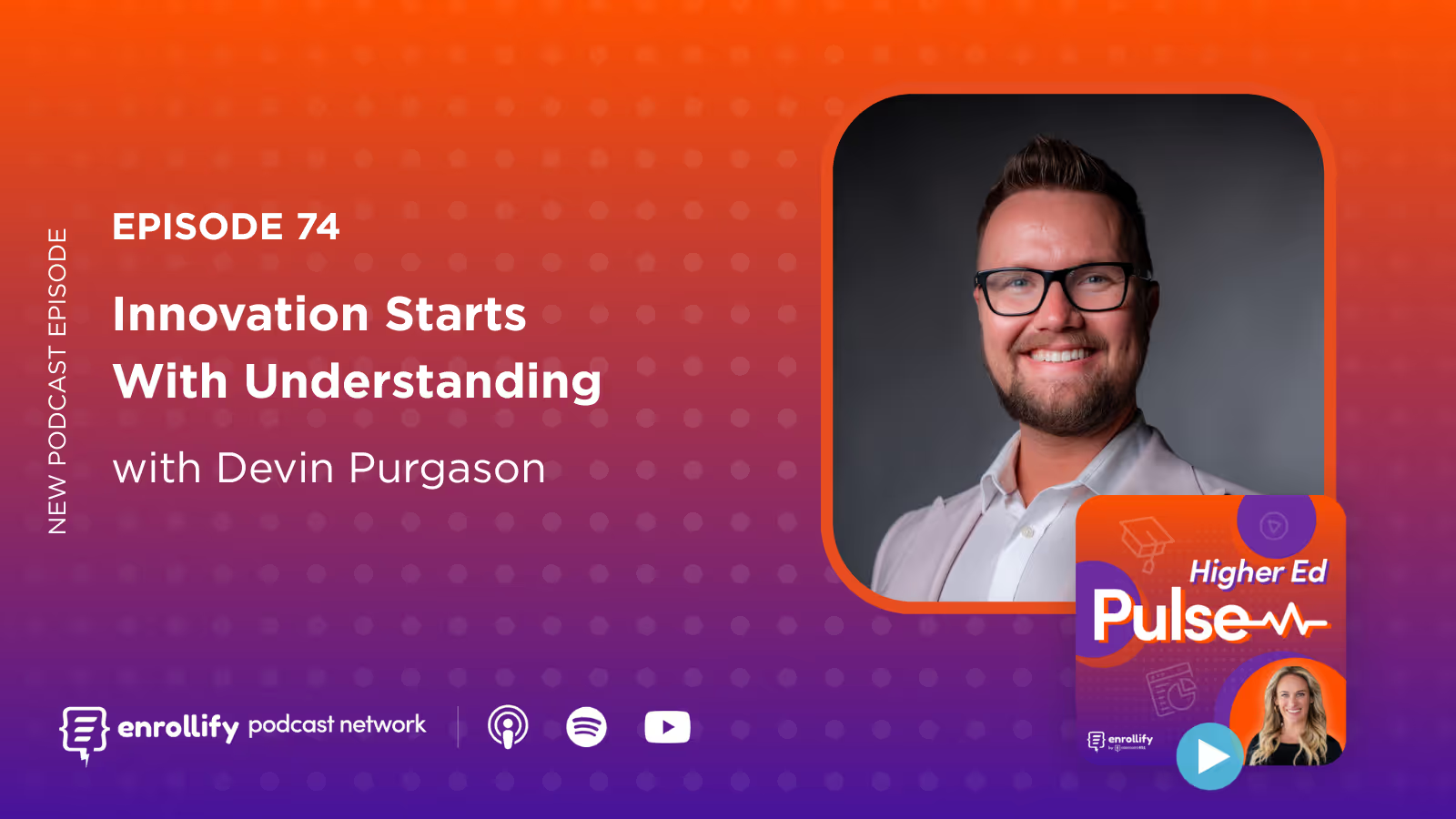




About the Episode
Got a story to tell? An innovative idea to share? Fill out our guest nomination form and let's chat!
About the Episode:
Register for the 2025 AMA Symposium for the Marketing of Higher Education
Watch all the sessions from the 2025 Engage Summit!
In this episode of Higher Ed Pulse, host Mallory Willsea sits down with Devin Purgason, AVP of Student Experience Marketing and Outreach at Forsyth Technical Community College, to dive into the behind-the-scenes of deploying AI on campus. From building better knowledge bases to turning karaoke into community-building, Devin shares key lessons from the 2024 Engage Summit, his takeaways as an AMA Symposium planning committee member, and his vision for a more human-centered, tech-enabled future in higher ed.
If you're an enrollment marketer exploring AI in higher education or seeking practical student success strategies, this episode is packed with insights and inspiration.
Key Takeaways
- Build AI around purpose, not hype. Start with a clear student pain point, then explore if AI is the right tool to solve it.
- Knowledge bases must be living documents. Devin and his team learned that maintaining an AI chatbot requires constantly updated and simplified content.
- Student-facing marketers unlock better data. Having someone on the frontlines—like Devin’s colleague, Hannah Wilson—helps teams quickly adapt to real-time student needs.
- Use design thinking for digital transformation. Forsyth Tech applies a “Understand, Ideate, Design, Deploy” model to ensure tech solutions are actually solving student problems.
- Loneliness in innovation is real. Devin opens up about the emotional toll of leading change—and how transparency and small wins help win hearts and minds.
- Community matters—karaoke included. From dancing at the Mint Museum to planning the AMA Symposium, Devin emphasizes the value of authentic connection in higher ed marketing.
Episode Summary
What made the 2024 Engage Summit stand out?
Devin highlighted the shared sense of purpose among attendees at this year’s Engage Summit. Rather than being swept up in the buzz around AI tools, many presenters focused on how to make AI work for students—a shift he found energizing. The session that especially resonated? Amanda Gulley’s keynote, which compared student UX design to the carefully crafted user experience at Disney World. This emphasis on thoughtful, intentional tech design affirmed the importance of prioritizing goals before tools.
Amanda's story of redesigning a flawed application process also offered a masterclass in strategic innovation. Rather than jumping to AI as the first solution, her team clearly defined the problem and considered multiple options before selecting AI as the best option—not the default. That mindset mirrors Forsyth Tech’s own approach, where design thinking is at the core of every major initiative.
For Devin, this mindset is crucial to making sure new tools actually serve students and create equitable, human-centered experiences. The takeaway? The best tech strategy starts with empathy and ends in impact.
What’s the story behind Forsyth Tech’s AI-powered knowledge base?
Devin offers an inside look into how his team revamped their institution’s knowledge base to better support an AI chatbot. What started as a patchwork of outdated content became a curated, living resource—thanks largely to the leadership of Hannah Wilson, who now oversees its daily maintenance.
As Devin puts it, “A knowledge base is like a garden—you have to constantly tend it.” That means monthly department meetings, real-time feedback loops, and even analyzing when and how students ask questions (tone and timing matter!). By treating content as dynamic rather than static, Forsyth Tech can respond faster to student needs and ensure their AI tools stay accurate and helpful.
Hannah’s work has been so impactful, she’ll be sharing her insights on the Exhibit Hall Stage at this year’s AMA Symposium. Her upcoming session on Notebook LM promises to be CRM-agnostic, practical, and universally useful—no matter what tech stack your institution uses.
What changed after launching the improved knowledge base?
Post-launch, the cadence and strategy behind maintaining the knowledge base shifted dramatically. Rather than updating it once per semester, Hannah now meets monthly with departments to keep the content clean, accurate, and responsive to trends in student questions.
This change has created a more agile communication strategy. If, for example, the chatbot receives a surge of financial aid questions, Hannah can quickly circle back with that department to refine or expand content. It’s not just about the tech—it’s about creating a feedback loop between marketing, student services, and the students themselves.
More importantly, this integration of marketing with the student experience is breaking down traditional silos. Forsyth Tech’s marketing team is no longer working for students from a distance—they’re working with students in real time.
How do you lead AI adoption without losing your team?
Devin gets candid about the emotional side of innovation. Even at a college with a forward-thinking president like Janet Spriggs, getting buy-in isn’t always easy. “People fear tech replacing them,” he shares. “They fear getting it wrong.”
To move past those fears, Devin leans on radical transparency. He brings stakeholders into the process early, shows them the small wins, and constantly communicates the “why” behind every initiative. Humor helps, too—but trust is the foundation.
His advice for other innovators feeling lonely on their campuses? Keep sharing your story. Stay focused on your purpose. And remember: transparency builds credibility, especially when you're navigating change.
What can we expect at this year’s AMA Symposium?
As a first-time AMA planning committee member, Devin is especially excited about expanding the boundaries of higher ed marketing. He championed a session exploring what we can learn from the fashion industry—and how those branding lessons can help colleges elevate their student experience.
Mallory added that this year’s Fireside Chat series will feature similar outside-the-box thinking, like a session on how educational brands can (and should?) reach the same cultural relevance as entertainment brands. This year’s AMA program promises fresh perspectives and bold ideas from all corners of the marketing world.
Bonus: Hannah Wilson will also be presenting her knowledge base expertise live—yet another reason not to miss the conference.
What’s a creative risk Devin is taking this year?
Outside of AI, Devin is taking a bold creative swing with Forsyth Tech’s annual report. For the college’s 65th anniversary, they’re ditching the glossy magazine format and going retro with a 1960s-style newspaper, complete with QR codes leading to rich video content.
It’s a perfect blend of nostalgic design and modern functionality—exactly the kind of risk that could inspire future projects across campus. For Devin, success will be measured in donor engagement and dollars raised. But even beyond the numbers, this creative experiment shows the power of merging old-school storytelling with digital-first strategy.
When asked when he’ll know AI is really working for him? Devin’s answer: “When it can find and book me the best hotel in NYC without me lifting a finger.” We’re almost there.
Connect With Our Host:
Mallory Willsea
https://www.linkedin.com/in/mallorywillsea/
https://twitter.com/mallorywillsea
About The Enrollify Podcast Network: The Higher Ed Pulse is a part of the Enrollify Podcast Network. If you like this podcast, chances are you’ll like other Enrollify shows too!
Some of our favorites include Generation AI and Confessions of a Higher Education Social Media Manager.
Enrollify is produced by Element451 — the next-generation AI student engagement platform helping institutions create meaningful and personalized interactions with students. Learn more at element451.com.




.svg)
.svg)
