






About the Episode
Got a story to tell? An innovative idea to share? Fill out our guest nomination form and let's chat!
About the Episode:
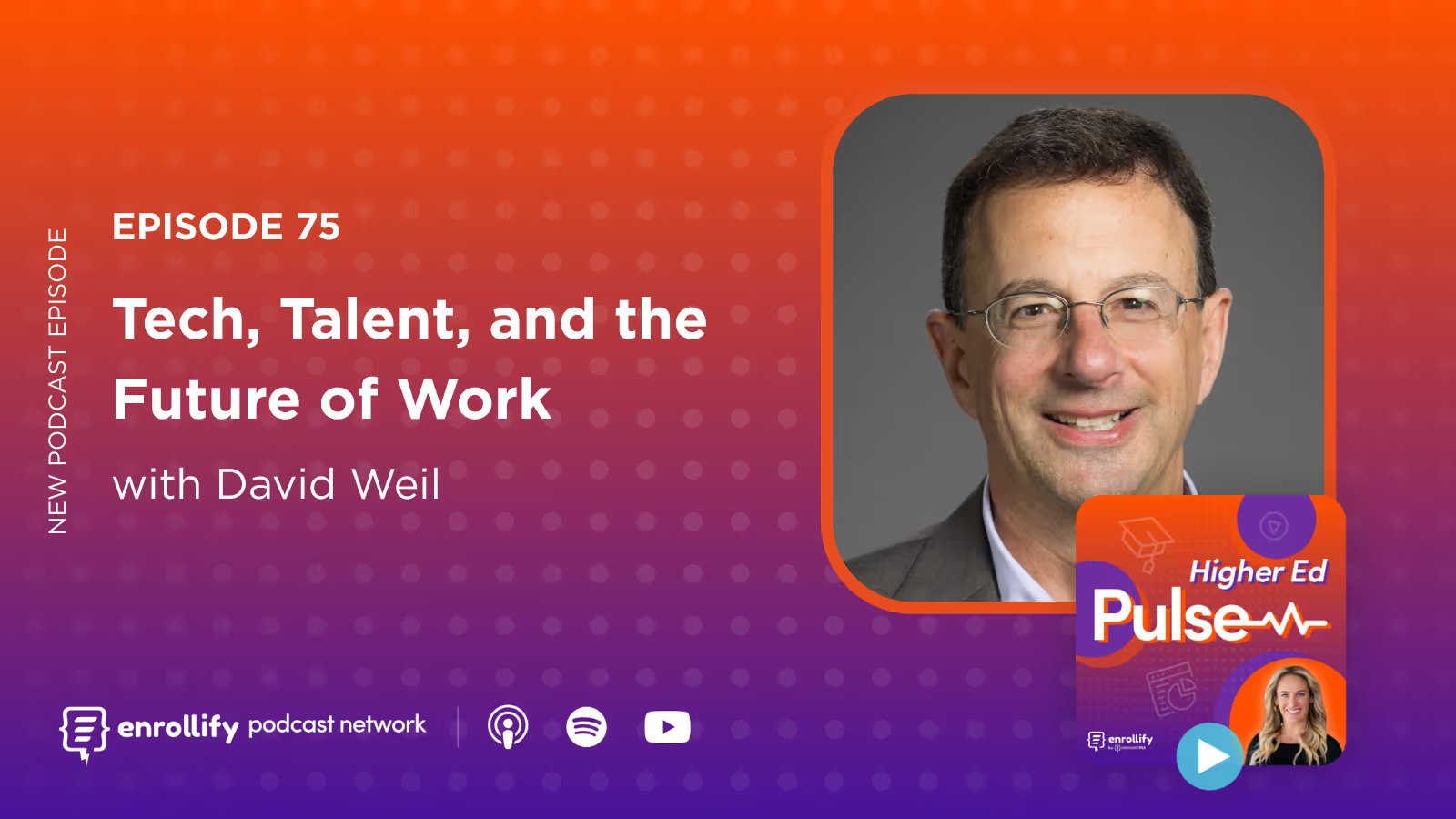
In this episode of Higher Ed Pulse, host Mallory Willsea is joined by David Weil, Senior Vice President and CIO at Ithaca College, for a conversation about one of the most urgent issues in higher education today: the disappearance of entry-level jobs due to AI automation. They explore how institutions can evolve curricula, redefine readiness, and support students in launching careers in a workforce being rapidly reshaped by artificial intelligence. This episode offers timely insights into AI literacy, human-centered skills development, and the future of work.
Key Takeaways
- AI is reshaping the workforce: Entry-level jobs are disappearing as automation replaces traditional pathways into mid-level careers.
- Higher ed must shift from AI awareness to AI readiness: Institutions need to prepare students to thrive in a world where prompt engineering and interdisciplinary agility are in demand.
- Human skills are still king: Qualities like ethical decision-making, leadership, curiosity, and creativity are more valuable than ever.
- Curriculum reform must be nimble: Institutions like Ithaca College are finding new ways to support faculty experimentation with AI through grants and labs.
- AI can enhance—not replace—human support: Smart AI integration can reduce administrative burdens and increase student-facing time for staff.
- The liberal arts are making a comeback: In a world where AI can mimic but not feel, skills rooted in human experience gain new relevance.
- Leaders need a 360-degree view: Connecting talent, technology, and transformation is critical for preparing students for the future of work.
Episode Summary: What You’ll Learn in “The Bottom Rung of the Career Ladder is Breaking”
Why are entry-level jobs disappearing—and what does it mean for college grads?
As AI capabilities expand, especially in areas like writing, data analysis, and research, many traditional entry-level roles are being automated. David Weil shares insight from a Fortune 50 company that has nearly eliminated entry-level hiring—not because they don’t need new talent, but because automation now handles tasks that used to introduce employees to the field. The result? A bottleneck in the talent pipeline. For higher education, this means preparing students to jump straight into more complex, human-centered roles—or risk irrelevance.
“We need to ensure our graduates are prepared not for the first rung—but for the second,” Weil says.
What should higher ed focus on when redesigning programs for AI readiness?
The industry must rethink what it means to be “career ready.” That doesn’t just mean teaching students to use AI tools—it means preparing them to do what AI can’t: lead, collaborate, think ethically, and solve complex problems. Weil emphasizes the need to double down on the human skills that are increasingly prized across industries and less likely to be automated. The goal? To create students who are not only digitally fluent but emotionally and ethically intelligent.
These shifts suggest a renewed appreciation for the liberal arts, where curiosity, critical thinking, and storytelling still reign supreme.
How can curriculum innovation happen faster in a traditionally slow system?
Curriculum change is infamously slow—and AI’s rapid evolution waits for no one. At Ithaca College, leadership responded by launching a Presidential Working Group on AI, issuing mini-grants to faculty for experimentation, and opening an AI Exploration Lab. These initiatives invite faculty to learn, test, and iterate in low-risk ways.
According to Weil, you don’t need every professor to be an AI expert—but you do need them to be AI literate. That means understanding both how to use tools like ChatGPT and how AI is impacting their disciplines and industries. Literacy isn’t just about function—it’s about context.
What’s the right way to integrate AI into student services?
One of the most innovative ideas from this episode is how Ithaca is using AI behind the scenes—not to replace humans, but to free up more time for them. For example, AI is now helping research and prepare case notes for staff working with struggling students, allowing each team member to assist more students directly.
“This year alone, that approach allowed them to support 150 additional students,” Weil shares.
This model aligns with Ithaca’s human-centered culture and points to a compelling strategy for institutions looking to boost student success while still embracing tech transformation.
What’s the long-term outlook for higher ed in an AI-powered world?
Weil closes with a hopeful vision for the future. If institutions get this right—aligning programs, mindsets, and technology—higher ed can elevate its core value: helping students live meaningful, impactful lives. AI won’t eliminate the need for college; it will redefine what college prepares students to do. And if higher ed embraces that challenge, it could emerge stronger, more agile, and more vital than ever before.
Connect With Our Host:
Mallory Willsea
https://www.linkedin.com/in/mallorywillsea/
https://twitter.com/mallorywillsea
About The Enrollify Podcast Network: The Higher Ed Pulse is a part of the Enrollify Podcast Network. If you like this podcast, chances are you’ll like other Enrollify shows too!
Some of our favorites include Generation AI and Confessions of a Higher Education Social Media Manager.
Enrollify is produced by Element451 — the next-generation AI student engagement platform helping institutions create meaningful and personalized interactions with students. Learn more at element451.com.




.svg)
.svg)
