






About the Episode
Got a story to tell? An innovative idea to share? Fill out our guest nomination form and let's chat!
About the Episode:
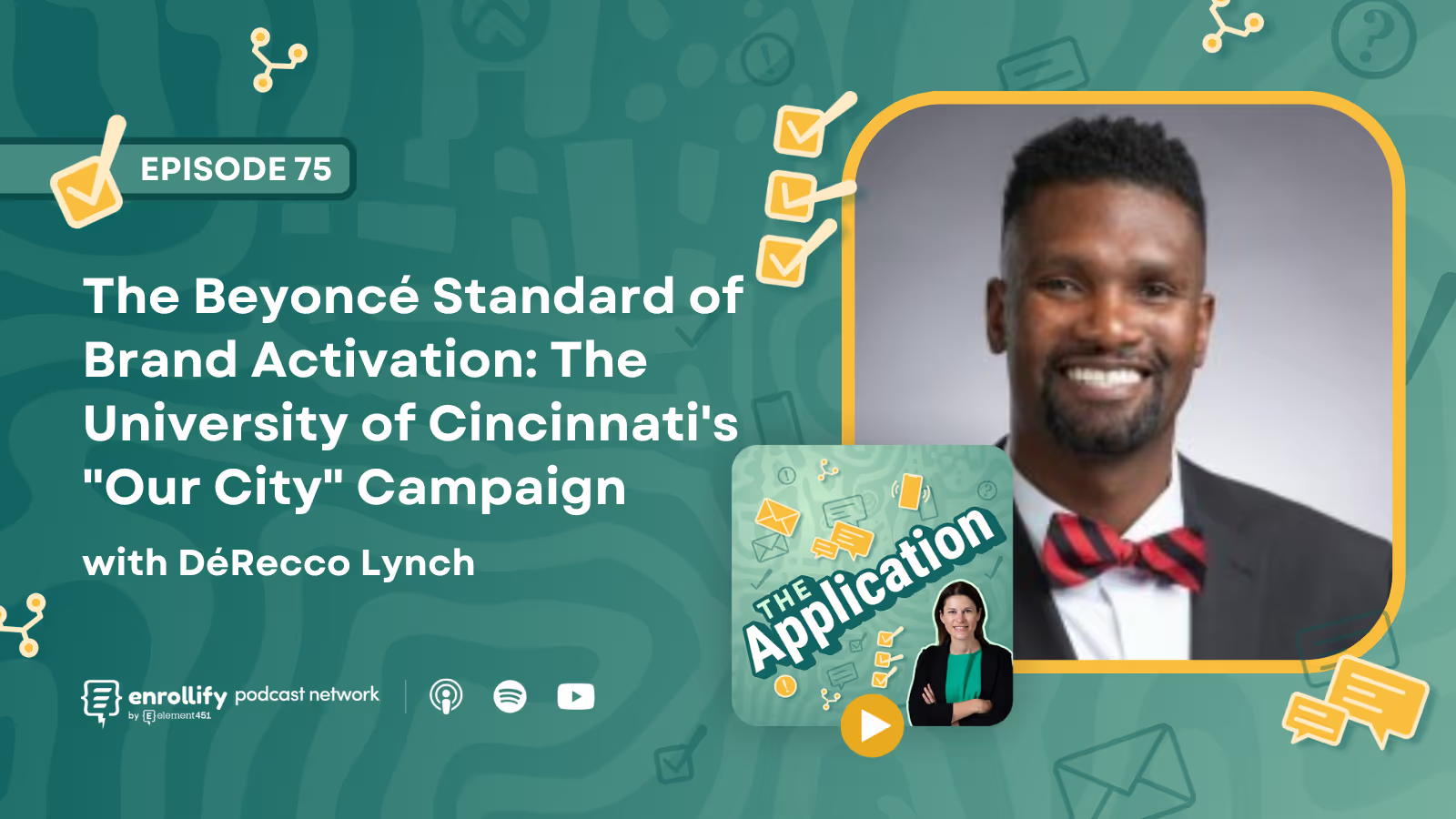
What if your institution stopped playing it safe and started thinking like a startup? DéRecco Lynch, Assistant Vice Provost of Enrollment Management at the University of Cincinnati, asked that question and answered it by launching Our City, one of higher ed’s boldest brand activations. In this episode, DéRecco tells Allison how his team broke down silos, built trust, and aligned four divisions to move fast and make an unforgettable mark on the city. From failing fast to letting go of creative control to creating a student-centered, family-focused experience, he shares what it takes to unify a brand and spark real engagement.
Join us as we discuss:
- [1:51] How to break down departmental silos and build trust
- [8:29] Why you should embrace a startup mindset and fail fast
- [20:21] The art of the possible: where to start and what not to skip
Check out these resources we mentioned during the podcast:
What does it mean to “take back your city” in higher ed marketing?
Dr. DéRecco Lynch posed that bold challenge upon stepping into his role at the University of Cincinnati. Sparked by dozens of candid Uber conversations with locals who didn’t even realize UC was nearby, he realized the institution had lost its visibility in its own city. “No one should be able to visit and not know we’re here,” he said. That led to the Our City campaign—a strategic, emotionally resonant brand activation that put UC’s presence on billboards, in stores, and into the everyday lives of Cincinnatians. The message? This university belongs to everyone in the city, and it’s time they felt it.
How do you align silos in higher ed to work together on one campaign?
Alignment began with honesty. Leaders across enrollment, athletics, online programs, and central marketing sat down in a room and aired their frustrations—and found common ground. “We just want people to engage with UC,” became the shared mission. Instead of starting with creative or logistics, the team focused first on vision and executive buy-in. DéRecco drew on his time at Salesforce, where he learned that top-level alignment unlocks speed, innovation, and cross-functional execution. The billboard became a pilot—a creative and cultural experiment that proved they could actually do things together.
Why did UC choose to think like Google instead of a traditional university?
Because the traditional playbook wasn’t working. Higher ed is facing a market disruption as significant as the COVID era, DéRecco argues. That demands a startup mindset: act fast, embrace risk, fail forward. The team prioritized bold action over cautious perfection, launching their campaign within 30 days of aligning. “Would Google wait for a full creative brief?” he asked. No—they’d take over the city with a memorable message. That’s exactly what UC did, inspired by tech-world thinking and the competitive, innovative spirit of their collaborators.
How did creative collaboration help the campaign soar?
Initially, central marketing created the first round of visuals—but they missed the mark. That moment of tension didn’t divide the team; it deepened trust. Athletics was then brought in to take the creative lead, and the results were transformative. They listened deeply, presented 200+ visual concepts, and came back with a shortlist so strong it was hard to choose just one. That level of collaboration—letting go of control, embracing feedback, and trusting new partners—was key to the campaign’s authenticity and resonance.
What measurable impact has the campaign had so far?
While it wasn’t built around trackable QR codes or landing pages, the Our City campaign generated a different kind of data: human impact. Alumni requested merch. The campaign spread into retail stores. Community members commented on UC’s newfound visibility. Students and families alike noticed, engaged, and began talking. UC saw more than impressions—they saw pride. And as DéRecco noted, the real ROI may lie in the newfound collaboration across departments, which is now fueling even more strategic, unified campaigns.
How is UC rethinking enrollment marketing for a new era?
The big shift? Enrollment is now about building fans, not just filling seats. DéRecco and his team are targeting the whole family, with programming and messaging for everyone from toddlers to grandparents. They’re integrating city-wide experiences, like light shows and community events, into the admissions journey. And they’re re-centering the student—literally—by asking them what they want, how they see UC, and what language resonates. This isn’t just marketing; it’s student success strategy reimagined.
What’s the biggest lesson for other higher ed leaders?
DéRecco puts it plainly: “You can’t have mission without margin.” The higher ed landscape is oversaturated, and bold brand activations like Our City are how institutions can reclaim competitive edge. But it has to start with mindset. Leaders need to ask: What’s actually possible if we work together? Then they need to give themselves permission to slow down long enough to get it right—and fast enough to not miss their moment. Strategic patience, paired with bold urgency, is the new formula for impact.
Connect With Our Host:
Allison Turcio
https://www.linkedin.com/in/allisonturcio/
https://twitter.com/allisonturcio
About The Enrollify Podcast Network: The Application with Allison Turcio is a part of the Enrollify Podcast Network. If you like this podcast, chances are you’ll like other Enrollify shows, too!
Some of our favorites include Mission Admissions and Visionary Voices: The College President’s Playbook.
Enrollify is made possible by Element451 — the next-generation AI student engagement platform helping institutions create meaningful and personalized interactions with students. Learn more at element451.com.





.svg)
.svg)
