






About the Episode
Got a story to tell? An innovative idea to share? Fill out our guest nomination form and let's chat!
About the Episode:
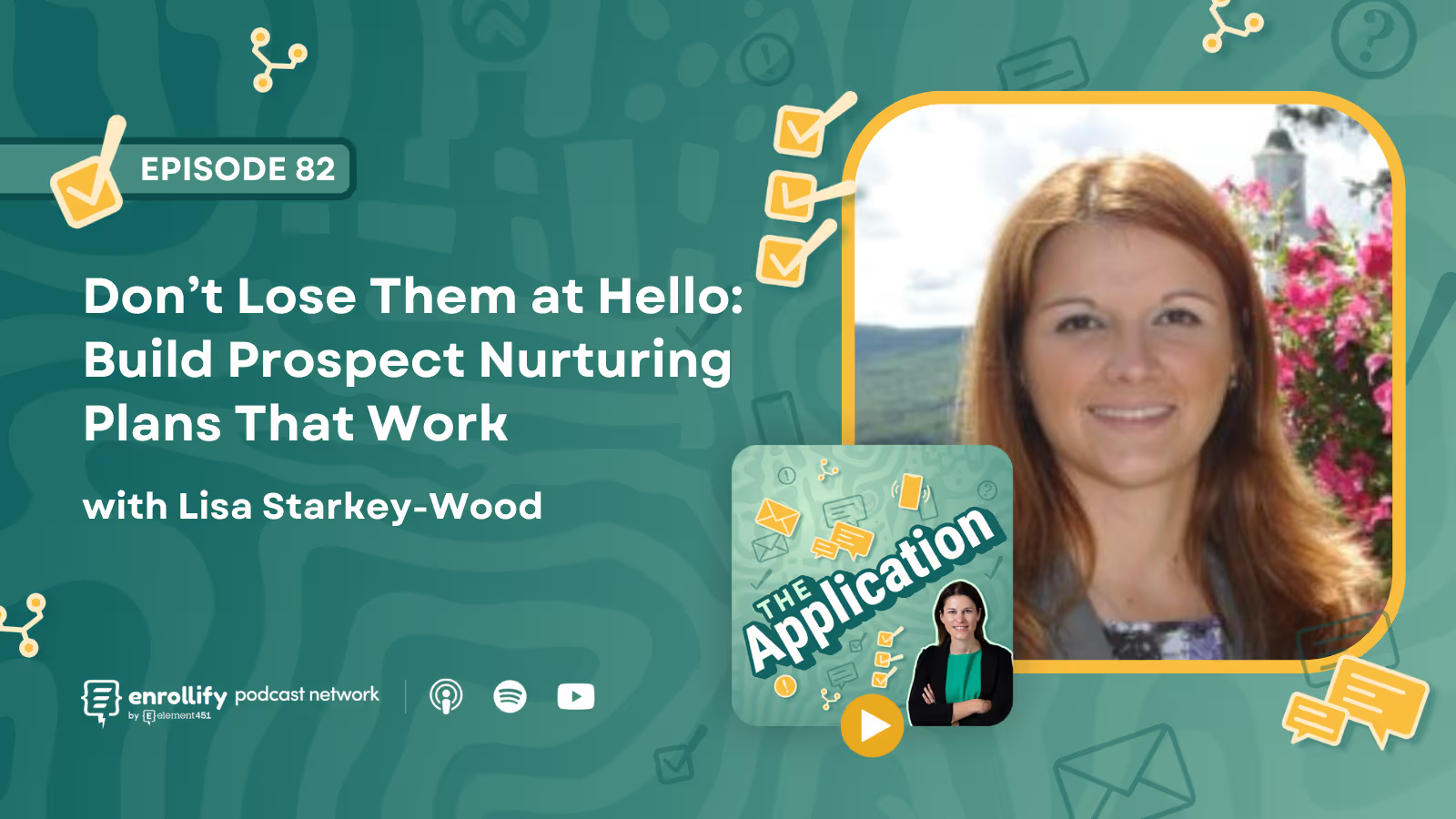
Every email, text, and touchpoint with a prospective student matters. Get it right, and you move them closer to enrollment. Get it wrong, and you may lose them to another institution. In this episode, we sit down with Lisa Starkey-Wood, Sr. Director of Digital Strategy at Stamats. She breaks down the must-dos of prospect nurturing: from mapping communication by stage and student type, to delivering quick wins that keep your funnel strong. You’ll hear why “day zero” response is critical, how to avoid overwhelming prospective students, and why student workers may lead you to your most valuable insights.
Join us as we discuss:
- [1:53] Why a “day zero” response is non-negotiable
- [8:59] How to use “mystery shopping” to test your own funnel
- [16:54] Making students and faculty a part of your outreach process
Check out these resources we mentioned during the podcast:
To hear this interview and many more like it, subscribe on Apple Podcasts, Spotify, or our website, or search for “The Application with Allison Turcio” in your favorite podcast player.
What’s the most important first step when planning a prospect nurturing strategy?
Start by mapping communications by stage in the student journey—Inquiry, Applicant, Admitted, Enrolled—and segment within each stage by student type (first-year, transfer, adult learners). Lisa emphasizes the importance of whiteboarding or using a spreadsheet to visually organize the flow. Rather than trying to build everything at once, focus on what matters most right now in the cycle (e.g., yield during winter). This ensures messaging is timely, relevant, and manageable for small teams.
How do you handle multiple student entry points into your CRM?
In today’s fragmented digital landscape, students don’t just come through one or two standardized paths anymore. They might enter through a digital ad, a college fair, your website, or a social media page. Regardless of where the first moment happens, Lisa advises institutions to make the most of it. A key tactic? Optimize your thank you page after an inquiry form submission. Instead of the generic “thank you, we’ll be in touch,” use it to share student-centric videos, next steps, and social links. Tools like Halda can even deliver AI-generated personalized content based on form input—turning that moment into a powerful mini-conversion point.
How fast should institutions respond to a new inquiry?
Immediately. Students—and parents—are conditioned by the instant gratification of the modern digital world. Lisa stresses the importance of a day-zero follow-up, whether it’s a basic acknowledgement email or a smarter, AI-driven response. Even if your CRM takes time to sync data, configure your form tool to trigger a short but engaging message. The takeaway: Don’t let silence be the first impression.
What does a well-sequenced nurturing plan look like?
It’s all about consistency and pacing. According to Lisa, many schools drop the ball after the initial 1–2 messages, waiting weeks to follow up again. Instead, start with more frequent outreach (first few days), then taper to a sustainable rhythm. Align content with where the student is mentally—transfer students need info on credit transfers and timelines; first-years want to know about campus life and academics. Bonus tip: map all channels—email, direct mail, digital ads, phone calls—on one timeline. This ensures you're not unintentionally spamming students with overlapping messages. One institution unknowingly sent 33 messages over six days. (Yes, that’s too many.)
What are some overlooked data points institutions should be monitoring?
Beyond open and click rates, Lisa encourages enrollment teams to dig deeper into enrollment metrics by segment—especially by academic program and geographic region. Did your new nursing campaign actually increase applications? Are Long Island prospects converting at expected rates? Tracking funnel performance by sub-audiences helps determine where to focus more energy and where to pivot. Aligning enrollment goals with marketing campaign outcomes is what transforms insights into impact.
How can institutions figure out what their students actually want to know?
Ask them. Lisa recommends tapping into your student ambassadors and work-study teams to uncover insights directly from your target audience. These students often have the clearest sense of what matters to incoming prospects. You can also join your admissions counselors on the road—listen to questions asked at college fairs, jot them down, and use that as the skeleton for future communications. It’s simple market research with immediate ROI.
What’s a common mistake institutions make in their nurturing sequences?
Not walking through their own process. Lisa encourages every team to mystery shop themselves—try submitting an inquiry on mobile, search for your own program from Google, and actually experience the journey as a student would. You’ll likely uncover broken forms, confusing navigation, and out-of-date pages that would otherwise go unnoticed. This low-effort audit can surface high-impact fixes fast.
Connect With Our Host:
Allison Turcio
https://www.linkedin.com/in/allisonturcio/
https://twitter.com/allisonturcio
About The Enrollify Podcast Network: The Application with Allison Turcio is a part of the Enrollify Podcast Network. If you like this podcast, chances are you’ll like other Enrollify shows, too!
Some of our favorites include Mission Admissions and Visionary Voices: The College President’s Playbook.
Enrollify is made possible by Element451 — the next-generation AI student engagement platform helping institutions create meaningful and personalized interactions with students. Learn more at element451.com.


.svg)
.svg)
