






About the Episode
Got a story to tell? An innovative idea to share? Fill out our guest nomination form and let's chat!
About the Episode:
https://news.gallup.com/poll/695003/perceived-importance-college-hits-new-low.aspx
https://www.luminafoundation.org/news-and-views/the-cost-vs-value-paradox-what-americans-really-think-about-college/
https://www.highereddive.com/news/higher-education-survey-new-america-varying-degrees-2024/722992/
https://www.bethel.edu/more/
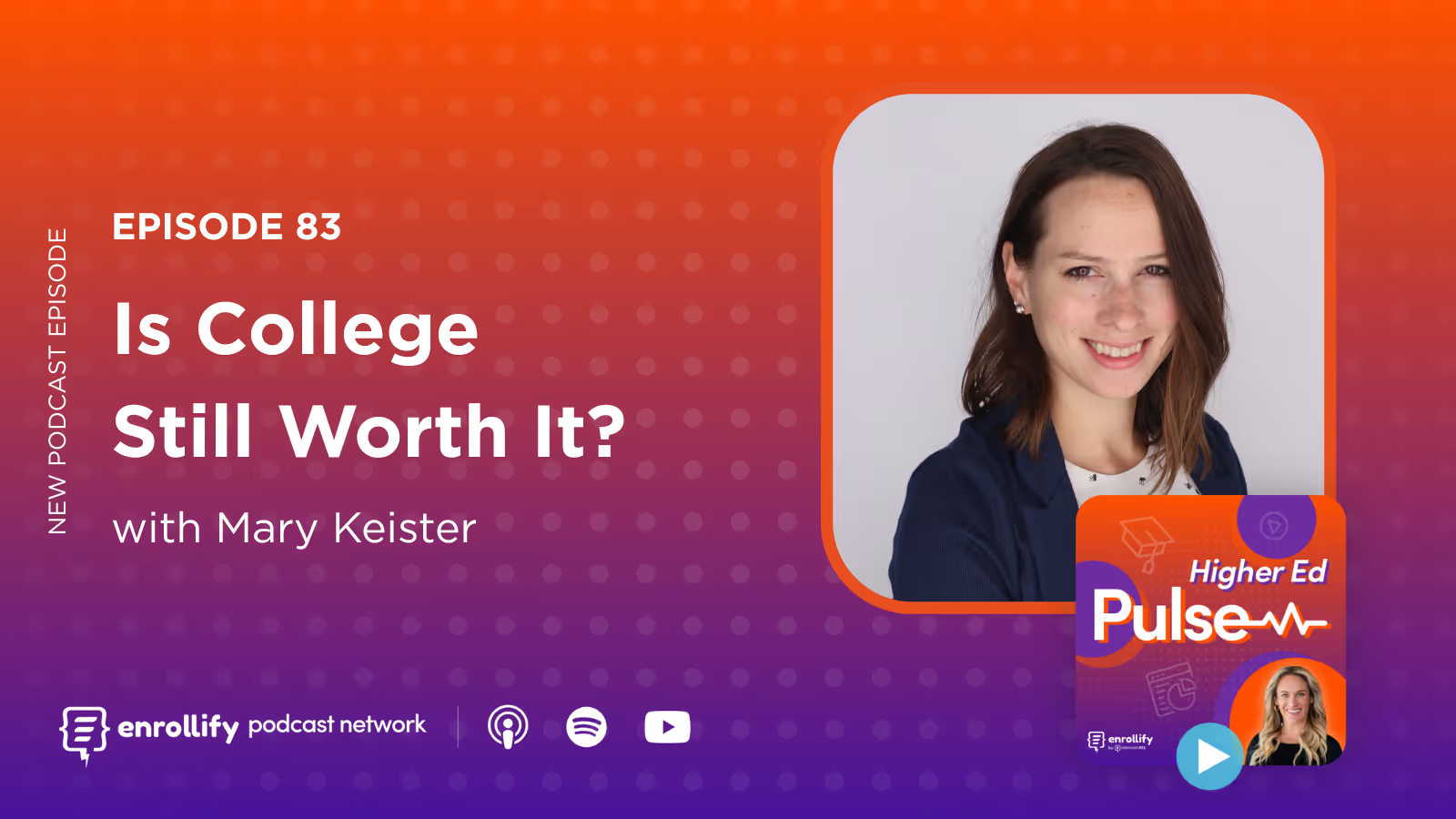
In this episode of Higher Ed Pulse, host Mallory Willsea sits down with Mary Keister, Principal at Mary Keister Consulting and a seasoned strategic communications pro, to unpack one of higher ed’s most pressing issues: the rapidly declining public trust in the value of college. With Gallup and Lumina Foundation data showing alarming trends in student and family skepticism, this conversation dives into what's fueling the crisis—and what institutions can actually do about it. From missed messaging opportunities to long-overdue operational pivots, Mary and Mallory explore how to reframe the higher ed value proposition for today’s reality.
Key Takeaways
- Public trust in higher education is at historic lows, with only 35% of Americans viewing college as "very important"—a steep drop from 75% in 2010.
- Families are demanding ROI, expecting real-world outcomes and affordability, not just glossy slogans or aspirational taglines.
- Institutions must broaden their communications beyond students and donors to include lawmakers, community leaders, and alumni.
- Internal trust is also eroding, with over one-third of current students losing faith in higher ed while still enrolled—posing retention and engagement risks.
- Proof of value must be transparent, personalized, and tied to outcomes like career support, debt reduction, and lifetime learning opportunities.
- Alumni engagement isn’t just about fundraising—it’s an essential component in demonstrating long-term institutional value and building a stronger public narrative.
- Presidents and leadership teams must listen more and speak less, focusing on operational change and community-building before jumping to “fix it” communications.
Episode Summary
What’s really driving the public trust crisis in higher education?
Gallup, Lumina, and Pew all paint a bleak picture: the American public is increasingly skeptical of higher ed’s value, with concerns spanning from tuition costs to real-world career relevance. But Mary Keister argues it’s more than just sticker shock—it’s a messaging failure and an operational one. Institutions continue to spotlight only the top-tier, residential, four-year college model, ignoring the immense value and diversity of other pathways like community colleges, online programs, and adult learner options.
Where are institutional leaders getting it wrong?
Too often, presidents and comms teams focus exclusively on prospective students and donors while neglecting other crucial stakeholders—like legislators, community partners, and especially, current students. Keister calls out the “not my problem” mindset she sees among leaders who acknowledge the crisis in higher ed in general, but fail to believe it applies to their own campus. And worse, many default to a “better messaging will fix it” approach without backing it up with tangible, internal change.
What proof points actually matter to today’s families and students?
Forget the slogans. Families want to know:
- Will this degree lead to a job or grad school acceptance?
- Can I afford it without lifelong debt?
- Will the school support me beyond graduation?
Mary highlights innovative programs like Bethel University’s Career Commitment—where graduates who don’t land a job or grad school placement within six months get either a free master’s course or an on-campus job—as examples of meaningful promises that rebuild trust.
How should colleges rebuild trust with their current students?
Keister emphasizes the importance of internal communications and presence. Students lose trust not just from headlines, but from daily friction points—parking problems, confusing systems, inaccessible support. Leadership showing up in dining halls, listening to students, and fixing what’s broken builds trust faster than any PR push. And neglecting these issues now means turning current students into disengaged alumni later—a long-term loss for the institution’s brand and donor pipeline.
What role does alumni engagement play in the value story?
Mary suggests institutions rethink alumni relations not as a fundraising mechanism but as an opportunity to prove lifelong support. Too often, alumni only hear from their alma maters when it's time to give money. But institutions like Northwestern (shouted out by Mallory!) set a standard by offering ongoing professional development, regional meetups, and continued learning opportunities—elevating their value long past commencement.
Connect With Our Host:
Mallory Willsea
https://www.linkedin.com/in/mallorywillsea/
https://twitter.com/mallorywillsea
About The Enrollify Podcast Network: The Higher Ed Pulse is a part of the Enrollify Podcast Network. If you like this podcast, chances are you’ll like other Enrollify shows too!
Some of our favorites include Generation AI and Confessions of a Higher Education Social Media Manager.
Enrollify is produced by Element451 — the next-generation AI student engagement platform helping institutions create meaningful and personalized interactions with students. Learn more at element451.com.
Register for the AI Engage Summit — Oct 15–16, 2025
👉 Join us online from 12–4 PM ET each day for two afternoons of AI insights and training. Free to attend with on-demand access included. Register now.






.svg)
.svg)
