






About the Episode
Got a story to tell? An innovative idea to share? Fill out our guest nomination form and let's chat!
About the Episode:
Check out Adam’s Red Stapler Presentation Deck
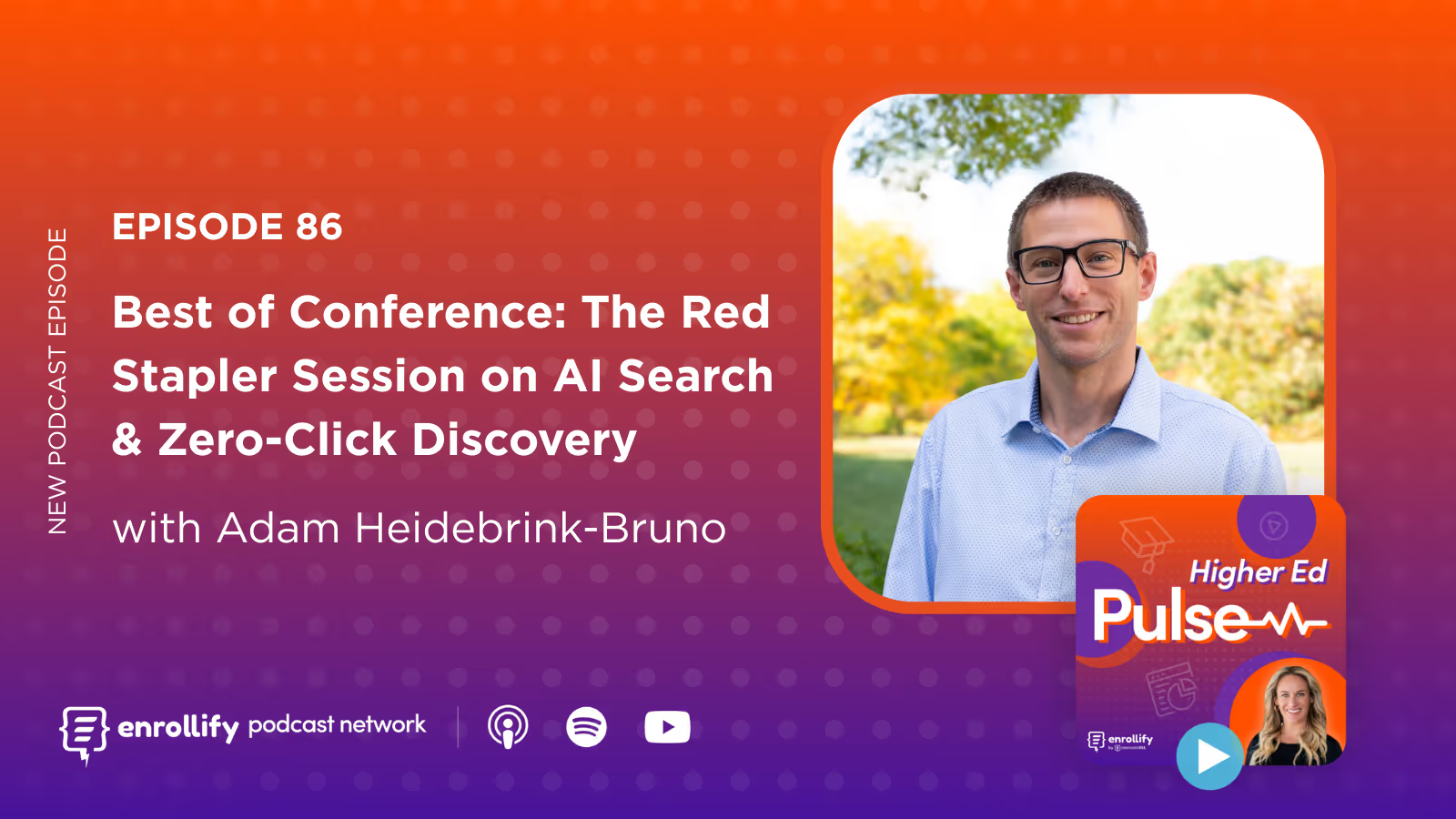
In this episode of Higher Ed Pulse, host Mallory Willsea sits down with Adam Heidebrink-Bruno, Digital Content Specialist at Finger Lakes Community College and winner of Best in Conference at the 2025 Digital Collegium Annual Conference. Adam’s session — “Preparing for AI Search and the Generative College Discovery Process” — dove deep into how AI-powered search is transforming how prospective students discover and evaluate colleges. In this conversation, Mallory and Adam unpack what it really means to optimize for generative AI tools like ChatGPT and Perplexity, the rise of zero-click search behavior, and why your institution’s content strategy may need an urgent overhaul.
Key Takeaways
- AI search is the new status quo
Generative tools like ChatGPT and Google’s AI Overviews are no longer “emerging tech” — they’re actively reshaping the college discovery process and user expectations around search. - Welcome to the Zero-Click Era
Students aren’t clicking through websites like they used to. Instead, they’re getting full answers from AI chat interfaces — meaning your content must be structured to surface there without a click. - SEO isn’t enough — content structure matters more than ever
Clear question-based headers, well-structured answers, and optimized metadata are critical for AI discoverability. It’s not just about keywords anymore. - Data visibility is limited but student usage is skyrocketing
Analytics may show minimal ChatGPT traffic, but surveys and first-year student conversations reveal high adoption and reliance on generative tools. - Five strategies to future-proof your content
Adam recommends focusing on direct question-answer formatting, cleaning up outdated pages, removing friction from the user experience, prioritizing accessibility, and embracing the zero-click mindset. - Content is no longer just your website
The web page is just one possible output. Your content must now be structured to work across AI platforms, mobile apps, and emerging generative interfaces.
Episode Summary: Your AI Search FAQs Answered
What exactly is “enshitification” and how does it relate to search?
The term, coined by Cory Doctorow, describes how platforms like Google or social media degrade user experience over time in pursuit of monetization. Initially optimized for users, they slowly pivot to serve advertisers. As Adam explains, AI search is a response to this — a cleaner, faster way for users (especially students) to get trustworthy answers without wading through cluttered ad-ridden pages.
Are students actually using ChatGPT for college search?
Yes — and the shift is already well underway. Despite referral analytics showing low percentages, Carnegie’s data shows 74% of graduating seniors are using AI for college-related questions. Adam also draws from firsthand experience as an instructor, noting that students increasingly treat generative AI like a trusted advisor.
Why does AI search behavior matter to higher ed marketers?
Because it fundamentally changes how students discover and interact with your institution. Instead of 10 blue links, they’re asking ChatGPT to “compare nursing programs in New York” or “explain how financial aid works at community colleges.” Your content either shows up — or it doesn’t. And if it doesn’t, you may be invisible in the conversation.
How can institutions adapt their content strategy for AI?
Adam outlines a smart, replicable process:
- Start by simulating prospective student queries in ChatGPT or Perplexity (both unbranded and branded).
- Analyze the answers, citations, and content structure of what’s surfaced.
- Identify where your institution shows up and where it doesn’t.
- Audit and revise your content based on what’s working — especially from institutions that are consistently cited.
What are the five content strategies that Adam recommends?
- Answer questions directly — Use clear, student-first headers and follow them with concise answers.
- Eliminate friction — Avoid content buried in PDFs, confusing navigation, or jargon-heavy copy.
- Clean up outdated content — AI pulls from everywhere; ensure what’s online is current and accurate.
- Prioritize accessibility — AI search thrives on structured, accessible content.
- Embrace zero-click behavior — Understand that students may never land on your site. Your impact must begin upstream, inside the AI interface.
Is this just an “upper-funnel” problem?
Not anymore. In fact, Adam ran an experiment asking ChatGPT to fill out the RFI form on his college’s website — and it did. With tools like OpenAI now integrating with apps like Etsy and Spotify, completing full transactions within AI chats is no longer hypothetical. College application processes could soon follow.
What’s the leadership takeaway here?
Generative AI is not a trend. It’s the new digital infrastructure students are using to make major life decisions — including where to attend college. Presidents and CMOs must ensure their institutions are allocating resources, training staff, and updating strategies accordingly. As Adam put it, “The best time to invest in this was two years ago. The second best time is right now.”
Connect With Our Host:
Mallory Willsea
https://www.linkedin.com/in/mallorywillsea/
https://twitter.com/mallorywillsea
About The Enrollify Podcast Network: The Higher Ed Pulse is a part of the Enrollify Podcast Network. If you like this podcast, chances are you’ll like other Enrollify shows too!
Some of our favorites include Generation AI and Confessions of a Higher Education Social Media Manager.
Enrollify is produced by Element451 — the next-generation AI student engagement platform helping institutions create meaningful and personalized interactions with students. Learn more at element451.com.
Register for the AI Engage Summit — Oct 15–16, 2025
👉 Join us online from 12–4 PM ET each day for two afternoons of AI insights and training. Free to attend with on-demand access included. Register now.




.svg)
.svg)
