






About the Episode
Got a story to tell? An innovative idea to share? Fill out our guest nomination form and let's chat!
About the Episode:
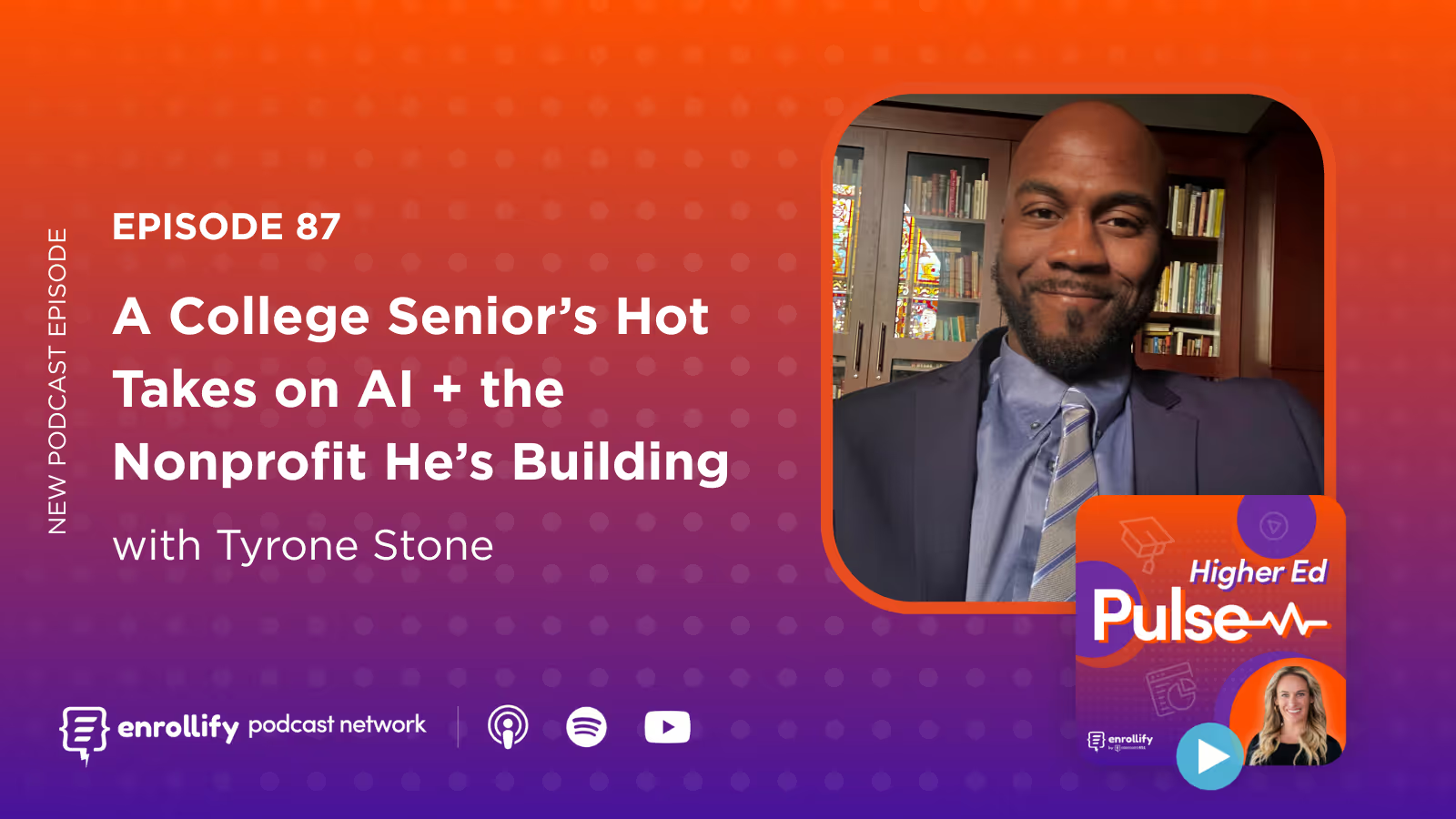
Mallory Willsea sits down with Tyrone “T.Y.” Stone, a senior at Augustana College, to discuss how students are really using AI in and outside of the classroom. T.Y. isn’t just using AI to write essays — he’s leveraging tools like ChatGPT and Poe to structure his thinking, spark creativity, and streamline side projects, all while dreaming up a nonprofit called CoBlack to teach coding and design to at-risk youth. Tune in to learn how this student is challenging assumptions about generative AI in education and pushing for equity in tech literacy from the ground up.
Key Takeaways
- AI in higher education isn't just about cheating — students like T.Y. are using it to enhance productivity, organize ideas, and develop professional skills.
- AI literacy should start early — T.Y. argues for teaching generative AI in middle and high schools to prepare students for a workforce shaped by automation.
- Representation in AI matters — and closing the digital divide means empowering underrepresented students with tools and training in coding, design, and AI.
- Students want guidance, not shame — instead of banning AI tools, institutions should teach responsible, critical usage.
- Free AI tools are powerful gateways — platforms like Poe give students access to a variety of bots and generative tools without the paywall barrier.
- AI in admissions and financial aid is still a gray area — and students like T.Y. express both optimism and caution about automation in high-stakes decisions.
Episode Summary: What This Student Wants Higher Ed to Know About AI
How are students actually using AI on a daily basis?
According to T.Y., AI starts his day before he even hits campus. He uses ChatGPT to summarize emails, organize tasks, and structure academic assignments. Far from using it as a shortcut, he treats AI as a collaborative brainstorming partner — one that helps him better manage time, clarify ideas, and level up his project management skills. Whether he's prepping for a presentation or refining a marketing pitch, AI is baked into his creative process.
Is AI use among students still taboo in higher ed?
Absolutely, says T.Y. Despite the growing popularity of tools like ChatGPT, the academic culture at many colleges, including his own, still leans toward shame and suspicion. He explains that while these tools are immensely helpful, they’re often misunderstood or discouraged in classroom settings. T.Y. believes that instead of policing usage, schools should be teaching AI literacy — helping students understand both the benefits and the pitfalls of generative tools.
What inspired T.Y. to create a nonprofit like CoBlack?
T.Y.’s vision for CoBlack stems from his research on the digital divide and personal experience growing up in underserved communities. He discovered that coding and design skills were rarely taught in low-income school systems — particularly to students who look like him. CoBlack aims to change that by offering at-risk youth access to tech education and AI training, giving them tools to not just survive but thrive in a workforce rapidly shaped by automation.
What kind of AI curriculum does he want to build?
His vision for CoBlack includes a focus on front-end and back-end coding, paired with graphic design. He believes these skills form the foundation for working effectively with AI tools. More than that, he wants students to unlock their creativity, giving them the confidence and capability to pursue tech careers or even launch their own projects — all while staying ahead of the curve in a world where automation is the norm.
How do students feel about AI’s role in admissions or financial aid?
T.Y. shares a nuanced view — while he recognizes that AI could streamline administrative processes, he worries about algorithmic bias and the lack of transparency in decision-making. He expresses concern that fully automated systems might disproportionately affect students from underrepresented backgrounds, echoing the larger debate happening across the industry. For now, he believes this technology needs more time and oversight before being used in high-stakes decisions.
What AI tools do students actually use — and are they paying for them?
Most students are using free versions of tools like ChatGPT, according to T.Y., though he sees real value in premium versions if accessible. He specifically calls out Poe as a go-to app that aggregates various AI bots under one roof, giving users flexibility depending on their needs — from business planning to cooking ideas. While he’s not ready to invest financially just yet, he knows these tools are an integral part of his productivity toolkit.
How does AI intersect with brand experiences and marketing?
From T.Y.’s perspective as a student and marketing enthusiast, AI-powered chatbots are among the most valuable tools brands are deploying well. However, he’s more skeptical of generative imagery and AI-generated voices, which he finds less authentic. He’s also curious how brand transparency — like disclosing AI-generated content — might affect consumer trust. For now, his belief is simple: AI works best when it assists, not replaces, human creativity.
Connect With Our Host:
Mallory Willsea
https://www.linkedin.com/in/mallorywillsea/
https://twitter.com/mallorywillsea
About The Enrollify Podcast Network: The Higher Ed Pulse is a part of the Enrollify Podcast Network. If you like this podcast, chances are you’ll like other Enrollify shows too!
Some of our favorites include Generation AI and Confessions of a Higher Education Social Media Manager.
Enrollify is produced by Element451 — the next-generation AI student engagement platform helping institutions create meaningful and personalized interactions with students. Learn more at element451.com.





.svg)
.svg)
