



About the Episode
The AI Engage Summit is a free, virtual experience built to help higher ed leaders actually do something with AI. Over two afternoons, you’ll hear from peers, see practical demos, and walk away with ideas you can use immediately — no travel required, no cost to attend. If you’re ready to move AI from “interesting” to “impactful,” this is the place to be. Register now, don't miss out.
About the Episode:
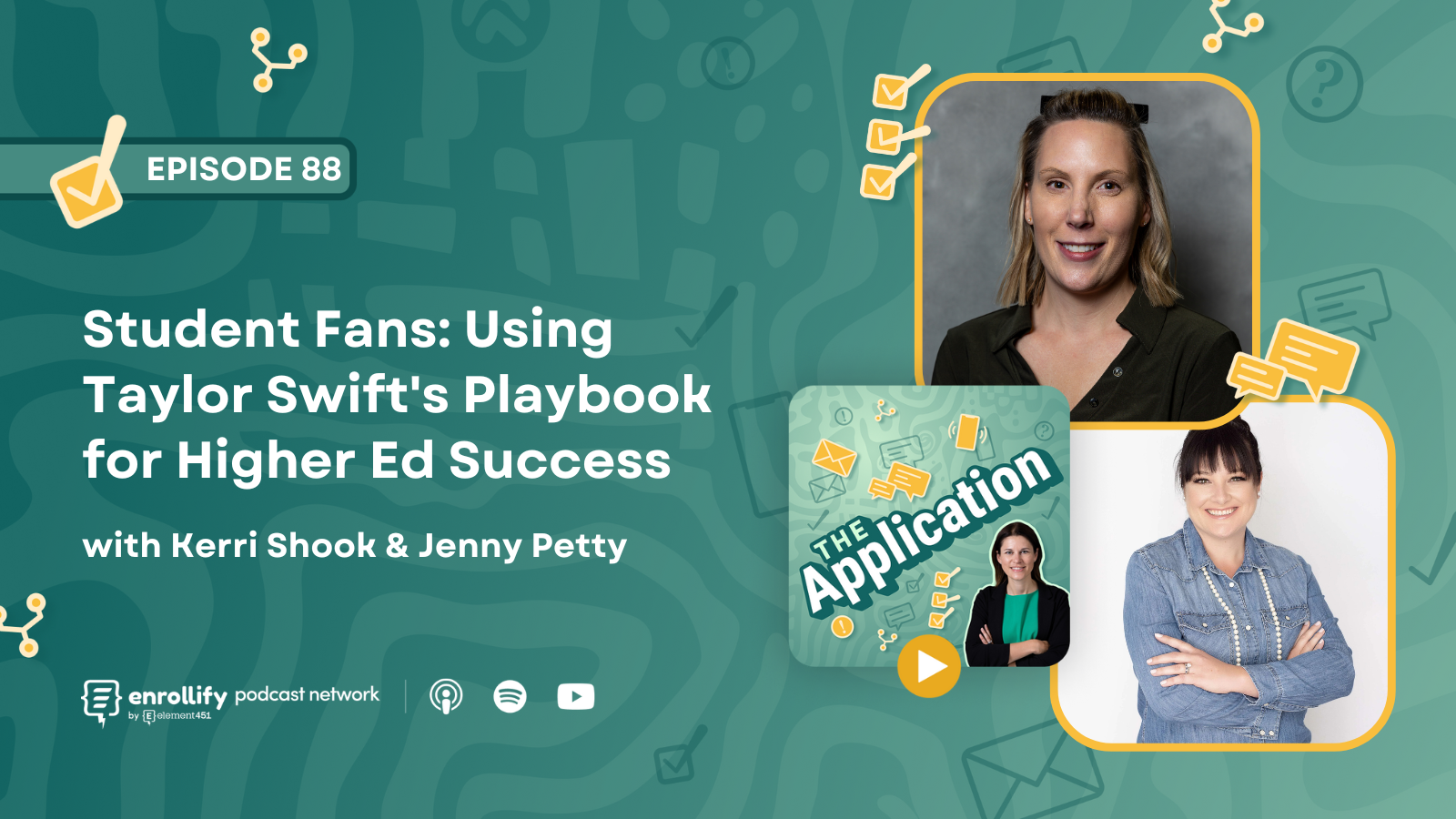
Allison is joined by Jenny Petty, VP of Industry Relations and Advisory Services at SimpsonScarborough, and Kerri Shook, Owner of ks strategy studio, to discuss rethinking student recruitment and retention by building a fan base. Inspired by Taylor Swift's “Eras” model, UM saw retention climb by 9% since 2018 by focusing on emotional storytelling and experiential branding. They explain how cross-campus collaboration led to new traditions, like the “Freshman Float,” that combat the perception of a lack of campus vibrancy. Learn how to use data to justify this emotional approach, listen to students to co-create experiences, and foster a true sense of belonging.
Join us as we discuss:
- [2:23] Rethinking student engagement through the lens of Taylor Swift fandom
- [9:30] How a lazy river float became an orientation capstone for the UM experience
- [18:34] Co-creating brand with your students and adapting to your audience
To hear this interview and many more like it, subscribe on Apple Podcasts, Spotify, or our website, or search for “The Application with Allison Turcio” in your favorite podcast player.
How can we rethink student retention like Taylor Swift rethinks her eras?
Jenny Petty and Kerri Shook challenge higher ed marketers to ditch the one-size-fits-all approach to student engagement. Inspired by the evolution of Taylor Swift’s music eras, they propose a new framework for student success: matching brand experiences and messaging to each stage of the student lifecycle, from high school inquiry to senior year stress. Just like Swift adapts her image and sound to meet fans where they are, colleges can (and should) evolve their storytelling and support strategies over time.
This mindset shift emerged from years of experimentation at the University of Montana, where Jenny and Kerri led a “brand renaissance” instead of a rebrand. Their goal? Create hype, buzz, and an emotional connection to the campus experience. The result was not only increased retention but a more vibrant, human-centric brand.
What role does brand experience play in building student belonging?
Montana’s retention turnaround didn’t come from more emails or handbooks. It came from emotional, place-based experiences. One standout example? The Freshman Float—a uniquely Montana tradition where incoming students float down the Clark Fork River in branded dry bags. What started as a yield campaign swag idea turned into a high-impact community event, co-created with students and tied to the institution’s mission around stewardship and sense of place.
Montana didn’t stop there. Recognizing the isolating impact of winter, they launched a Winter Bonfire Pep Rally complete with fireworks, cocoa, and community vibes. Each of these initiatives was built not just to impress—but to express what it feels like to belong at Montana. And yes, they turned into cherished traditions… despite being less than five years old.
How do you convince leadership (and the campus) to invest in retention marketing?
The key is agility and storytelling. When Montana hit a 40% enrollment drop in 2019, they embraced experimentation instead of fear. Leadership support was critical, but so was cross-campus collaboration. Jenny and Kerri built bridges with student affairs, faculty, and operations—not to take over, but to co-create.
To get buy-in, they used both data and emotion. Research showed students didn’t perceive Montana as vibrant. Student stories revealed feelings of abandonment after enrollment. Together, those insights formed a case for action. And small wins snowballed into bigger ones. Creating a new brand experience manager role allowed Montana to incubate ideas, test them, and turn successes over to student life for long-term sustainability.
What are low-cost ways to start building superfans?
It doesn’t take a big budget to get started. Kerri recommends conducting a student satisfaction survey—most campuses already have tools like Qualtrics. Start small, measure what matters (like sense of belonging), and set achievable milestones. Jenny suggests deep listening as the starting point—whether through focus groups, orientation influencer cohorts, or informal feedback loops. And be open to feedback. When patches didn’t resonate, Montana pivoted to enamel pins—now a beloved symbol of community pride.
Both Jenny and Kerri emphasize that retention marketing is more about mindset than money. It’s about showing up as a partner, being brave enough to try, and staying humble enough to tweak. Montana's superpower? Agility. And in an industry often slow to change, that’s a lesson worth amplifying.
Connect With Our Host:
Allison Turcio
https://www.linkedin.com/in/allisonturcio/
https://twitter.com/allisonturcio
Enrollify is made possible by Element451 — the next-generation AI student engagement platform helping institutions create meaningful and personalized interactions with students. Learn more at element451.com.