






About the Episode
Got a story to tell? An innovative idea to share? Fill out our guest nomination form and let's chat!
About the Episode:
2025 AI Search Trends Report by Everspring
Register for the Admission + AI Summit on August 21st
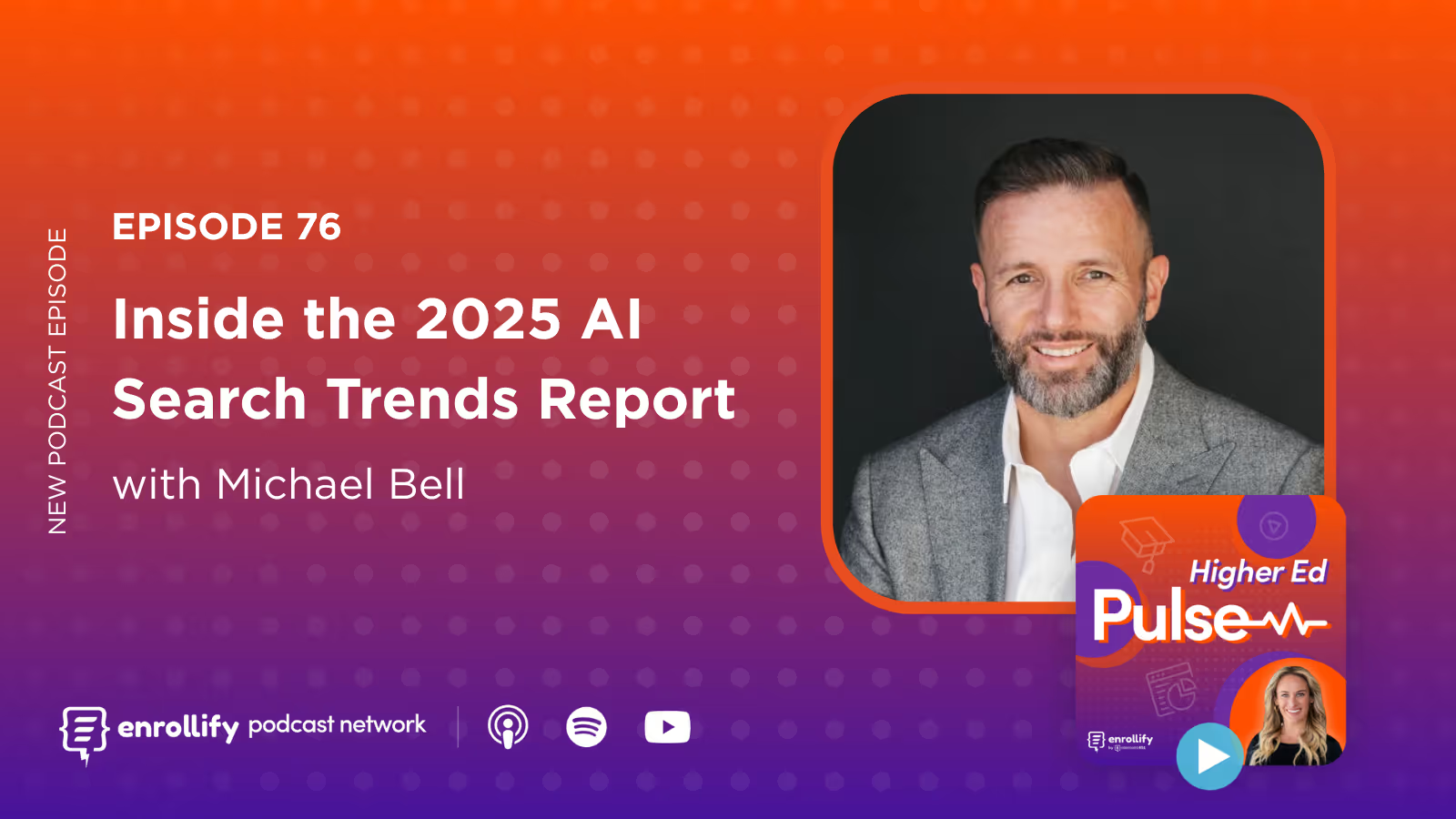
Mallory Willsea sits down with Mike Bell, Chief Marketing Officer at Everspring, to explore the disruptive impact of AI search tools on college discovery and decision-making. Drawing from Everspring's just-released 2025 AI Search Trends report, they unpack how platforms like ChatGPT and Perplexity are reshaping the higher education marketing funnel. With over 450,000 student interactions analyzed, the data reveals a major shift in student behavior—and a warning for marketers who aren’t ready. If you're a higher ed CMO wondering where your institution stands in AI-generated search results, this episode is your wake-up call.
Key Takeaways
- 45% of prospective students now use AI tools like ChatGPT and Perplexity during their college search—but only 13% fact-check what they read by visiting official school sites.
- The traditional marketing funnel is collapsing. Students are making decisions in “zero-click” environments, meaning they never land on your site at all.
- AI isn’t just a new channel—it’s a new conversation. Schools need to treat AI like an agent building a narrative from whatever public data is available.
- Search intent is changing. Students are asking AI personal, high-intent questions they might never ask an admission counselor.
- Visibility ≠ control. If your school doesn’t optimize for AI discovery, it risks being invisible or inaccurately portrayed during the most critical stage of student decision-making.
- Quick win: Audit your AI visibility today. Ask ChatGPT questions like “What are the best online MBAs for working adults?” to see if and how your institution appears.
Episode Summary
What is AI doing to the college search process?
According to Mike Bell and the 2025 AI Search Trends report, AI tools are fundamentally transforming how students discover and evaluate colleges. Unlike traditional search engines, platforms like ChatGPT don't just retrieve results—they assemble narratives. These narratives are drawn from any indexable content available: PDFs, Reddit posts, outdated web pages, and third-party rankings. This shift means prospective students could form opinions or even make decisions without ever visiting a school’s official website or hearing from admissions directly.
The data paints a sobering picture: nearly half of all students are using AI tools in their research, but only 13% go back to verify those AI-generated insights. For enrollment marketers, this means that brand trust and visibility are no longer just about rankings or ad spend—they’re about being cited, surfaced, and spoken about in AI interfaces that students trust implicitly. Institutions that ignore this trend risk being excluded from students’ consideration sets before they even get a chance to make their case.
Why is AI different from other marketing channels?
Bell argues that AI isn’t just another marketing channel—it’s the evolution of how students consume and interpret information. Unlike paid media or SEO strategies that focus on visibility through clicks, AI search is shaping perceptions at the “zero-click” level. This means that by the time a student lands on your site—if they ever do—they’ve already formed opinions based on AI-generated insights.
That insight challenges the long-held structure of the higher ed marketing funnel. Instead of guiding students from awareness to consideration to inquiry, AI condenses those stages into one continuous, personalized conversation. This forces a paradigm shift in how marketers think about intent. Traditional intent signals like form fills or time-on-site are no longer reliable indicators. Instead, marketers must understand the deeply personal and private nature of how students are interacting with AI tools to inform their decisions.
How should higher ed marketers respond to this shift?
Bell’s advice is clear: start small, start now. Most institutions don’t need a full content overhaul—they need to reformat what they already have to be AI-readable. That includes using schema markup, natural language headings, and question-answer formats to make high-intent information (like cost, flexibility, or application deadlines) easier for AI to parse and surface. Schools should also update or remove outdated third-party listings and make sure external content is consistent with official messaging.
Just as SEO professionals have long conducted keyword audits, higher ed marketers need to start running prompt audits: asking ChatGPT or Perplexity the same questions a prospective student might ask and analyzing the results. Bell also encourages marketers to track referral traffic from AI tools (which is now possible thanks to link embedding) and to monitor how their brand is being portrayed in AI overviews, especially in Google. These visibility checks should become a regular part of every CMO’s playbook.
Connect With Our Host:
Mallory Willsea
https://www.linkedin.com/in/mallorywillsea/
https://twitter.com/mallorywillsea
About The Enrollify Podcast Network: The Higher Ed Pulse is a part of the Enrollify Podcast Network. If you like this podcast, chances are you’ll like other Enrollify shows too!
Some of our favorites include Generation AI and Confessions of a Higher Education Social Media Manager.
Enrollify is produced by Element451 — the next-generation AI student engagement platform helping institutions create meaningful and personalized interactions with students. Learn more at element451.com.




.svg)
.svg)
