






About the Episode
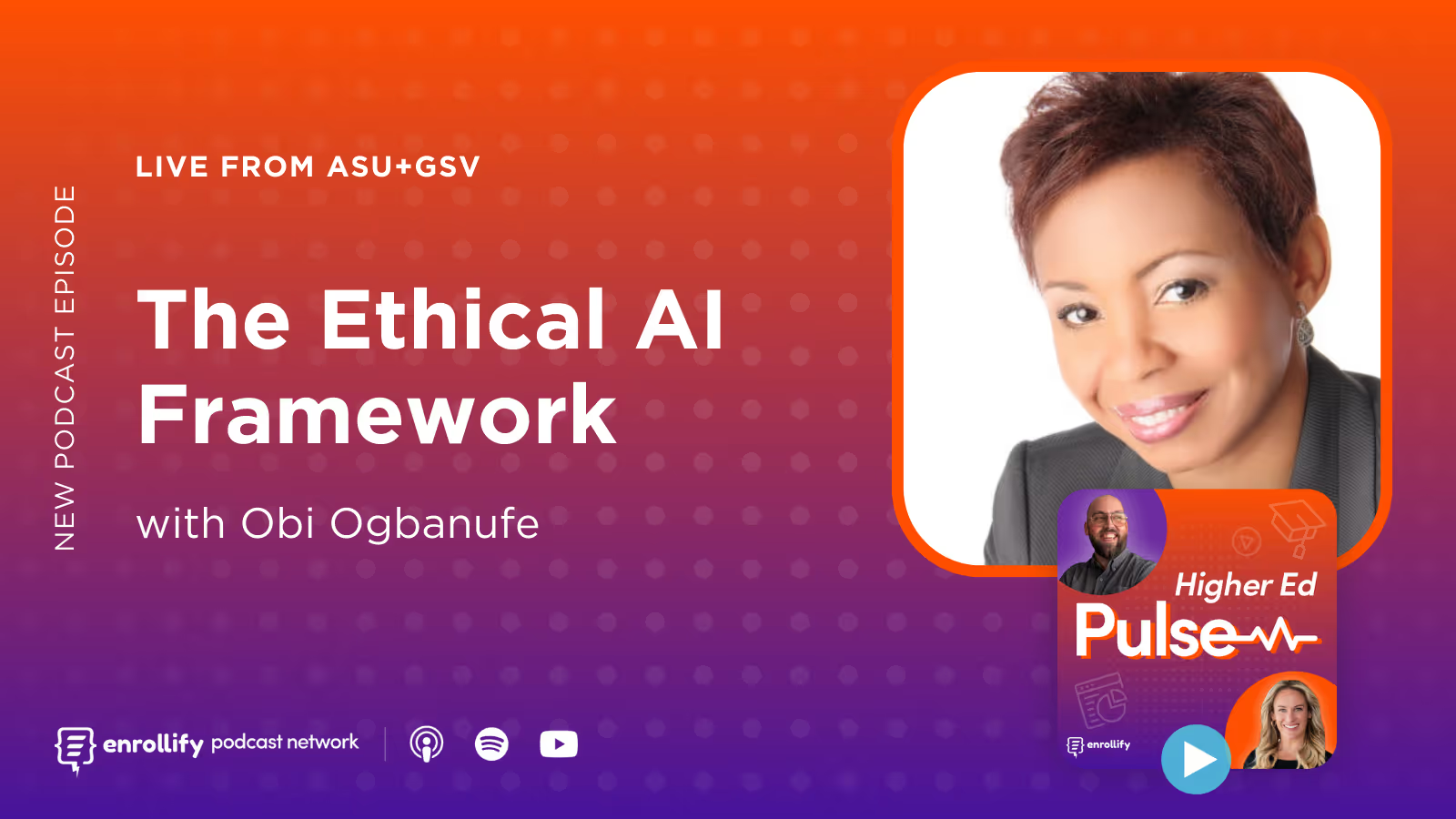
About the Episode: Recorded at the ASU+GSV inaugural AIR Show, Mallory chats with Obi Ogbanufe, a Professor at the University of North Texas. Obi shares her insights on the crucial role of ethics in artificial intelligence, particularly within educational technology. She explains and explores “FATE” — the importance of incorporating fairness, accountability, transparency, explainability, and privacy into AI systems. Obi underscores the impact these principles can have on both developers and consumers of AI.
Key Takeaways
- The Five Pillars of AI Ethics: Fairness, accountability, transparency, explainability, and privacy are crucial to building ethical and trustworthy AI applications.
- Critical AI Literacy for All: Students at every level, from K–12 to higher education, need to develop AI literacy skills to become informed and ethical users of AI technologies.
- Higher Ed’s Role in AI Ethics: Colleges and universities must integrate AI ethics into curricula across disciplines, helping students understand the broader implications of using AI tools.
- Case-Based Learning for AI Education: Obi is designing his upcoming AI ethics course around case studies to spark critical thinking and discussions on real-world ethical dilemmas in AI.
- Opportunities in Ed Tech: While much of the focus in AI education is currently on K–12, there’s a growing need for higher ed institutions to embrace AI for teaching, student support, and career preparation.
Why AI Ethics Matters
Obi Ogbanufe explains that while AI holds immense potential to transform industries and education, it also has a darker side that demands attention. Ethical concerns such as bias, accountability, privacy violations, and lack of transparency can harm individuals and erode trust in AI systems. Obi stresses the need for a framework that ensures AI is developed and deployed responsibly.
The five pillars of AI ethics—fairness, accountability, transparency, explainability, and privacy—serve as the foundation for this framework. Obi emphasizes that ethical AI is not just a technical challenge but a societal responsibility that requires input from educators, policymakers, and industry leaders.
Integrating AI Ethics into Education
Obi shares his plans for his upcoming AI ethics course, which will focus on case-based learning. Through real-world scenarios, students will analyze the positive and negative implications of AI technologies, discuss ethical dilemmas, and propose solutions. By engaging with case studies, students will build a deeper understanding of how to evaluate AI systems critically.
Obi also highlights two recommended readings for anyone interested in AI ethics:
- Weapons of Math Destruction by Cathy O’Neil
- Unmasking AI by Joy Buolamwini
These works provide a foundation for understanding the ethical challenges associated with AI and offer frameworks for addressing them.
The Need for AI Literacy Across Disciplines
AI literacy, according to Obi, is no longer optional. Every student—regardless of their major—should develop a basic understanding of how AI works, how it impacts society, and how to use it ethically. Obi advocates for integrating AI literacy into every course, from cybersecurity to business analytics.
He explains that being a “critical consumer” of AI means asking tough questions:
- How was the data collected?
- Was consent obtained from users?
- What biases might exist in the data or the algorithm?
- Can the decision-making process be explained clearly?
Obi believes that fostering this critical mindset will empower students to use AI responsibly in their careers and daily lives.
Ed Tech and Higher Ed’s Role in AI Ethics
While many ed tech companies at the ASU+GSV Air Show were focused on K–12, Obi sees a significant opportunity for higher education to lead the way in AI ethics. Colleges and universities should not only teach AI ethics but also model ethical practices in how they adopt and implement AI tools.
Obi calls on higher ed institutions to take a proactive approach to AI integration, ensuring that tools are transparent, secure, and designed with fairness and accountability in mind.
AI in K–12 and the Role of Early Education
Obi expressed excitement about the growing focus on AI in K–12 education. Teaching AI literacy and data visualization to high schoolers—and even middle schoolers—is preparing future college students to engage with AI in meaningful ways. He points to educators like the middle school teacher working on financial literacy and AI as a model for how to start these conversations early.
He notes that K–12 educators are already introducing concepts like data analytics and visualization, which will help students hit the ground running when they enter college.
Connect With Our Host:
Mallory Willsea
https://www.linkedin.com/in/mallorywillsea/
https://twitter.com/mallorywillsea
About The Enrollify Podcast Network: The Higher Ed Pulse is a part of the Enrollify Podcast Network. If you like this podcast, chances are you’ll like other Enrollify shows too!
Some of our favorites include Generation AI and Confessions of a Higher Education Social Media Manager.
Enrollify is made possible by Element451 — the next-generation AI student engagement platform helping institutions create meaningful and personalized interactions with students. Learn more at element451.com.
Connect with Us at the Engage Summit: Exciting news — Mallory will be at the 2024 Engage Summit in Raleigh, NC, on June 25 and 26, and we’d love to meet you there! Sessions will focus on cutting-edge AI applications that are reshaping student outreach, enhancing staff productivity, and offering deep insights into ROI.
Use the discount code Enrollify50 at checkout.
Learn more and register at engage.element451.com — we can’t wait to see you there!






.svg)
.svg)
