






About the Episode
About The Episode:
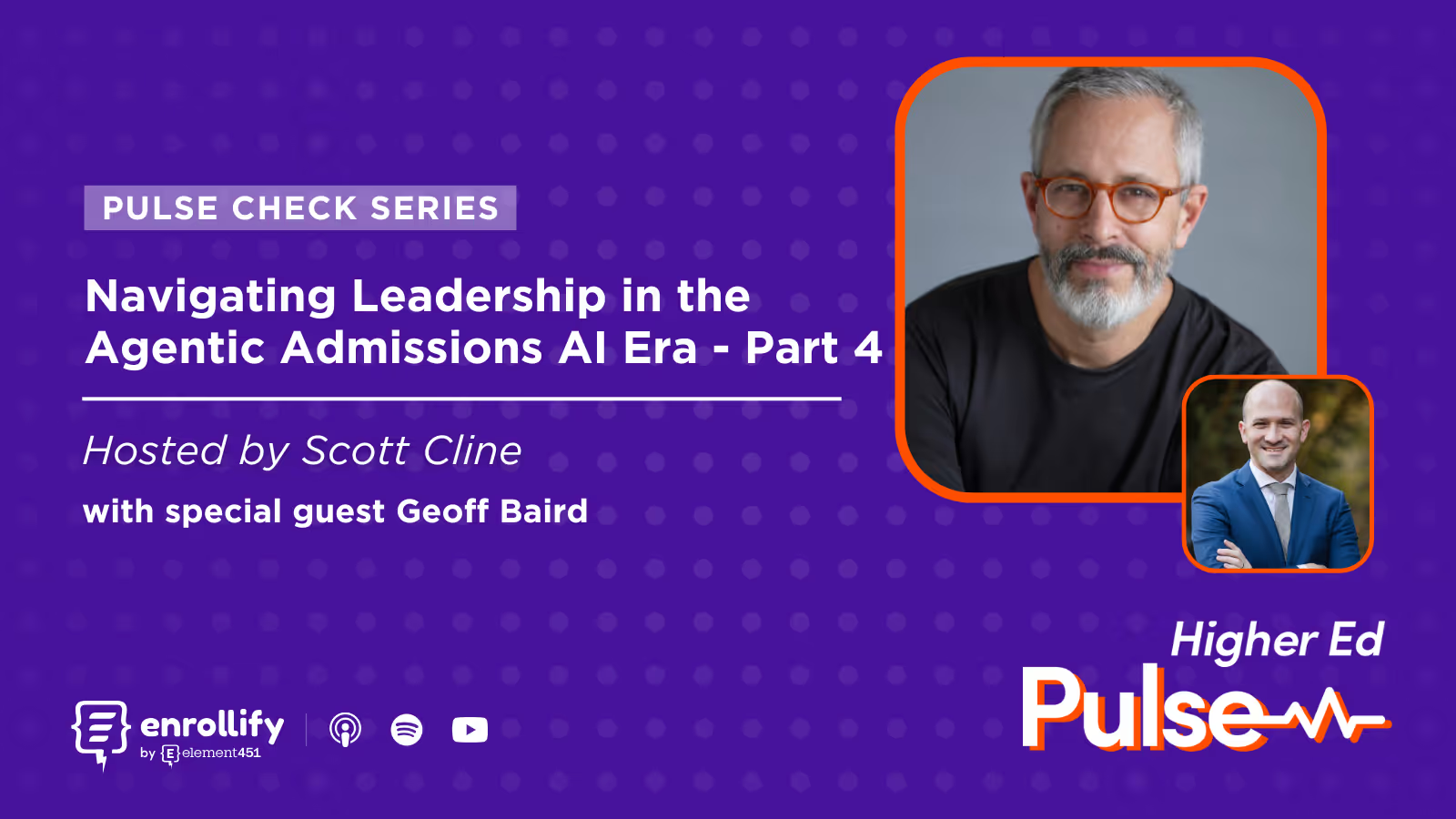
Scott Cline sits down with Geoff Baird — enrollment veteran, founder of Enroll ML, and author of The Signal Solution. They dive deep into the disruptive force of AI in college admissions, likening its impact to a "silent COVID" moment that’s transforming enrollment practices as we know them. With sharp insights into institutional readiness, student expectations, and the role of leadership, this episode is a must-listen for anyone navigating the evolving AI landscape in higher education.
Key Takeaways
- AI is higher ed’s “silent COVID”: The disruption AI brings to enrollment is as significant as the shift we saw during the pandemic — but many institutions are still slow to act.
- Students are already ahead of institutions: Today’s students are entering college more fluent in AI than the institutions themselves, leading to trust gaps and misalignment.
- Precision over perfection: Institutions don’t need fully baked AI strategies to get started — focusing on optimizing specific admissions processes can yield big results fast.
- Beware of "vanity AI": Adopting flashy AI tools without addressing foundational enrollment gaps leads to wasted time and resources.
- AI should amplify human connection, not replace it: Institutions that leverage AI to free up staff bandwidth and deepen student engagement will outperform those that automate for automation’s sake.
- Institution-wide alignment is essential: Successful AI integration requires buy-in and understanding from senior leadership across the institution, not just the admissions team.
- Building trust starts with transparency: Schools need clear, student-facing narratives about where and how AI is being used in admissions to foster trust.
Episode Summary: Key Questions Answered in This Conversation
Why is AI being compared to a “silent COVID” moment for higher education?
Geoff Baird explains that AI has ushered in a moment of forced transformation — not unlike what institutions faced during the pandemic. COVID compelled colleges to pivot rapidly, adopt new tech, and innovate out of necessity. AI is bringing similar levels of disruption, but because it’s not an immediate crisis, many leaders are slow to respond. Geoff argues this moment demands the same urgency and openness to innovation that COVID required.
What’s the risk of students being “ahead” of institutions in AI usage?
Students are increasingly entering the admissions funnel with more AI fluency than the institutions recruiting them — and that gap is growing. This mismatch can create major dissonance: students expect seamless, personalized interactions, while many institutions still operate with outdated, rigid processes. Geoff warns that this lag could erode trust and ultimately hurt enrollment outcomes if not addressed swiftly.
What does it mean to move closer to students — and why does it matter?
In The Signal Solution, Geoff argues that successful institutions won’t just use AI to bring students to them; they’ll use it to move closer to students — both in terms of timing and personalization. With shrinking demographics and increased competition, getting precision-focused in recruitment strategies and building relationships earlier is more important than ever. AI can help institutions narrow their focus and deepen engagement with the right students.
How can institutions practically get started with AI?
Geoff advises institutions to start small by focusing on admissions processes that are repetitive, time-consuming, and ripe for automation. Instead of trying to overhaul everything at once, he recommends identifying bottlenecks where staff are bogged down in tasks instead of engaging students. Targeting these areas with precision AI allows teams to regain time and focus on what matters most — human connection.
What is “vanity AI” and why is it a problem?
"Vanity AI" refers to tech implemented for the sake of being seen as innovative rather than solving a specific, mission-critical problem. Geoff shares that many institutions fall into this trap: they implement powerful AI tools that don’t align with actual enrollment challenges. The result? Impressive demos, poor outcomes. Strategic AI deployment requires alignment with enrollment goals and student needs.
Will AI replace human counselors in admissions?
Not anytime soon. Geoff firmly believes that while AI will reshape workflows, the human element — particularly the emotional connection students crave during the college decision process — remains irreplaceable. AI should empower admissions professionals by removing administrative burden and enhancing student interactions, not replacing them. The future is about augmentation, not automation.
How should institutions talk about AI use with students and families?
Geoff stresses the importance of transparency. Students and families want to know that AI isn’t making decisions in a vacuum. By clearly communicating where AI is being used — and how it enhances rather than replaces human engagement — institutions can build trust. Being silent about AI usage can actually heighten student suspicion and fuel misinformation.
Register for the AI Engage Summit — Oct 15–16, 2025
👉 Join us online from 12–4 PM ET each day for two afternoons of AI insights and training. Free to attend with on-demand access included. Register now.



.svg)
.svg)
