






About the Episode
About The Episode:
Givzey Newsletter signup:
https://givzey.com/newsletter
Version2.ai website:
https://www.version2.ai/
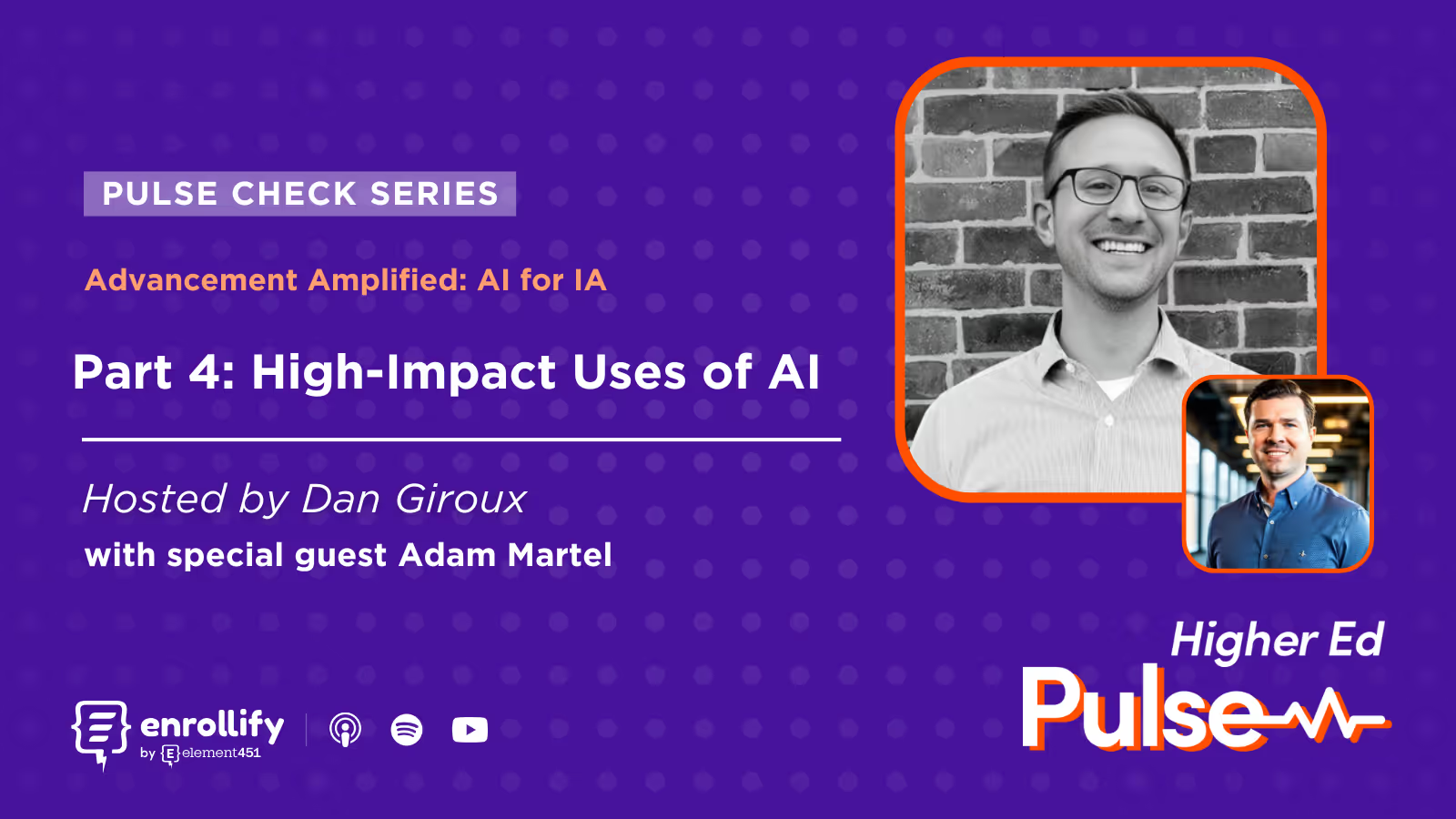
In this episode of Advancement Amplified: AI for IA, host Dan Giroux sits down with Adam Martel, CEO of Givzy and Version 2 AI, to explore the groundbreaking role of autonomous AI in fundraising and donor engagement. Adam shares insights on how AI is not just enhancing efficiency but fundamentally reshaping how institutions connect with donors. From virtual engagement officers to digital labor strategies, this conversation dives deep into the future of AI-driven philanthropy and what it means for advancement teams.
Key Takeaways
- The Difference Between AI-Enabled Tools and Autonomous AI: AI enablement increases efficiency, while autonomous AI acts independently to replicate frontline fundraisers' work.
- AI is Augmenting, Not Replacing, Fundraisers: Due to labor shortages, AI is filling the gap in donor engagement rather than eliminating jobs.
- Digital Labor is Here to Stay: Institutions are already incorporating AI-driven virtual engagement officers into multi-year staffing plans.
- Transparency and Ethical AI Usage Matter: AI should never mislead donors, and data usage should be minimal and marketing-approved.
- AI is Reshaping Fundraising Strategies: From Days of Giving to personalized stewardship, autonomous AI is improving donor engagement and retention.
- Future of AI in Philanthropy: Within five years, digital labor will be standard in fundraising, working alongside traditional frontline fundraisers to scale impact.
What is the difference between AI-enabled tools and autonomous AI in fundraising?
AI-enabled tools help fundraisers work more efficiently, allowing them to manage larger donor portfolios by generating content and automating tasks. Autonomous AI, on the other hand, functions independently—replicating the work of fundraisers by engaging donors at scale, analyzing data, and making decisions based on past interactions. Adam Martel explains that autonomous AI is like Waymo’s self-driving cars: it senses, processes, and acts without direct human intervention, making it a game-changer for institutions struggling with labor shortages.
Will AI replace frontline fundraisers?
Not at all. Adam emphasizes that there simply aren’t enough fundraisers to meet the needs of donor engagement. Many organizations have open fundraising positions that go unfilled for months, creating a massive gap in donor outreach. AI is stepping in to help engage the 90-95% of donors who otherwise receive only generic emails and direct mail. Institutions using autonomous AI aren’t reducing staff—they’re actually looking to hire more fundraisers while using AI to scale their efforts.
How are institutions adopting AI in their fundraising strategies?
Universities like William & Mary, Texas State, and San Diego State are already implementing autonomous AI through cohort models. These institutions are working together to test AI’s effectiveness, share insights, and refine strategies. Early results show that AI-driven engagement is significantly increasing donor interactions and gift conversions, especially among previously unassigned donors. As AI continues to prove its value, institutions are creating long-term digital labor plans to integrate AI into their staffing models.
How do institutions balance AI with the human touch in philanthropy?
One major concern in the advancement space is ensuring that AI-driven interactions don’t feel impersonal. Adam shares that autonomous AI is primarily replacing mass outreach methods like cold email blasts and direct mail, not the personal connections made by frontline fundraisers. AI is being used to schedule calls, personalize outreach, and free up fundraisers’ time to focus on high-impact relationships. Institutions are also using AI to optimize student caller programs—ensuring that student fundraisers only reach out to donors who have expressed interest in engaging.
How is AI being used for Days of Giving?
One standout example comes from Bucknell University, where their virtual engagement officer was responsible for 21% of all Day of Giving donations. This showcases the immense potential of AI in high-volume fundraising campaigns. AI can send personalized outreach at scale, increasing donor participation and reducing unsubscribes caused by excessive email blasts. As AI continues to evolve, it will play a larger role in stewardship, donor engagement, and campaign execution.
How does AI maintain transparency and ethical engagement with donors?
Transparency is a priority. Adam stresses that donors should never be misled into thinking they’re communicating with a human when they’re actually engaging with AI. Version 2 AI ensures that all AI-generated outreach is clearly identified and that AI decisions are explainable—not a "black box." Additionally, their platform only uses 12-15 essential donor data points, minimizing privacy risks while maximizing engagement.
What’s next for AI in higher education fundraising?
In the near future, institutions will move beyond virtual engagement officers to introduce roles like virtual stewardship officers and virtual gift officers. These AI-driven agents will complement traditional fundraising teams, helping to personalize stewardship, manage mid-level donors, and optimize campaign strategies. Looking further ahead, AI will become a standard part of every fundraising operation, supporting larger campaign goals and driving mission-critical philanthropy.
Enrollify is produced by Element451 — the next-generation AI student engagement platform helping institutions create meaningful and personalized interactions with students. Learn more at element451.com.
Attend the 2025 Engage Summit!
The Engage Summit is the premier conference for forward-thinking leaders and practitioners dedicated to exploring the transformative power of AI in education.
Explore the strategies and tools to step into the next generation of student engagement, supercharged by AI. You'll leave ready to deliver the most personalized digital engagement experience every step of the way.
👉🏻 Register now to secure your spot in Charlotte, NC, on June 24-25, 2025!




.svg)
.svg)
